Love this? Save it for later!
Share the inspiration with your friends
“You know that feeling when summer hits and all you want is something fresh but without the dreaded bloat?” That was me last July, sitting on my tiny balcony after a long, sweaty day at the farmer’s market. I’d just picked up the last of the season’s cucumbers, carrots, and a few herbs, thinking, “Okay, time for a salad that won’t make my IBS flare up.” Honestly, fresh salads that are both delicious and gentle on the tummy felt like a myth back then. I mean, who wants to deal with bloating on a hot day when all you want is to feel light and refreshed?
That afternoon, I started mixing and matching ingredients thoughtfully, avoiding the usual suspects that tend to cause discomfort. Between juggling grocery bags and dodging the city’s noise, a little kitchen chaos happened—I forgot to chop the herbs finely and spilled some dressing on the floor (classic me!). But by the time I sat down with my bowl, I realized I’d stumbled on something that was not only kind to my gut but packed with flavor.
These fresh IBS-friendly summer salads became my go-to on no-bloat days. Maybe you’ve been there—looking for a salad that feels like a cool breeze rather than a stomach ache. Whether you’re managing IBS or just want a light, vibrant meal, I’m excited to share these recipes that have been tested, tweaked, and loved. Let me tell you, having a stash of these salads ready to go feels like a little win every summer.
Why You’ll Love This Recipe
After countless trials and a few “oops” moments (like accidentally adding onions before remembering their effect on IBS), these fresh IBS-friendly summer salads have become a staple. Here’s why they might just become yours too:
- Quick & Easy: Ready in under 20 minutes—perfect when you’re craving something healthy but don’t want to spend hours in the kitchen.
- Simple Ingredients: No need for exotic produce or specialty stores; these salads use everyday items you likely have on hand.
- Perfect for Hot Days: They’re light, refreshing, and hydrating—ideal for summer lunches, picnics, or a quick dinner.
- Crowd-Pleaser: Friends and family who don’t even follow IBS-friendly diets rave about the flavors and textures.
- Unbelievably Delicious: The balance of crisp veggies, fresh herbs, and subtle dressings make every bite satisfying without heaviness.
What sets these salads apart? It’s the careful ingredient selection and layering of flavors that respect your digestive system while still feeling indulgent. For instance, swapping traditional dressings for gentle, homemade vinaigrettes keeps things tasty but tummy-friendly. Plus, the fresh herbs add that pop of brightness that makes it feel special without the fuss. Honestly, this isn’t just another salad recipe—it’s the one I reach for when I want to feel good inside and out.
What Ingredients You Will Need
These fresh IBS-friendly summer salads rely on simple, wholesome ingredients to deliver bold flavor and satisfying texture without the fuss. Almost everything is a pantry or fridge staple, and when some ingredients are seasonal, I’ll note easy swaps you can make.
- For the Salad Base:
- Mixed greens (baby spinach, arugula, or butter lettuce)—choose tender leaves to avoid roughage that’s hard to digest
- Cucumber, peeled and thinly sliced (adds crunch and hydration)
- Carrots, shredded or julienned (for sweetness and texture)
- Cherry tomatoes (use in moderation; some IBS sufferers tolerate them better than others)
- For the Protein Boost:
- Cooked chicken breast, shredded or diced (plain, no heavy seasoning)
- Firm tofu, cubed (for a vegetarian option)
- Hard-boiled eggs, sliced (adds richness and satiety)
- For the Dressing:
- Extra virgin olive oil (I prefer Colavita for its smooth texture)
- Fresh lemon juice (bright and gentle on digestion)
- Maple syrup or a small pinch of sugar (to balance acidity)
- Dijon mustard (optional, adds subtle depth without overpowering)
- Sea salt and freshly cracked black pepper (to taste)
- Fresh Herbs & Extras:
- Fresh basil and parsley, finely chopped (adds fresh aroma and flavor)
- Chopped chives or green parts of scallions (avoid white parts to reduce FODMAPs)
- Toasted pumpkin seeds or walnuts (adds crunch and healthy fats)
If you’re wondering about substitutions, no worries! For example, you can swap chicken with canned tuna or tempeh. If you’re avoiding eggs, omit them or replace with avocado slices for creaminess. In summer, fresh herbs like mint or cilantro can brighten up flavors. I’ve found that these substitutions keep the salads just as enjoyable and IBS-friendly.
Equipment Needed
- A sharp chef’s knife—trust me, a good one makes chopping veggies way less frustrating. I’m still using my trusty Wüsthof, which I’ve had for years.
- Cutting board—preferably wood or bamboo to avoid dulling your knives.
- Large mixing bowl—to toss all your ingredients without spills. I like using a glass one because it’s easy to clean and doesn’t stain.
- Measuring spoons—for precise dressing measurements. KitchenAid’s set is budget-friendly and reliable.
- Salad spinner (optional but recommended)—dry greens mean your dressing sticks better. I once skipped this step and ended up with soggy salad, lesson learned!
- Small whisk or fork—for blending the dressing smoothly.
- Storage containers—airtight ones if you plan to meal prep or save leftovers.
Don’t worry if you don’t have a salad spinner; a clean kitchen towel works fine for drying greens. And if you’re short on time or tools, chopping veggies roughly still tastes great—sometimes rustic is best!
Preparation Method
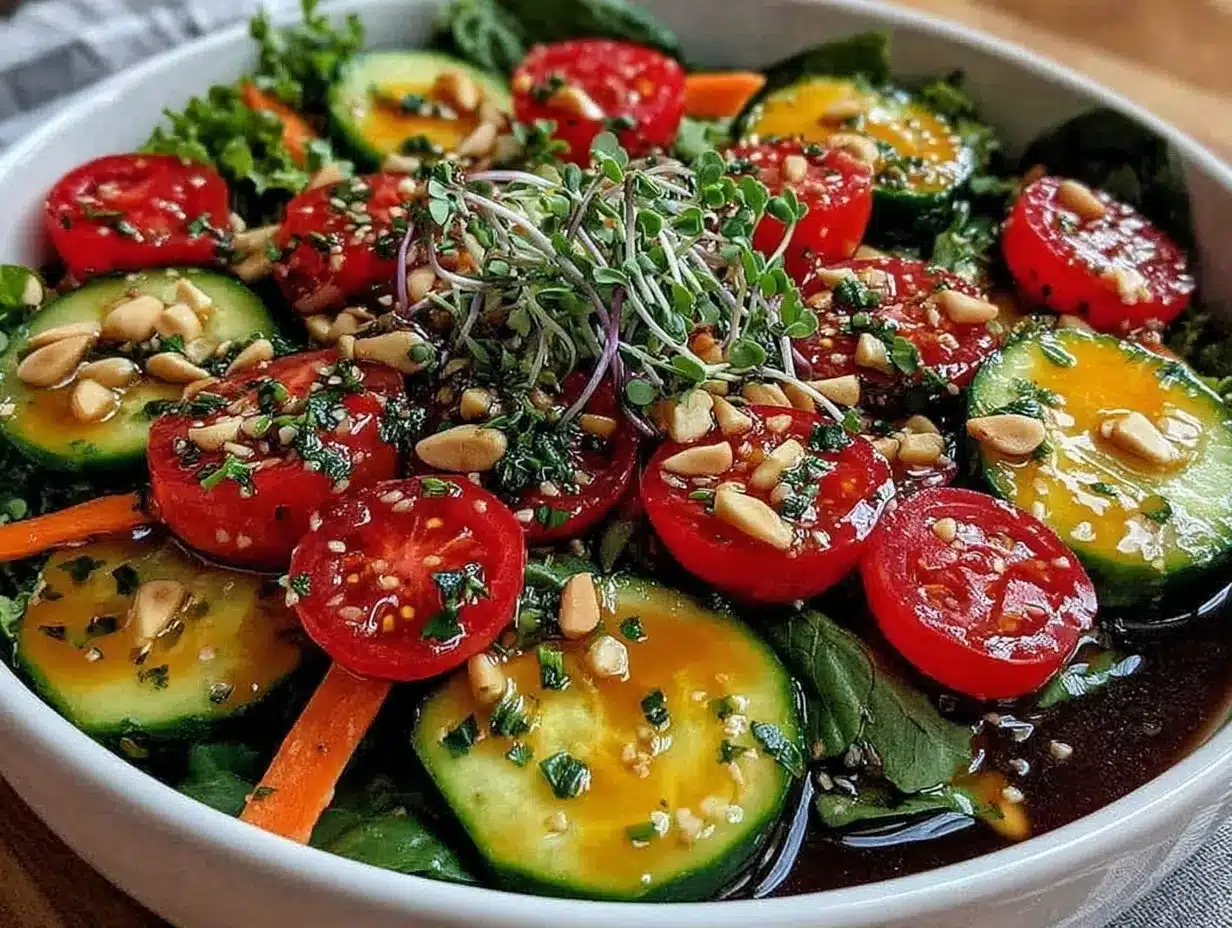
- Prepare the vegetables (10 minutes): Rinse all fresh produce thoroughly under cold water. Peel and thinly slice the cucumber, shred the carrots, and halve the cherry tomatoes. Dry your mixed greens well using a salad spinner or towel—wet greens lead to watery salads.
- Cook and prep proteins (15 minutes): If using chicken breast, poach it gently in simmering water seasoned with a pinch of salt until cooked through (about 12 minutes), then let it cool before shredding. For tofu, press out excess water then cube. Hard-boil eggs in advance if using; peel and slice just before assembling.
- Make the dressing (5 minutes): In a small bowl, whisk together 3 tablespoons (45 ml) extra virgin olive oil, 2 tablespoons (30 ml) fresh lemon juice, 1 teaspoon (5 ml) maple syrup, 1 teaspoon (5 ml) Dijon mustard (optional), salt, and pepper to taste. Adjust sweetness or acidity according to your preference. If it tastes too sharp, a touch more oil can mellow it out.
- Toss the salad (3 minutes): In a large bowl, combine the greens, cucumber, carrots, and tomatoes. Add your protein choice on top. Drizzle the dressing evenly over all ingredients, then gently toss to coat everything without bruising the leaves.
- Add fresh herbs and crunch (1 minute): Sprinkle chopped basil, parsley, and chives over the salad. Toss lightly again. Finally, scatter toasted pumpkin seeds or walnuts for texture.
- Serve immediately or chill (optional): For best flavor and texture, serve right away. However, these salads keep well in the fridge for up to 24 hours if stored in airtight containers. Just give them a quick toss before serving to redistribute dressing and freshen flavors.
Pro tip: If you find the salad a bit bland, a pinch of smoked paprika or a few drops of garlic-infused oil (which is IBS-friendly) can add a nice touch without upsetting your stomach.
Cooking Tips & Techniques
Making IBS-friendly salads doesn’t mean sacrificing flavor or texture. Let me share some tips I’ve picked up from numerous kitchen experiments:
- Choose gentle greens: Spinach, arugula, and butter lettuce are usually well tolerated. Avoid kale or cabbage on no-bloat days as they can be tricky for sensitive tummies.
- Peel and prep carefully: Peeling cucumbers and carrots reduces fiber that might cause discomfort. Julienning carrots instead of chopping them chunky helps digestion too.
- Dress just before serving: Adding dressing too early can make salads soggy and dull. Toss right before eating to keep everything crisp and fresh.
- Cook proteins simply: Avoid heavy spices or frying. Poaching and boiling are your friends for IBS-friendly meals.
- Mind the herbs: Fresh herbs like basil and parsley brighten flavor without adding irritants. I learned the hard way that dried herbs sometimes contain additives that upset my stomach.
One mistake I often made was overloading my salads with raw onions or garlic—while delicious, these can cause bloating. Now, I use garlic-infused oil for flavor without the trouble. Timing-wise, prepping veggies in the morning and assembling just before lunch ensures freshness and keeps things easy during a busy day.
Variations & Adaptations
One of the joys of these fresh IBS-friendly summer salads is how easy they are to tweak. Here are a few ideas:
- Seasonal swap: In late summer, add peeled zucchini ribbons or roasted red peppers for variety and color.
- Low-FODMAP twist: Skip tomatoes if they bother you; instead, add sliced radishes or grated fennel for crunch.
- Protein alternatives: Replace chicken with grilled shrimp or canned salmon. For vegetarians, chickpeas (rinsed well) or tempeh work nicely.
- Dressing changes: Try a gentle tahini-lemon dressing or a yogurt-based dressing using lactose-free yogurt for creaminess.
- Personal favorite: I once added diced mango and a sprinkle of toasted coconut flakes for a tropical flair that was surprisingly soothing and refreshing.
These salads are like a canvas—feel free to get creative while keeping ingredients IBS-friendly. Just remember to introduce new items slowly to see how your system reacts.
Serving & Storage Suggestions
Serve these salads chilled or at room temperature for best flavor. A simple presentation with a few fresh herb sprigs on top makes it look inviting without fuss. Pair the salads with a light soup or a crusty gluten-free bread for a complete meal.
For storage, keep leftovers in airtight containers in the fridge for up to one day. Dressing the salad only when ready to eat helps maintain crispness. When reheating proteins like chicken or tofu, warm gently to avoid drying out.
Flavors often deepen after resting a bit, so if you have time, let the salad sit for 10-15 minutes before serving (just toss before plating). This resting period lets the dressing meld with the veggies, creating a more harmonious taste.
Nutritional Information & Benefits
These fresh IBS-friendly summer salads are nutrient powerhouses. Expect approximately 250-350 calories per serving, depending on protein choice and dressing amount.
- Rich in fiber from fresh vegetables—promotes gentle digestion when prepared thoughtfully.
- Good source of lean protein from chicken, tofu, or eggs—supports muscle maintenance and satiety.
- Healthy fats from olive oil and nuts—important for heart health and absorption of fat-soluble vitamins.
- Low in FODMAPs, reducing chances of IBS-triggered bloating and discomfort.
Plus, the fresh herbs provide antioxidants and vitamins, adding to the salad’s wholesome benefits. If you’re managing IBS, these salads fit nicely into a balanced eating plan without sacrificing taste or enjoyment.
Conclusion
These fresh IBS-friendly summer salads are not just easy and tasty—they’re a little lifesaver for anyone navigating the tricky terrain of digestive sensitivity during the hottest months. I love how they bring color, crunch, and comfort without the worry of bloating or discomfort. Honestly, having a few go-to recipes like these makes summer meals feel like a treat rather than a challenge.
Feel free to mix and match ingredients to fit your preferences and what’s fresh at the market. And hey, if you try out these salads, I’d love to hear how they fit into your no-bloat days—drop a comment, share your tweaks, or even your own IBS-friendly salad stories!
Here’s to light, fresh eating that keeps us feeling good all summer long.
FAQs About Fresh IBS-Friendly Summer Salads
What makes a salad IBS-friendly?
A salad is IBS-friendly when it avoids high-FODMAP ingredients that often cause gas and bloating. Using gentle veggies like spinach and cucumber, and simple dressings helps keep it tummy-friendly.
Can I prepare these salads ahead of time?
You can prep veggies and proteins in advance, but toss the dressing just before serving to keep greens crisp and fresh.
Are tomatoes safe for IBS in these salads?
Some people tolerate tomatoes well, others don’t. Start with small amounts and see how your body reacts, or substitute with radishes or bell peppers.
What are good protein options for these salads?
Cooked chicken, tofu, hard-boiled eggs, canned tuna, or grilled shrimp all work well. Choose what feels best for your digestion.
How can I add flavor without triggering IBS symptoms?
Use fresh herbs, lemon juice, olive oil, and small amounts of mustard or maple syrup. Avoid raw onions or garlic, but garlic-infused oil can add a nice touch without issues.
For a similar fresh and light meal idea, you might enjoy my crispy garlic chicken recipe which pairs great with these salads on warmer days.
Pin This Recipe!
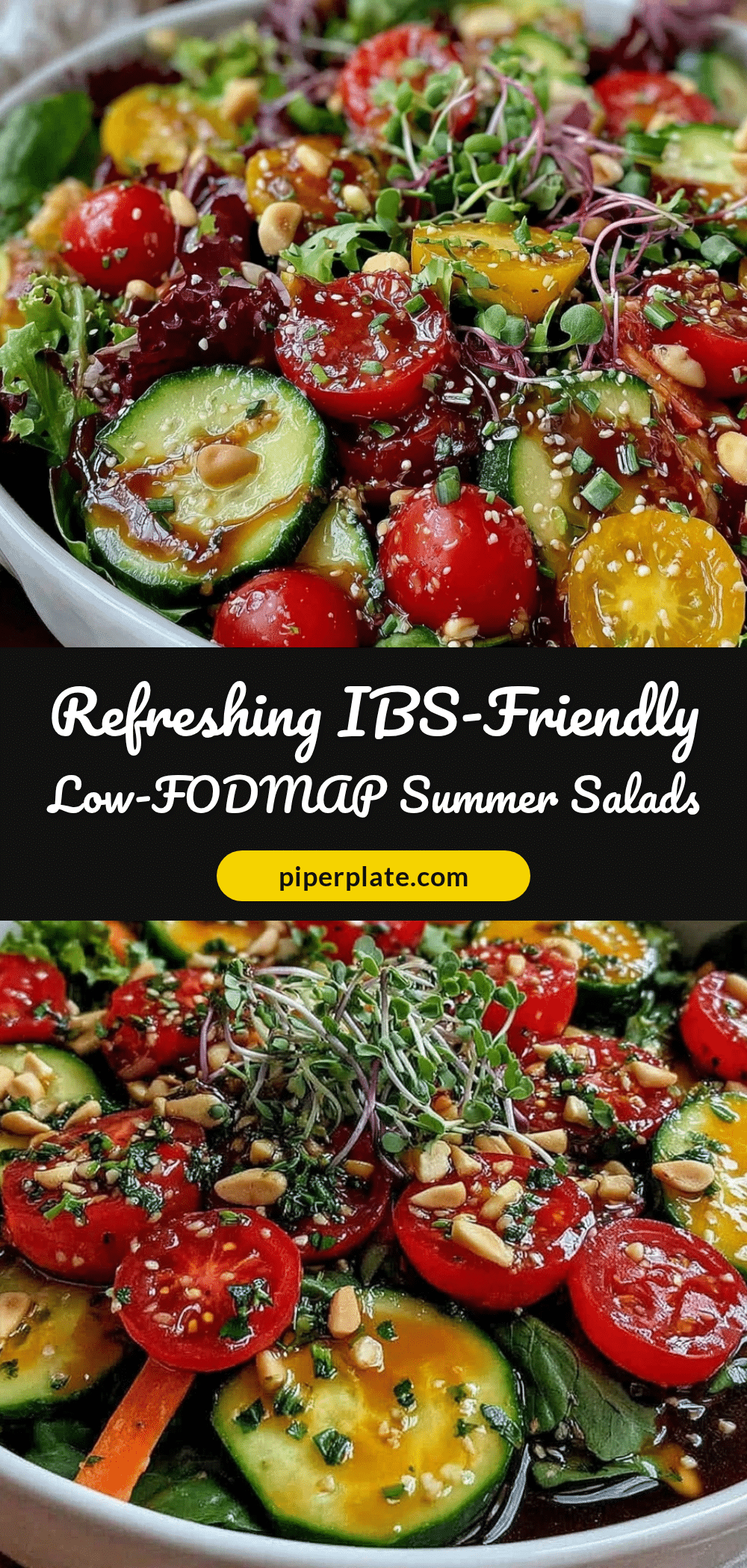
Fresh IBS-Friendly Summer Salads
Light, refreshing, and IBS-friendly summer salads that are quick to prepare and gentle on the digestive system, perfect for hot days.
- Prep Time: 10 minutes
- Cook Time: 15 minutes
- Total Time: 25 minutes
- Yield: 2 servings 1x
- Category: Salad
- Cuisine: American
Ingredients
- Mixed greens (baby spinach, arugula, or butter lettuce)
- 1 cucumber, peeled and thinly sliced
- 2 carrots, shredded or julienned
- 1/2 cup cherry tomatoes (use in moderation)
- Cooked chicken breast, shredded or diced (plain, no heavy seasoning)
- Firm tofu, cubed (vegetarian option)
- 2 hard-boiled eggs, sliced
- 3 tablespoons extra virgin olive oil
- 2 tablespoons fresh lemon juice
- 1 teaspoon maple syrup or a small pinch of sugar
- 1 teaspoon Dijon mustard (optional)
- Sea salt and freshly cracked black pepper to taste
- Fresh basil and parsley, finely chopped
- Chopped chives or green parts of scallions
- 2 tablespoons toasted pumpkin seeds or walnuts
Instructions
- Rinse all fresh produce thoroughly under cold water. Peel and thinly slice the cucumber, shred the carrots, and halve the cherry tomatoes. Dry mixed greens well using a salad spinner or towel.
- If using chicken breast, poach gently in simmering salted water for about 12 minutes until cooked through, then cool and shred. For tofu, press out excess water and cube. Hard-boil eggs in advance, peel and slice before assembling.
- In a small bowl, whisk together 3 tablespoons extra virgin olive oil, 2 tablespoons fresh lemon juice, 1 teaspoon maple syrup, 1 teaspoon Dijon mustard (optional), salt, and pepper to taste. Adjust sweetness or acidity as preferred.
- In a large bowl, combine greens, cucumber, carrots, and tomatoes. Add chosen protein on top. Drizzle dressing evenly over all ingredients and gently toss to coat without bruising leaves.
- Sprinkle chopped basil, parsley, and chives over the salad. Toss lightly again. Scatter toasted pumpkin seeds or walnuts for texture.
- Serve immediately or chill in airtight containers for up to 24 hours. Toss before serving to redistribute dressing and freshen flavors.
Notes
Use gentle greens like spinach, arugula, or butter lettuce to avoid roughage. Peel cucumbers and carrots to reduce fiber that may cause discomfort. Dress salad just before serving to keep it crisp. Poach proteins simply without heavy spices. Garlic-infused oil can be used for flavor without IBS issues. Salad keeps well refrigerated for up to 24 hours; toss before serving.
Nutrition
- Serving Size: 1 salad bowl (approx
- Calories: 300
- Sugar: 6
- Sodium: 250
- Fat: 18
- Saturated Fat: 3
- Carbohydrates: 15
- Fiber: 4
- Protein: 20
Keywords: IBS-friendly, summer salad, no-bloat, fresh salad, light meal, healthy salad, gut-friendly, low FODMAP