Love this? Save it for later!
Share the inspiration with your friends
“You know that moment when you realize your body needs a serious reset, but the idea of restrictive diets makes you want to run screaming from the kitchen? That was me last spring, sitting on my apartment floor surrounded by cookbooks and feeling overwhelmed. The doctor had suggested the Autoimmune Protocol elimination phase to calm my flaring symptoms, but honestly, I wasn’t looking forward to bland meals and endless substitutions. Then, one rainy Sunday afternoon, while chatting with my neighbor Elise—who swears by her healing food rituals—I got handed a scribbled list of ‘easy healing AIP diet recipes’ that she swore by. I wasn’t expecting much, but let me tell you, these recipes didn’t just meet the challenge; they changed the way I approached food during that tough phase.”
Cooking for the AIP elimination phase often feels like walking a culinary tightrope—no grains, no nightshades, no dairy, no nuts. But these recipes? They’re designed to bring comfort and nourishment without the fuss. The best part is, they don’t require a degree in nutrition or hours of prep time. I remember forgetting to soak the cassava flour one afternoon and ended up improvising with what I had on hand—yeah, it was a mess, but it reminded me that healing food doesn’t have to be perfect, just real and satisfying.
If you’re diving into the Autoimmune Protocol elimination phase and searching for simple, delicious meals that actually help you heal, this guide is exactly what you need. Whether you’re a newbie or someone who has tried and faltered before, these easy healing AIP diet recipes will keep you grounded, nourished, and maybe even a little excited to eat again.
Why You’ll Love This Recipe Guide
After countless kitchen experiments and real-life trials, I’ve gathered these easy healing AIP diet recipes that truly work. Here’s why they might just become your go-to during the autoimmune protocol elimination phase:
- Quick & Easy: Most recipes come together in under 30 minutes, perfect for busy days when you need healing food without the hassle.
- Simple Ingredients: No need to hunt down exotic items. These recipes focus on pantry staples and fresh produce that you can find at your local market.
- Perfect for Healing: Crafted to support your body’s natural recovery during the elimination phase, minimizing inflammation and gut irritation.
- Crowd-Pleaser: Even family members not on AIP will happily join in—these dishes are far from boring!
- Unbelievably Delicious: Think rich flavors, comforting textures, and satisfying meals that make you forget you’re on a restricted diet.
What makes these recipes stand out is the thoughtful approach behind them. For example, blending nutrient-dense bone broth with gentle herbs creates depth without triggering sensitivities. Plus, I’ve included tips to tweak seasoning and textures so you can personalize each dish. Honestly, this isn’t just about sticking to a diet; it’s about making healing a tasty, approachable adventure.
This guide is also my way of sharing the kind of recipes that made me close my eyes and savor every bite during the toughest days. If you’re looking to bring some joy back to your kitchen while following the AIP elimination phase, you’re in the right place.
What Ingredients You Will Need
These easy healing AIP diet recipes rely on straightforward, wholesome ingredients chosen for their healing properties and compatibility with the elimination phase. Everything here is intended to be nourishing, gentle, and accessible, whether you’re stocking a minimalist pantry or shopping seasonally.
- For the Base & Proteins:
- Pasture-raised chicken thighs or breasts (rich in nutrients and easy to digest)
- Wild-caught fish fillets (salmon or cod for omega-3 boost)
- Bone broth (homemade or trusted brands like Kettle & Fire for gut healing)
- Organic cassava flour (a naturally gluten-free flour that works well for baking)
- For Vegetables & Flavor:
- Fresh leafy greens (spinach, kale, or dandelion greens)
- Carrots, peeled and chopped (adds natural sweetness and texture)
- Yellow squash and zucchini (mild and versatile)
- Fresh herbs like rosemary, thyme, and basil (adds aroma and gentle flavor)
- Sea salt and pink Himalayan salt (for seasoning)
- For Fats & Cooking:
- Extra-virgin olive oil (choose brands like Colavita for quality)
- Avocado oil (high smoke point, great for searing)
- Coconut oil (solid at room temperature, adds richness)
- For Sweeteners & Extras:
- Raw honey (use sparingly, local sources preferred)
- Gelatin powder (for natural thickening in soups and desserts)
Substitutions are simple here: if you need a dairy-free alternative for bone broth, look for vegetable broth options, though they lack collagen. For gluten-free baking, cassava flour is a lifesaver, but tigernut flour can be swapped in if you tolerate it. Seasonal swaps? In the summer, I love adding fresh berries to AIP-friendly desserts instead of dried fruit. Remember, fresh and organic when possible will always give you the best healing edge.
Equipment Needed
Cooking these easy healing AIP diet recipes doesn’t call for fancy gadgets, but having the right tools definitely smooths the process.
- Quality chef’s knife – sharp and reliable for chopping vegetables and trimming meats (I’ve worn out a few cheap ones, and honestly, the better knife makes all the difference).
- Cast iron skillet or heavy-bottomed pan – perfect for searing proteins and sautéing veggies evenly.
- Slow cooker or Instant Pot (optional) – a lifesaver for hands-off bone broth or stews.
- Mixing bowls in various sizes – I keep a set of glass and stainless steel on hand.
- Measuring cups and spoons – accuracy here helps balance flavors and textures, especially for baking with cassava flour.
- Immersion blender or regular blender – handy for pureeing soups and sauces to silky perfection.
If you don’t have a slow cooker, no worries: stovetop simmering works just fine for broths. For budget-friendly knife options, brands like Victorinox offer great quality without breaking the bank. Keeping your equipment clean and sharp is key; dull knives or scorched pans can ruin the subtle flavors we’re aiming for here.
Preparation Method
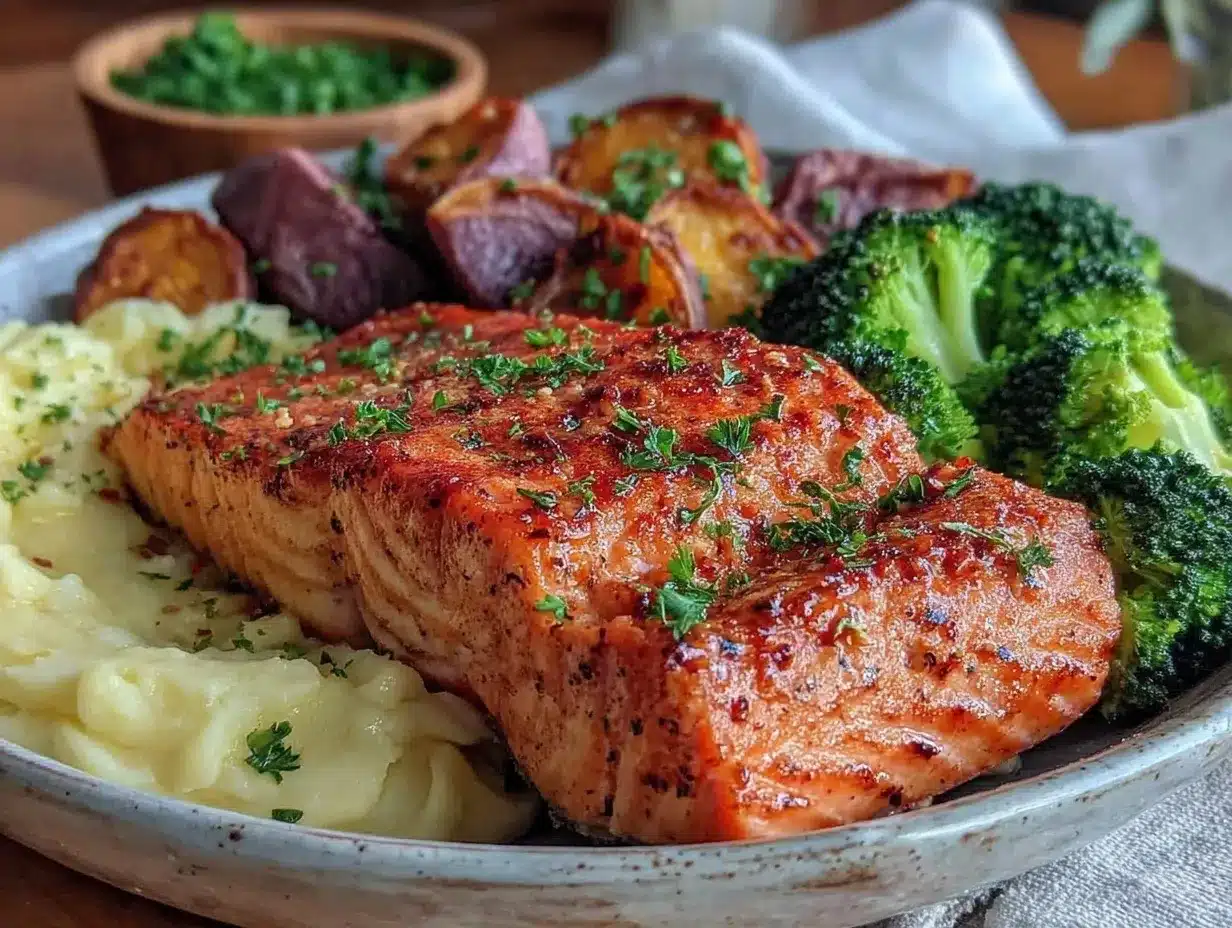
- Prepare Your Proteins (15-20 minutes)
Start by seasoning chicken thighs or fish fillets lightly with sea salt. Use avocado oil in a preheated cast iron skillet over medium-high heat. Sear each side for about 4 minutes until golden brown. You’re aiming for a nice crust but still juicy inside. If you’re using a slow cooker for bone broth, toss in bones with filtered water, a pinch of salt, and some fresh herbs, then cook on low for 12-24 hours. - Chop Your Vegetables (10 minutes)
While the protein cooks or broth simmers, peel and chop carrots, slice zucchini, and wash leafy greens. Keep sizes consistent for even cooking. I like to toss carrots and squash in a little olive oil and roast at 375°F (190°C) for 20 minutes, which brings out natural sweetness—a trick Elise swore by. - Create a Flavorful Base (10 minutes)
In a large pot, gently sauté fresh herbs in olive oil until fragrant but not browned. Add roasted veggies and bone broth or water, simmering gently. This step is where the magic happens; the aroma alone will reassure you that healing food can smell amazing. - Incorporate Thickening Agents or Binders (5-10 minutes)
If your recipe calls for thickening, sprinkle in gelatin powder, whisking quickly to avoid lumps. This gives soups and stews a comforting body without starches that aren’t AIP-friendly. - Final Assembly & Adjustments (5 minutes)
Add seared protein back into the pot to warm through. Taste and adjust seasoning with salt or a drizzle of raw honey if you want a touch of sweetness. Remember, less is more in this phase. - Serve Warm and Enjoy
Plate your dish with a garnish of fresh herbs or a squeeze of lemon if tolerated. The colors, textures, and warmth all come together to create a meal that feels like a hug.
Common hiccups? Sometimes the gelatin clumps if you add it too fast, so patience is your friend. Also, if your pan gets too hot when searing, proteins might stick—medium heat and a little oil help prevent that. Trust me, with a bit of practice, these steps become second nature.
Cooking Tips & Techniques
Mastering easy healing AIP diet recipes is as much about technique as ingredients. Here’s what I’ve learned through trial, error, and a few kitchen messes:
- Low and Slow for Broth: Letting bone broth simmer gently over many hours extracts minerals and collagen without turning bitter. I once rushed it, and the flavor was off, so don’t skip this patience step.
- Oil Choices Matter: Use avocado oil or olive oil for sautéing, but avoid heating coconut oil above its smoke point to prevent off-flavors.
- Don’t Overcrowd the Pan: Giving proteins space helps them sear properly instead of steaming. This keeps textures appealing.
- Seasoning Is Key: Since many spices are off-limits during elimination, fresh herbs and good salt become your best friends for flavor depth.
- Batch Prep When Possible: Making larger portions of bone broth or roasted veggies saves time and ensures you have healing staples on hand.
- Listen to Your Body: Everyone’s autoimmune journey is unique, so keep notes on what feels good and what doesn’t. Adjust recipes accordingly.
Variations & Adaptations
The beauty of these recipes is their flexibility. Here are some ways to customize:
- Vegetarian Adaptation: Swap bone broth for homemade vegetable broth and add mashed avocado or cooked pumpkin for richness.
- Seasonal Swaps: Use winter squash in fall and fresh zucchini in summer to keep flavors aligned with the season.
- Flavor Boost: Add a splash of coconut aminos at the end for a subtle umami kick if tolerated.
- Cooking Method: Instead of stovetop, try baking proteins with herbs wrapped in parchment paper for gentle cooking that locks in moisture.
- Allergen-Free: Replace cassava flour with tigernut flour for a nut-free version if you tolerate it well.
Personally, I love adding fermented veggies on the side for probiotics, which really helped me during the elimination phase. It’s a simple tweak that brings an extra layer of healing to every meal.
Serving & Storage Suggestions
Serving these dishes fresh and warm is ideal, but leftovers can be a lifesaver. Here’s how to make the most of your meals:
- Serve with a sprinkle of fresh herbs or a wedge of lemon for brightness.
- Pair with other AIP-compliant sides like steamed greens or mashed sweet potatoes.
- Store leftovers in airtight containers in the refrigerator for up to 3 days.
- Freeze bone broth or soups in small batches using freezer-safe containers.
- Reheat gently on the stove or in a microwave at medium power to preserve texture and nutrients.
Flavors often deepen after a day or two, so don’t be afraid to plan ahead. I always find that a little patience with reheating rewards me with a richer, more satisfying meal.
Nutritional Information & Benefits
These easy healing AIP diet recipes are packed with nutrients that support your body’s recovery. For example, bone broth provides collagen and amino acids essential for gut lining repair. Vegetables supply antioxidants and fiber, while healthy fats like olive and avocado oil promote anti-inflammatory effects.
Estimated nutrition per serving varies depending on the recipe, but typically includes:
- Calories: 350-450
- Protein: 25-35 grams
- Carbohydrates: 15-25 grams (mostly from veggies)
- Fats: 15-25 grams (healthy, anti-inflammatory fats)
These recipes are naturally gluten-free, grain-free, and dairy-free, making them ideal for those following the elimination phase. Just watch for personal allergens and adjust accordingly.
Conclusion
If you’ve been searching for easy healing AIP diet recipes that actually taste good and feel doable, you’ve found your new kitchen companions. These dishes aren’t about rigid restrictions but about gentle nourishment that supports your autoimmune journey in a practical, friendly way.
Feel free to tweak the flavors or swap ingredients based on what your body prefers—after all, the best healing food is the one you enjoy eating! Personally, these recipes helped me reconnect with food during a tricky time, and I hope they bring that same comfort and strength to you.
Give them a try, share your adaptations, and let me know how your healing kitchen adventures go. Remember, every small step counts, and you’ve got this.
FAQs
What is the Autoimmune Protocol (AIP) elimination phase?
The AIP elimination phase is a strict diet designed to reduce inflammation by removing foods that commonly trigger autoimmune symptoms. It focuses on nutrient-dense, anti-inflammatory foods to help the body heal.
Can I eat out while on the AIP elimination phase?
Eating out can be challenging during elimination. If you do, look for simple grilled proteins and steamed vegetables, and always ask about ingredients to avoid hidden triggers.
How long should I follow the AIP elimination phase?
Typically, it lasts 30-90 days, depending on your symptoms and healing progress. It’s important to work with a healthcare professional to decide when to start reintroducing foods.
Are there sweeteners allowed on the AIP elimination phase?
Raw honey is generally allowed in small amounts, but refined sugars and artificial sweeteners should be avoided during elimination.
Can I freeze meals made from these AIP recipes?
Yes! Many of these recipes freeze well, especially bone broth, soups, and cooked proteins. Freeze in portion-sized containers for easy thawing and reheating.
Pin This Recipe!
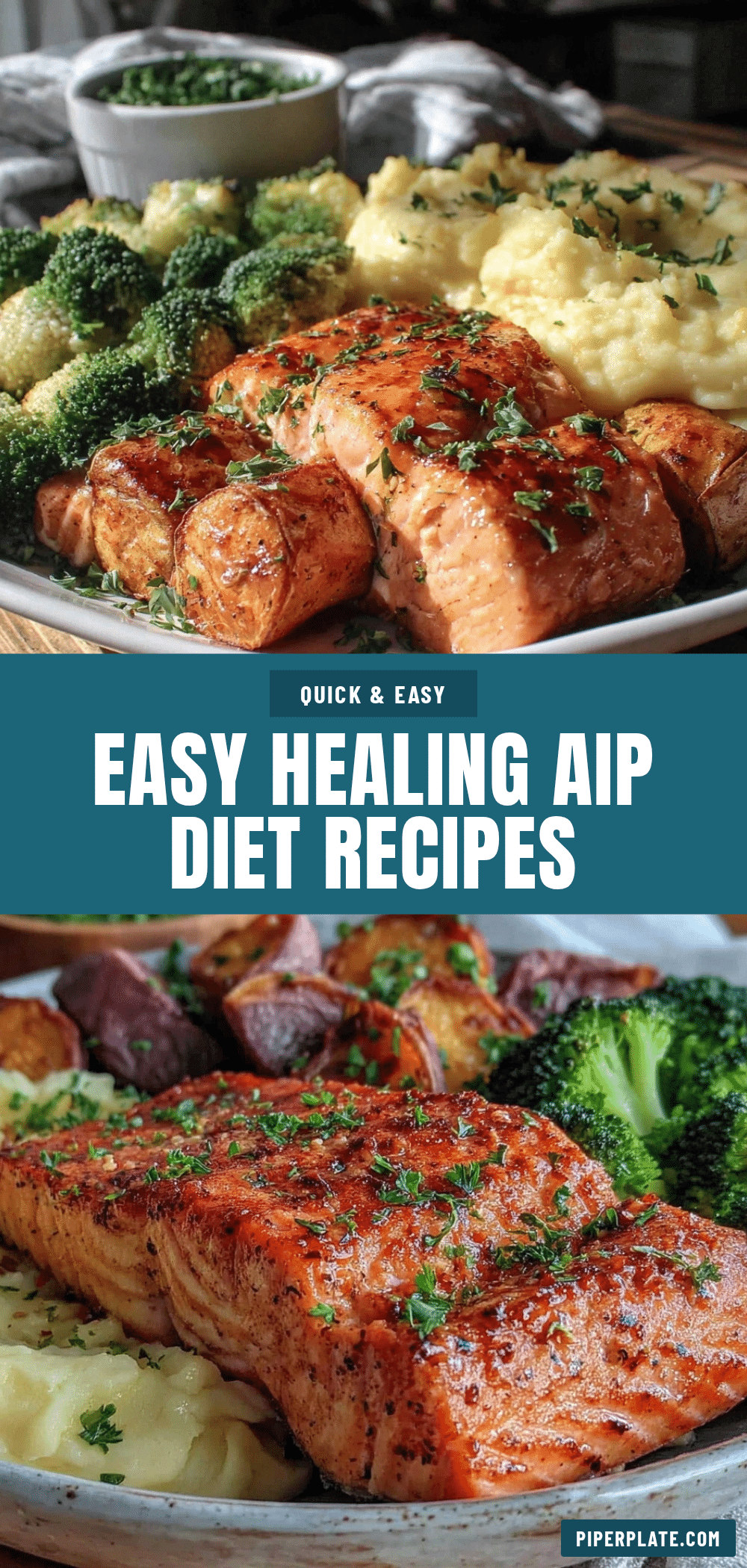
Easy Healing AIP Diet Recipes for Autoimmune Protocol Elimination Phase Guide
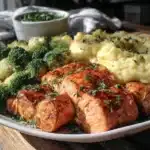
This guide offers simple, nourishing recipes designed for the Autoimmune Protocol elimination phase, focusing on healing, anti-inflammatory ingredients that are quick and easy to prepare.
- Prep Time: 15 minutes
- Cook Time: 30 minutes
- Total Time: 45 minutes
- Yield: 4 servings
- Category: Main Course
- Cuisine: Autoimmune Protocol (AIP)
Ingredients
- Pasture-raised chicken thighs or breasts
- Wild-caught fish fillets (salmon or cod)
- Bone broth (homemade or trusted brands like Kettle & Fire)
- Organic cassava flour
- Fresh leafy greens (spinach, kale, or dandelion greens)
- Carrots, peeled and chopped
- Yellow squash and zucchini
- Fresh herbs like rosemary, thyme, and basil
- Sea salt and pink Himalayan salt
- Extra-virgin olive oil
- Avocado oil
- Coconut oil
- Raw honey
- Gelatin powder
Instructions
- Prepare your proteins by seasoning chicken thighs or fish fillets lightly with sea salt. Heat avocado oil in a preheated cast iron skillet over medium-high heat and sear each side for about 4 minutes until golden brown.
- If using a slow cooker for bone broth, toss in bones with filtered water, a pinch of salt, and fresh herbs, then cook on low for 12-24 hours.
- Peel and chop carrots, slice zucchini, and wash leafy greens. Toss carrots and squash in a little olive oil and roast at 375°F (190°C) for 20 minutes.
- In a large pot, gently sauté fresh herbs in olive oil until fragrant but not browned. Add roasted veggies and bone broth or water, then simmer gently.
- If thickening is needed, sprinkle gelatin powder into the pot while whisking quickly to avoid lumps.
- Add seared protein back into the pot to warm through. Taste and adjust seasoning with salt or a drizzle of raw honey if desired.
- Serve warm, garnished with fresh herbs or a squeeze of lemon if tolerated.
Notes
Avoid overheating coconut oil to prevent off-flavors. Use medium heat and sufficient oil to prevent proteins from sticking. Add gelatin powder slowly to avoid clumping. Batch prep bone broth and roasted veggies to save time. Adjust seasoning carefully during elimination phase. Substitute vegetable broth for bone broth for vegetarian adaptation. Use tigernut flour instead of cassava flour if nut tolerance allows.
Nutrition
- Serving Size: 1 serving (approxima
- Calories: 400
- Sugar: 5
- Sodium: 400
- Fat: 20
- Saturated Fat: 5
- Carbohydrates: 20
- Fiber: 5
- Protein: 30
Keywords: AIP diet, autoimmune protocol, elimination phase, healing recipes, gluten-free, dairy-free, grain-free, anti-inflammatory, bone broth, cassava flour