Love this? Save it for later!
Share the inspiration with your friends
“I wasn’t planning on becoming a meal-planning ninja, but there I was, staring at my nearly empty fridge on a Tuesday night, with just $75 left in my grocery budget for the week. Gluten-free living already felt like a pricey adventure, and honestly, I was a little overwhelmed. Then my neighbor, who knows a thing or two about thrifty cooking, casually dropped the idea of a budget-friendly gluten-free meal plan. ‘You can eat well without breaking the bank,’ she said, while handing me a cracked notebook filled with her favorite recipes. The first time I tried it, I forgot to buy one key ingredient—because, of course, I was distracted by a call from my cousin—but somehow, the meals still turned out delicious and surprisingly satisfying.
You know that feeling when you want to eat healthy, stick to your diet, but also not empty your wallet every week? This gluten-free meal plan came at just the right time. It’s packed with easy recipes crafted specifically to keep costs low without sacrificing flavor or variety. Whether you’re new to gluten-free cooking or a seasoned pro looking to save, this plan walks you through meals that feel like you’re treating yourself, not scrimping.
What’s really stuck with me is how this plan turns everyday ingredients into comforting dishes that don’t feel like “diet food.” The best part? You don’t have to be a kitchen wizard or spend hours prepping. I mean, maybe you’ve been there—scrambling for dinner ideas that fit your gluten-free lifestyle and your budget. That’s exactly why I keep coming back to these recipes. They’re practical, tasty, and honestly, a little bit of relief when life gets hectic.”
Why You’ll Love This Recipe
After testing and tweaking this budget-friendly gluten-free meal plan over several weeks, I can confidently say it’s a game-changer. Here’s what makes it stand out:
- Quick & Easy: Most meals come together in under 30 minutes, perfect for those busy weeknights or last-minute cravings.
- Simple Ingredients: You won’t need to hunt for rare or expensive items. Most ingredients are pantry staples or easy to find at your local grocery store.
- Perfect for Any Occasion: Whether you’re meal prepping for the week or cooking a cozy dinner, these recipes fit the bill.
- Crowd-Pleaser: Gluten-free doesn’t have to mean boring. These meals get rave reviews from friends and family, even those who aren’t gluten-free.
- Unbelievably Delicious: The flavors strike a perfect balance between comfort and freshness, making every bite satisfying.
What really sets this meal plan apart is the careful balance between affordability and flavor. Instead of just swapping wheat for gluten-free flour and calling it a day, these recipes use smart techniques—like batch cooking and ingredient cross-utilization—to keep waste and costs down. For example, blending canned beans into sauces adds creaminess without cream, and swapping out pricey specialty items for seasonal produce keeps things fresh and affordable.
This plan isn’t just about saving money—it’s about feeling good while doing it. The idea is to enjoy wholesome, hearty meals that nourish your body and respect your budget. Honestly, it feels like a little victory every time you open your fridge and see a week’s worth of meals that are both gluten-free and wallet-friendly.
What Ingredients You Will Need
This budget-friendly gluten-free meal plan relies on wholesome, accessible ingredients that come together to create satisfying meals without fuss. Most of these are pantry staples or affordable fresh items. Here’s a breakdown:
- For the Base and Staples:
- Brown rice or quinoa (great for fiber and protein, and holds up well for leftovers)
- Gluten-free pasta (I recommend the brand Barilla Gluten-Free for texture)
- Canned beans (black beans, chickpeas, or kidney beans—affordable protein and fiber)
- Rolled oats (certified gluten-free, useful for breakfasts and baking)
- Fresh Produce:
- Carrots (inexpensive, versatile, and sweet)
- Onions and garlic (flavor foundation for nearly every dish)
- Seasonal greens like spinach or kale (affordable when bought fresh or frozen)
- Potatoes (budget-friendly and filling)
- Tomatoes (canned diced tomatoes for sauces or fresh for salads)
- Proteins & Dairy Alternatives:
- Eggs (multi-purpose and economical)
- Plain Greek yogurt or dairy-free coconut yogurt (adds creaminess and tang)
- Peanut butter or almond butter (great for snacks or adding richness)
- Pantry Essentials & Seasonings:
- Olive oil or vegetable oil (for cooking and dressings)
- Gluten-free soy sauce or tamari (adds umami flavor)
- Salt, black pepper, paprika, dried oregano, and cumin (basic seasonings that punch up flavor)
- Honey or maple syrup (optional, for sweetening)
When shopping, I often pick up store-brand versions to cut costs without sacrificing quality. If you’re looking for gluten-free flours, rice flour or chickpea flour are both budget-friendly options for thickening sauces or baking. In the summer, swapping fresh tomatoes for canned can save you a few bucks, and frozen veggies are a great alternative when fresh isn’t on sale.
Equipment Needed
You won’t need anything fancy for this meal plan—just the basics you probably already have. Here’s what I usually use:
- Large skillet or sauté pan: Perfect for stir-fries, sautéing veggies, or simmering sauces.
- Medium saucepan: Great for cooking rice, quinoa, or boiling pasta.
- Baking sheet: Ideal for roasting veggies or baking simple dishes.
- Mixing bowls: For combining ingredients and marinating.
- Measuring cups and spoons: To keep your recipes accurate and consistent.
- Colander: Useful for draining pasta and rinsing beans.
If you don’t have a baking sheet, you can use an oven-safe dish instead. For chopping, a good sharp knife makes a world of difference—trust me, it saves time and frustration. I also like having a blender handy for making dressings or sauces, but it’s not a must.
Maintenance tip: Keep your pans seasoned and avoid harsh scrubbing to extend their life—especially for non-stick surfaces. And if budget is tight, thrift stores often have perfectly good kitchen tools for a fraction of the price.
Preparation Method
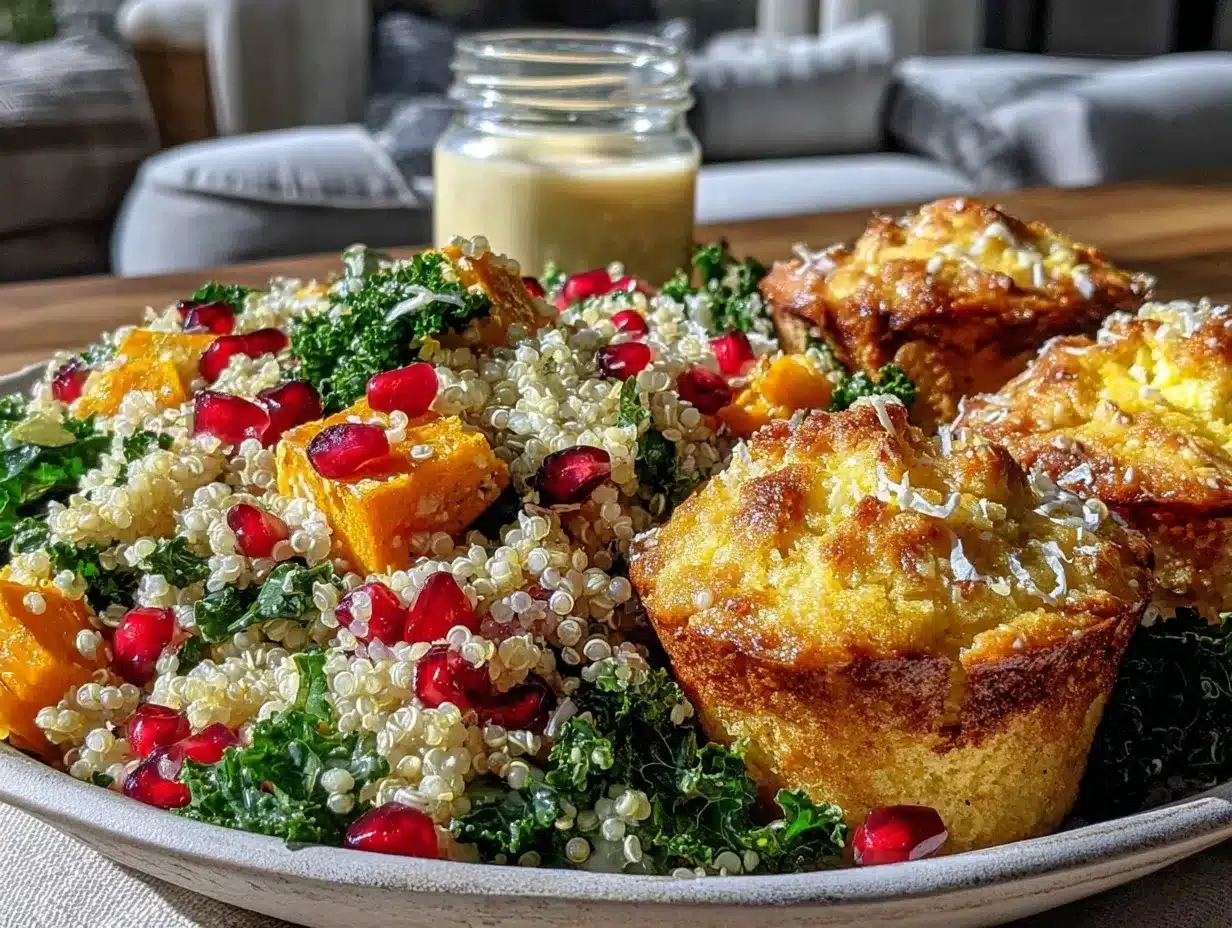
- Plan your meals: Start by reviewing the recipes and making a shopping list based on the ingredients above. Try to pick items that overlap between recipes to save money and reduce waste. (10 minutes)
- Cook your grains: Rinse 2 cups (370 g) of brown rice and cook it with 4 cups (950 ml) of water in a saucepan. Bring to a boil, then simmer covered for 40-45 minutes until tender. Fluff with a fork and let cool. Alternatively, cook quinoa using a 2:1 water-to-quinoa ratio for 15 minutes. (45 minutes)
- Prepare beans: Drain and rinse 3 cans (15 oz / 425 g each) of beans. For extra flavor, gently mash half of the beans with a fork or potato masher to thicken sauces or dips. (5 minutes)
- Chop vegetables: Dice 2 onions, mince 4 garlic cloves, and chop 4 carrots and 4 cups (120 g) of greens. Keep your cutting board steady with a damp towel underneath to avoid slips. (15 minutes)
- Sauté aromatics: Heat 2 tablespoons (30 ml) of olive oil in a large skillet over medium heat. Add onions and garlic, cooking until translucent and fragrant—about 5 minutes. Watch closely to avoid burning. (5 minutes)
- Build your sauces and dishes: Add chopped carrots and tomatoes (1 can, 14.5 oz / 410 g diced) to the skillet. Season with 1 teaspoon (5 g) salt, 1/2 teaspoon (1 g) pepper, 1/2 teaspoon (1 g) paprika, and 1 teaspoon (2 g) cumin. Stir and simmer for 10 minutes until carrots soften. (10 minutes)
- Assemble meals: Combine cooked rice or quinoa with the sautéed veggies and beans. Add a splash of gluten-free soy sauce or tamari (1-2 tablespoons / 15-30 ml) for depth. For creamier dishes, stir in 1/2 cup (120 ml) Greek yogurt or dairy-free alternative. (5 minutes)
- Roast or bake as needed: For recipes calling for roasted veggies, preheat the oven to 400°F (200°C). Toss chopped potatoes or other veggies with olive oil and seasonings. Spread on a baking sheet and roast for 25-30 minutes, flipping halfway. (30 minutes)
- Portion and store: Divide meals into airtight containers for easy grab-and-go options. Let cool before sealing to avoid sogginess. (10 minutes)
- Clean as you go: Keeping your workspace tidy makes the process less overwhelming, especially on busy days!
Pro tip: If you want to speed things up, cook your grains and roast veggies simultaneously. Also, prepping veggies in advance on a Sunday can save valuable time during the week. And if you ever forget an ingredient (like I did with the cumin once), experiment with different spices—you might stumble on a new favorite flavor!
Cooking Tips & Techniques
Cooking gluten-free on a budget can be tricky, but these tips have helped me keep everything on track:
- Batch cook staples: Make large portions of rice, beans, or roasted veggies and use them in multiple meals. Saves time and money.
- Use dried herbs and spices: They last longer and add huge flavor without a hefty price tag.
- Rinse canned beans: This reduces sodium and improves taste without extra cost.
- Don’t overcook grains: Overcooked rice or quinoa turns mushy. Keep an eye on the timer and fluff when done.
- Multi-task: While grains cook, prep veggies or make a simple dressing to save time.
- Watch your oil heat: Medium heat prevents burning garlic or onions, which can make dishes bitter.
- Adjust seasoning last: Taste before adding salt or pepper; canned ingredients can vary in saltiness.
- Learn from mistakes: I once added too much garlic—lesson learned! Next time, I adjusted the recipe and it was perfect.
Variations & Adaptations
This meal plan is flexible enough to fit different needs, tastes, and seasons. Here are some variations I’ve tried or recommend:
- Vegetarian or Vegan: Swap Greek yogurt for coconut or almond yogurt. Use nutritional yeast for cheesy flavor without dairy.
- Seasonal Swaps: In winter, use roasted root vegetables like sweet potatoes or parsnips instead of carrots. In summer, fresh tomatoes and zucchini brighten up dishes.
- Low-Carb Option: Replace rice with cauliflower rice or spiralized veggies to lower carbs.
- Allergen-Friendly: For nut allergies, skip nut butters and use sunflower seed butter or extra olive oil.
- Spice It Up: Add chili flakes or fresh jalapeños if you like heat. I once added smoked paprika for a smoky twist that everyone loved.
Serving & Storage Suggestions
These meals are best served warm but also reheat beautifully. Here’s how I like to handle them:
- Serving: Plate with a sprinkle of fresh herbs like cilantro or parsley when possible. A squeeze of fresh lemon juice can brighten flavors at the last minute.
- Pairings: Complement meals with a simple green salad or gluten-free bread for added texture and freshness.
- Storage: Store leftovers in airtight containers in the fridge for up to 4 days. For longer storage, freeze individual portions for up to 3 months.
- Reheating: Microwave covered for 1-2 minutes or reheat on the stovetop with a splash of water to prevent drying out.
- Flavor Development: Some dishes taste even better the next day as flavors meld, so don’t hesitate to make extra!
Nutritional Information & Benefits
This meal plan emphasizes balanced nutrition without expensive specialty products. On average, each meal provides:
- Calories: 350-450 kcal per serving
- Protein: 15-20 grams, thanks to beans, eggs, and yogurt
- Fiber: 6-8 grams from whole grains and vegetables
- Healthy fats: From olive oil and nut butters
Key ingredients like brown rice and beans support digestive health and sustained energy. Fresh veggies add vitamins and antioxidants, while Greek yogurt contributes probiotics and calcium. Plus, the plan is naturally gluten-free, suitable for those with celiac disease or gluten sensitivity, and can be adapted for other dietary needs.
Conclusion
So, is this budget-friendly gluten-free meal plan under $75 worth your time? Absolutely. It’s a practical, flavorful way to eat well without stressing your wallet or your schedule. The recipes respect your dietary needs while still feeling satisfying and enjoyable. I love how easy it is to mix and match meals throughout the week, making gluten-free living feel less like a chore and more like a lifestyle.
Give it a shot, and don’t be afraid to tweak ingredients or seasonings to suit your tastes. Cooking should be fun, not intimidating, and this plan is proof that you can have both health and savings on your side. I’d love to hear how you make these recipes your own—drop a comment or share your favorite adaptation!
Here’s to good food, smart shopping, and plenty of delicious meals ahead.
FAQs
Is this meal plan suitable for someone newly diagnosed with gluten intolerance?
Yes, it uses naturally gluten-free ingredients and avoids cross-contamination by focusing on whole foods, making it beginner-friendly.
Can I substitute any ingredients if they are not available?
Absolutely! For example, swap brown rice with quinoa or millet, and use frozen vegetables if fresh aren’t in season.
How can I make these meals more kid-friendly?
Keep seasonings mild and involve kids in simple prep tasks to get them excited about food. You can also blend veggies into sauces for hidden nutrition.
What are some time-saving tips for busy weeknights?
Batch cooking grains and roasting veggies in advance, plus using canned beans, can cut prep time significantly.
Is this meal plan suitable for other dietary restrictions?
With minor tweaks, yes. For vegan options, replace dairy with plant-based alternatives; for nut allergies, avoid nut butters and choose safe oils.
Pin This Recipe!
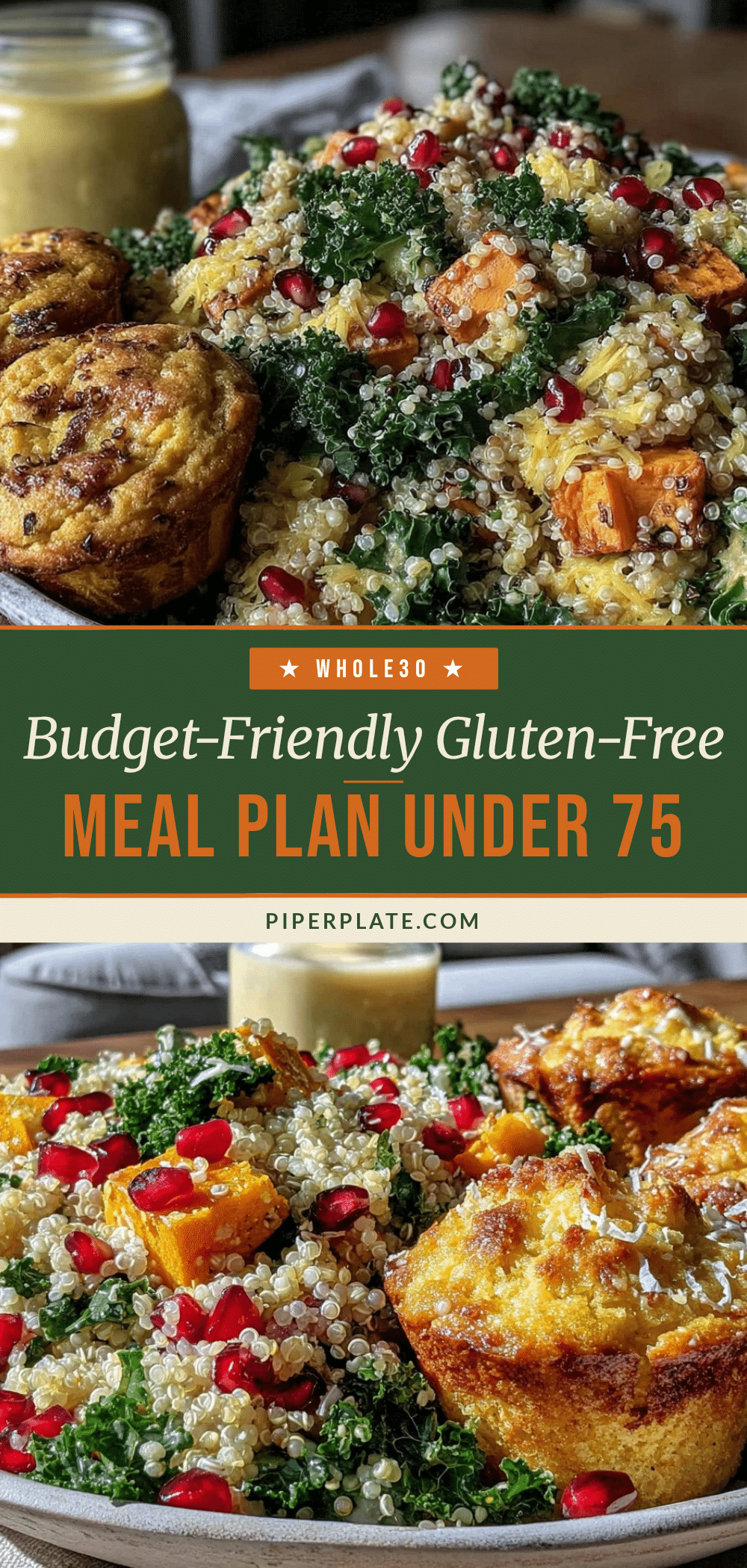
Budget-Friendly Gluten-Free Meal Plan Under $75
A practical and flavorful gluten-free meal plan featuring easy, affordable recipes designed to save money without sacrificing taste or nutrition.
- Prep Time: 30 minutes
- Cook Time: 1 hour 15 minutes
- Total Time: 1 hour 45 minutes
- Yield: 6 servings
- Category: Main Course
- Cuisine: Gluten-Free
Ingredients
- Brown rice or quinoa
- Gluten-free pasta (e.g., Barilla Gluten-Free)
- Canned beans (black beans, chickpeas, or kidney beans)
- Rolled oats (certified gluten-free)
- Carrots
- Onions
- Garlic
- Seasonal greens (spinach or kale)
- Potatoes
- Tomatoes (canned diced or fresh)
- Eggs
- Plain Greek yogurt or dairy-free coconut yogurt
- Peanut butter or almond butter
- Olive oil or vegetable oil
- Gluten-free soy sauce or tamari
- Salt
- Black pepper
- Paprika
- Dried oregano
- Cumin
- Honey or maple syrup (optional)
Instructions
- Plan your meals by reviewing recipes and making a shopping list focusing on overlapping ingredients to save money and reduce waste. (10 minutes)
- Cook 2 cups of brown rice with 4 cups of water by bringing to a boil, then simmer covered for 40-45 minutes until tender. Alternatively, cook quinoa with a 2:1 water-to-quinoa ratio for 15 minutes. Fluff and let cool. (45 minutes)
- Drain and rinse 3 cans of beans (15 oz each). Mash half of the beans for thickening sauces or dips. (5 minutes)
- Dice 2 onions, mince 4 garlic cloves, chop 4 carrots and 4 cups of greens. Use a damp towel under the cutting board for stability. (15 minutes)
- Heat 2 tablespoons of olive oil in a large skillet over medium heat. Sauté onions and garlic until translucent and fragrant, about 5 minutes. (5 minutes)
- Add chopped carrots and 1 can of diced tomatoes to the skillet. Season with 1 teaspoon salt, 1/2 teaspoon black pepper, 1/2 teaspoon paprika, and 1 teaspoon cumin. Stir and simmer for 10 minutes until carrots soften. (10 minutes)
- Combine cooked rice or quinoa with sautéed veggies and beans. Add 1-2 tablespoons gluten-free soy sauce or tamari. Stir in 1/2 cup Greek yogurt or dairy-free alternative for creaminess. (5 minutes)
- Preheat oven to 400°F. Toss chopped potatoes or other veggies with olive oil and seasonings. Spread on a baking sheet and roast for 25-30 minutes, flipping halfway. (30 minutes)
- Divide meals into airtight containers for storage. Let cool before sealing to avoid sogginess. (10 minutes)
- Clean as you go to keep workspace tidy and reduce stress.
Notes
Batch cook staples like rice, beans, and roasted veggies to save time and money. Use dried herbs and spices for flavor and longevity. Rinse canned beans to reduce sodium. Avoid overcooking grains to prevent mushiness. Adjust seasoning last to taste. Prepping veggies in advance can save time during the week. Substitute ingredients based on availability and dietary needs.
Nutrition
- Serving Size: Approximately 1 meal
- Calories: 350450
- Sugar: 46
- Sodium: 300500
- Fat: 1015
- Saturated Fat: 23
- Carbohydrates: 4555
- Fiber: 68
- Protein: 1520
Keywords: budget-friendly, gluten-free, meal plan, easy recipes, affordable cooking, healthy meals, gluten intolerance, meal prep