Love this? Save it for later!
Share the inspiration with your friends
Introduction
“You know that moment when you’re halfway through grocery shopping and suddenly realize half the items on your list might just flare up your Crohn’s symptoms? Yeah, I’ve been there more times than I can count.” It was a late Tuesday afternoon at my local health food store, and I was juggling a basket filled with bland, often confusing ingredients that promised to soothe inflammation but rarely delivered on flavor. Honestly, finding a low-residue recipe that’s both gentle on the gut and genuinely satisfying felt like chasing a unicorn.
One evening, after a particularly rough day battling discomfort, I decided to tinker with some simple, nourishing ingredients I had on hand—nothing fancy, just basics that wouldn’t aggravate my sensitive digestive system. I threw together what I thought would be a plain, forgettable meal, but surprisingly, it turned into something comforting and healing. The warmth, the subtle flavors, the softness of every bite—it was exactly what I needed.
Maybe you’ve been there, too: stuck between wanting to eat well and needing to keep inflammation at bay. This wholesome low-residue Crohn’s disease diet recipe isn’t just another bland meal plan suggestion; it’s the result of trial, error, and a dash of patience. I even forgot to add one ingredient the first time I made it (classic me), but it still turned out delicious. That little happy accident made me realize sometimes simplicity and kindness to our bodies can go hand in hand. Let me tell you, this recipe stuck with me because it’s easy, nourishing, and oddly comforting on those tougher days.
Why You’ll Love This Recipe
After testing dozens of low-residue dishes, this recipe stands out—not just because it’s safe for sensitive digestion but because it actually tastes good. I’m not a fan of compromising flavor for health, and this recipe delivers on both fronts. Here’s why it’s a keeper:
- Quick & Easy: Ready in under 30 minutes, making it perfect for busy days when you need gentle nutrition fast.
- Simple Ingredients: No need for specialty stores. Chances are, your pantry and fridge have most of what you need already.
- Perfect for Soothing Inflammation: Carefully selected to reduce gut irritation, helping you feel better from the inside out.
- Crowd-Pleaser: Even family members without digestive issues enjoy this mild yet flavorful meal.
- Unbelievably Delicious: You won’t feel like you’re missing out—soft textures, subtle herbs, and gentle spices create a satisfying bite.
What sets this recipe apart is the gentle cooking method paired with ingredients that naturally calm inflammation—no harsh spices or rough fibers here. Instead, it’s about embracing nourishing simplicity. I always blend a bit of bone broth in for richness, which adds a soothing depth you might not expect. Honestly, it’s the kind of meal that makes you close your eyes and breathe a sigh of relief after the first bite.
Whether you’re managing flare-ups or just want a gut-friendly meal without fuss, this recipe brings comfort and care to your table.
What Ingredients You Will Need
This recipe uses a handful of wholesome, easy-to-digest ingredients designed to reduce inflammation and keep your gut happy. Most are pantry staples or fresh basics, so you won’t need to hunt for anything exotic. Here’s what you’ll gather:
- Chicken breast, boneless and skinless, about 1 pound (450g) – lean protein that’s gentle on the stomach
- Carrots, peeled and sliced thin (2 medium-sized) – soft when cooked, easy to digest
- Zucchini, peeled and diced (1 medium) – low-fiber and hydrating
- White rice, 1 cup (200g) uncooked – a low-residue grain that’s filling without irritation
- Low-sodium chicken broth, 4 cups (950ml) – I prefer Swanson brand for a clean taste
- Olive oil, 1 tablespoon – adds healthy fats and gentle flavor
- Fresh parsley, chopped (2 tablespoons) – mild herb that adds freshness without harshness
- Salt, to taste – keep it light to avoid bloating
- Ground turmeric, 1/2 teaspoon – known for its anti-inflammatory properties, used sparingly
- Fresh ginger, grated (1 teaspoon) – gentle digestive aid
- Water, as needed for cooking rice and adjusting consistency
Substitution tips: You can swap the chicken for firm tofu if you want a vegetarian option, but make sure to press the tofu well to reduce excess moisture. For a gluten-free alternative, this recipe is already safe, but double-check your broth labels. If you prefer, swap white rice for quinoa, though quinoa is higher in fiber, so only use if tolerated well.
Equipment Needed
- Large non-stick skillet or sauté pan – I like using my 12-inch skillet for even cooking
- Medium saucepan with lid – for cooking the rice perfectly soft
- Sharp knife and cutting board – peeling tools help with prepping veggies gently
- Measuring cups and spoons – precise measurements make a difference with delicate ingredients
- Wooden spoon or heat-resistant spatula – for stirring without scratching your pans
If you don’t have a non-stick skillet, a well-seasoned cast iron pan works fine but keep the heat moderate to avoid sticking. For budget-friendly options, I recommend checking thrift stores or online marketplaces—you’d be surprised at the finds! Also, keeping your knives sharp is key; dull knives make prep frustrating and less safe.
Preparation Method
- Prepare the rice: Rinse 1 cup (200g) of white rice under cold water until the water runs clear to remove excess starch. In a medium saucepan, combine the rice with 2 cups (475ml) of water and a pinch of salt. Bring to a boil over medium-high heat, then reduce to low, cover, and simmer for 18 minutes. Turn off the heat and let it rest, covered, for 10 minutes. Fluff gently with a fork. (If your rice feels too firm, add a tablespoon of water and gently steam a few more minutes.)
- Prepare the chicken: While the rice cooks, heat 1 tablespoon of olive oil in a large skillet over medium heat. Pat dry 1 pound (450g) of boneless, skinless chicken breast and season lightly with salt and 1/4 teaspoon turmeric. Add chicken to the pan and cook for about 6 minutes per side, or until cooked through and juices run clear. Remove from pan and set aside to rest for 5 minutes, then slice thinly or shred.
- Sauté the vegetables: In the same skillet, add peeled and thinly sliced 2 medium carrots and diced 1 medium peeled zucchini. Cook over medium heat for about 8 minutes, stirring occasionally, until vegetables are tender and soft. Add 1 teaspoon grated fresh ginger and stir for another minute until fragrant.
- Combine and simmer: Pour 4 cups (950ml) low-sodium chicken broth into the skillet with the veggies. Bring to a gentle simmer and cook for 5 minutes to marry flavors. Return the sliced chicken to the pan to warm through. Adjust salt as needed, but try to keep it light.
- Assemble and garnish: Serve the warm chicken and vegetable mixture over the soft white rice. Sprinkle with 2 tablespoons of freshly chopped parsley for a bright, fresh finish.
Pro tip: If you want a creamier feel, stir in a tablespoon of plain lactose-free yogurt just before serving—adds a nice tang without upsetting the gut. And don’t worry if the veggies aren’t perfectly uniform; this dish is about comfort, not fancy presentation.
Cooking Tips & Techniques
Cooking for Crohn’s means paying close attention to texture and ingredients that soothe rather than irritate. Here are a few tips I’ve learned from personal trial and error:
- Keep it gentle: Avoid high-fiber skins and seeds. That means peeling zucchini and carrots here to reduce residue.
- Cook until soft: The softer, the better. It’s easier on your digestive tract and more comforting when inflammation flares.
- Use fresh ginger and turmeric sparingly: Both are great anti-inflammatories but can be strong. I stick to small amounts to avoid any reaction.
- Don’t skip resting meat: Letting the chicken rest after cooking keeps it juicy and tender, avoiding dryness that can be tough to swallow.
- Multitasking: While the rice cooks, prep veggies and chicken to keep the process smooth and save time.
One rookie mistake I made was rushing the rice cooking. Undercooked rice can be harsh on the gut, so patience here pays off big time. Also, low-sodium broth is a must—too much salt makes me feel bloated and sluggish. If you’re new to this kind of cooking, take it slow and savor the process; it’s part of the healing journey.
Variations & Adaptations
This recipe is a flexible base, so feel free to tweak it to fit your needs or preferences:
- Vegetarian option: Replace chicken with firm tofu or cooked peeled potatoes for a plant-based, low-residue meal.
- Seasonal twist: Swap zucchini with peeled summer squash or peeled yellow squash to keep it fresh and in-season.
- Flavor variation: Add a pinch of ground cumin or fennel seeds if tolerated, for a gentle aromatic lift.
- Cooking method adjustment: Try baking the chicken breast wrapped in parchment with herbs for a hands-off approach.
- Allergen-friendly: For dairy-free, avoid the optional yogurt topping; for gluten-free, this recipe is naturally safe but double-check broth labels.
I once tried adding peeled butternut squash instead of zucchini in autumn, and it brought a lovely sweetness that balanced the savory broth nicely. It’s your kitchen—feel free to experiment within your comfort zone.
Serving & Storage Suggestions
This dish is best served warm to soothe your gut and comfort your soul. Plate it with a sprinkle of fresh parsley and enjoy it slightly cooled if your stomach is sensitive to heat.
Pair it with a mild herbal tea like chamomile or peppermint to aid digestion. If you want to round out the meal, a simple cucumber salad with peeled cucumbers and a light lemon dressing complements without extra fiber.
Store leftovers in an airtight container in the fridge for up to 3 days. Reheat gently on the stove or microwave at medium power to avoid drying out the chicken. For longer storage, freeze in suitable portions for up to 2 months. When thawing, do so overnight in the fridge and reheat slowly.
Over time, the flavors meld beautifully, so you might find it tastes even better the next day—perfect for meal prepping on a calmer day.
Nutritional Information & Benefits
This recipe offers a balanced mix of lean protein, easily digestible carbohydrates, and anti-inflammatory ingredients. Here’s a rough estimate per serving (serves 4):
| Calories | 320 kcal |
|---|---|
| Protein | 35g |
| Carbohydrates | 30g |
| Fat | 6g (mostly healthy fats from olive oil) |
| Fiber | 2g (low-residue friendly) |
Key anti-inflammatory benefits come from turmeric and ginger, known to reduce gut inflammation gently. Lean chicken provides essential amino acids without taxing digestion. The white rice is a low-fiber filler that helps avoid irritation typical of whole grains during flare-ups.
This recipe is naturally gluten-free and low in FODMAPs, making it a solid choice for many digestive sensitivities. Just be mindful of any personal allergies or intolerances.
Conclusion
When it comes to managing Crohn’s disease, finding meals that truly support your gut without sacrificing flavor can feel like a never-ending quest. This wholesome low-residue recipe is a result of real-life kitchen experiments and the kind of meal that offers nourishment and comfort when you need it most.
Feel free to personalize it—swap veggies, try different herbs, or adjust textures based on what your body tells you. And trust me, this one’s worth keeping in your recipe box for those days you want something easy but thoughtful.
I hope you find as much comfort in making and eating this recipe as I have. Don’t be shy to leave a comment sharing your tweaks or how it worked for you—I love hearing from others navigating similar journeys. Remember, gentle food can be delicious, too. Happy cooking and take good care!
FAQs
Is this recipe safe during Crohn’s flare-ups?
Yes, it uses low-residue, gentle ingredients ideal for flare-up phases. However, individual tolerance varies, so adjust as needed.
Can I use brown rice instead of white rice?
Brown rice is higher in fiber, which can irritate sensitive guts during flare-ups. It’s best to stick with white rice until your symptoms improve.
What if I’m vegetarian or vegan?
Simply swap chicken for firm tofu or peeled root vegetables. Avoid high-fiber beans or lentils to keep it low-residue.
How do I store leftovers safely?
Keep in an airtight container in the fridge for up to 3 days or freeze portions for up to 2 months. Reheat gently to preserve texture.
Can I add spices to enhance flavor?
Use mild spices like turmeric and ginger in small amounts. Avoid hot peppers and heavy spices that may irritate your gut.
For a related gentle protein dish, you might enjoy my simple baked salmon recipe, which also suits sensitive digestion days. Or if you want a soothing side, my creamy mashed potatoes are a comforting low-residue option that pairs beautifully.
Pin This Recipe!
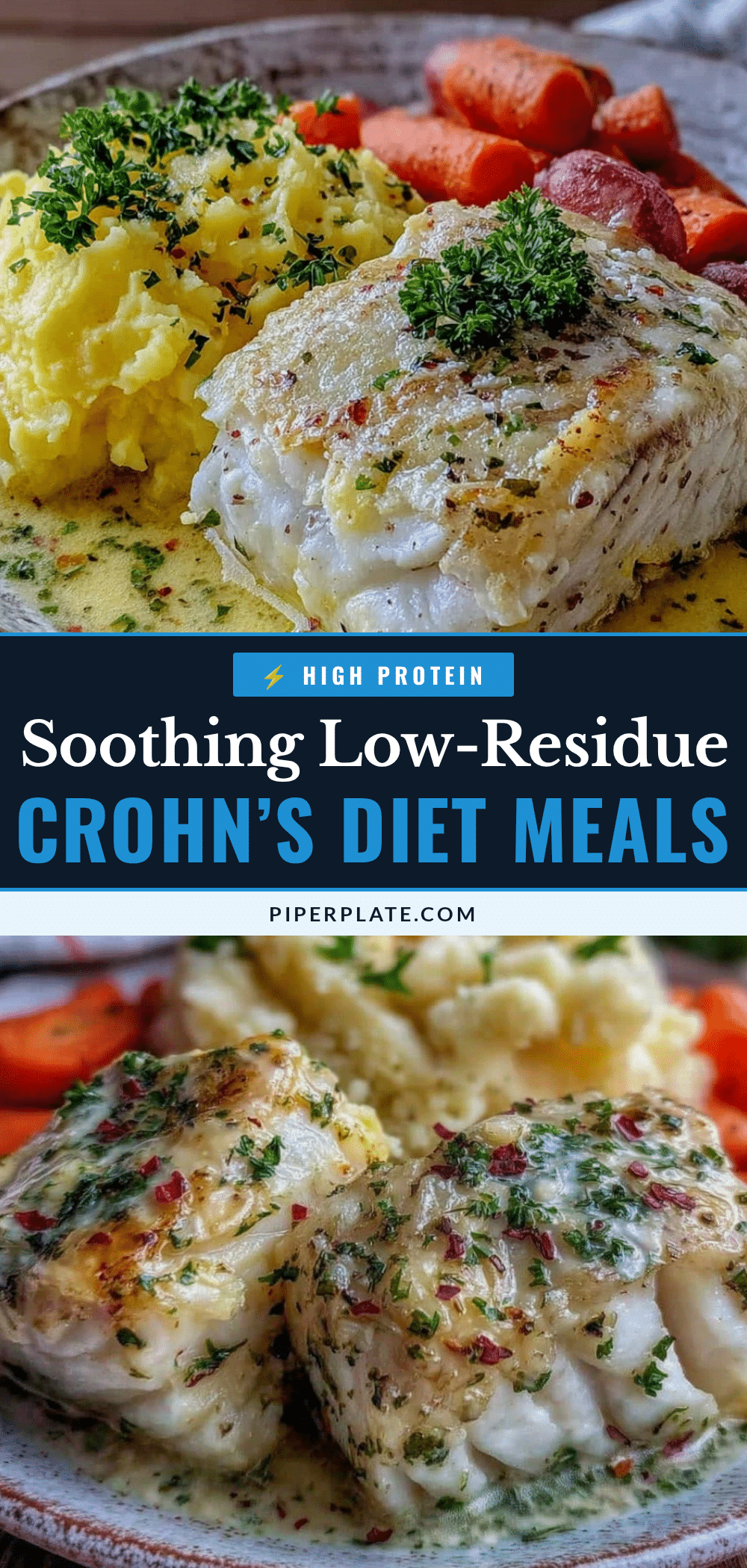
Wholesome Low-Residue Crohn’s Disease Diet Recipe to Reduce Inflammation Easily

A gentle, nourishing low-residue recipe designed to soothe inflammation and support sensitive digestion, featuring tender chicken, soft vegetables, and mild spices.
- Prep Time: 10 minutes
- Cook Time: 25 minutes
- Total Time: 35 minutes
- Yield: 4 servings 1x
- Category: Main Course
- Cuisine: American
Ingredients
- 1 pound (450g) boneless, skinless chicken breast
- 2 medium carrots, peeled and sliced thin
- 1 medium zucchini, peeled and diced
- 1 cup (200g) uncooked white rice
- 4 cups (950ml) low-sodium chicken broth
- 1 tablespoon olive oil
- 2 tablespoons fresh parsley, chopped
- Salt, to taste
- 1/2 teaspoon ground turmeric
- 1 teaspoon fresh ginger, grated
- Water, as needed for cooking rice and adjusting consistency
Instructions
- Rinse 1 cup (200g) of white rice under cold water until the water runs clear to remove excess starch. In a medium saucepan, combine the rice with 2 cups (475ml) of water and a pinch of salt. Bring to a boil over medium-high heat, then reduce to low, cover, and simmer for 18 minutes. Turn off the heat and let it rest, covered, for 10 minutes. Fluff gently with a fork. If rice feels too firm, add a tablespoon of water and gently steam a few more minutes.
- While the rice cooks, heat 1 tablespoon of olive oil in a large skillet over medium heat. Pat dry the chicken breast and season lightly with salt and 1/4 teaspoon turmeric. Add chicken to the pan and cook for about 6 minutes per side, or until cooked through and juices run clear. Remove from pan and set aside to rest for 5 minutes, then slice thinly or shred.
- In the same skillet, add peeled and thinly sliced carrots and diced zucchini. Cook over medium heat for about 8 minutes, stirring occasionally, until vegetables are tender and soft. Add grated fresh ginger and stir for another minute until fragrant.
- Pour 4 cups (950ml) low-sodium chicken broth into the skillet with the veggies. Bring to a gentle simmer and cook for 5 minutes to marry flavors. Return the sliced chicken to the pan to warm through. Adjust salt as needed, keeping it light.
- Serve the warm chicken and vegetable mixture over the soft white rice. Sprinkle with freshly chopped parsley for a bright, fresh finish.
Notes
For a creamier texture, stir in a tablespoon of plain lactose-free yogurt just before serving. Avoid high-fiber skins and seeds by peeling vegetables. Let chicken rest after cooking to keep it juicy. Use low-sodium broth to prevent bloating. This recipe can be adapted for vegetarians by substituting chicken with firm tofu or peeled root vegetables.
Nutrition
- Serving Size: 1 serving (approxima
- Calories: 320
- Fat: 6
- Carbohydrates: 30
- Fiber: 2
- Protein: 35
Keywords: low-residue, Crohn’s disease, anti-inflammatory, gentle digestion, chicken recipe, gut-friendly, easy dinner, soft vegetables