Love this? Save it for later!
Share the inspiration with your friends
This was supposed to be my standard Sunday sourdough bake. You know the one—mix the dough, stretch and fold, let it proof, shape it, bake it. Simple. Predictable. I had my starter fed and bubbly, my flour measured, my bench scraper ready. But then I saw the can of pumpkin puree in the back of the fridge. And the maple syrup my sister brought back from Vermont. And I thought, well, maybe I’ll just add a little to the dough. Just a little. What could go wrong?
Everything, apparently. The dough was too wet, too sticky, too heavy. It wouldn’t rise. It just sat there, this sad, orange-ish blob, mocking me. I was already running late for a phone call with my mom, and I had a sink full of dishes. Honestly, I almost tossed the whole thing in the trash. But I didn’t. I let it sit overnight in the fridge, figuring I’d deal with it in the morning. Maybe the cold would help. Maybe I’d just turn it into crackers. I wasn’t hopeful.
The next morning, I pulled out the bowl, and something had shifted. The dough had structure. It had life. It smelled incredible—warm, spiced, like autumn in a bowl. I rolled it out, slathered it with a brown sugar-maple filling, and sliced it into rolls. When they came out of the oven, golden and sticky and fragrant, I knew I had stumbled onto something. They were nothing like the plan. They were better. That’s the thing about baking with sourdough—sometimes the starter knows what it’s doing even when you don’t. Maybe you’ve been there, staring at a failed project, ready to give up. Stick with it. These Cozy Maple Pumpkin Sourdough Cinnamon Rolls are proof that the best recipes are the ones that almost didn’t happen.
Why You’ll Love This Recipe
Let me tell you, I’ve tested a lot of cinnamon roll recipes over the years. I’ve made the overnight ones, the quick-rise ones, the ones with cream cheese frosting, the ones with a simple glaze. But these? These are different. They have a depth of flavor that comes from the sourdough fermentation, a tenderness from the pumpkin, and a sweetness from the maple that isn’t cloying. I’ve made them for my book club, for Thanksgiving morning, and for a lazy Sunday when I needed something to look forward to. Every time, they disappear.
- Quick & Easy: Okay, hear me out. The active work is only about 30 minutes. The rest is just waiting—letting the dough do its thing in the fridge overnight. Perfect for busy weeknights or last-minute cravings when you want something special without the all-day project.
- Simple Ingredients: No fancy grocery trips needed. Pumpkin puree, maple syrup, butter, flour, and your sourdough starter. You likely already have everything in your kitchen, especially if you’re a fall baking enthusiast.
- Perfect for Fall Mornings: Great for Thanksgiving brunch, Halloween breakfast, or a cozy weekend when the leaves are turning. The aroma alone is worth it.
- Crowd-Pleaser: I brought a pan to a neighborhood potluck and got three requests for the recipe before the coffee was even poured. Kids and adults alike go crazy for the sticky maple-pumpkin topping.
- Unbelievably Delicious: The texture is soft and pillowy, thanks to the pumpkin, but with a slight tang from the sourdough. The maple syrup caramelizes on the bottom of the pan, creating a sticky, gooey layer that is next-level comfort food.
What makes this recipe different from the rest is the fermentation. The long, slow cold proof in the fridge develops a complex flavor that you just can’t get from a standard yeast roll. It’s not just another version—it’s your best version. This recipe isn’t just good; it is the kind that makes you close your eyes after the first bite. It’s comfort food reimagined—healthier, faster, but with the same soul-soothing satisfaction. Perfect for impressing guests without stress, or turning a simple morning into something memorable.
What Ingredients You Will Need
This recipe uses simple, wholesome ingredients to deliver bold flavor and satisfying texture without the fuss. Most of these are pantry staples for any fall baker, and the substitutions are easy if you need them.
For the Dough
- 1 cup (240g) pumpkin puree (not pumpkin pie filling—make sure it’s 100% pure pumpkin. I prefer Libby’s for consistent moisture content)
- 1/2 cup (120ml) maple syrup (use the real stuff, not pancake syrup. Grade A dark amber works beautifully)
- 1/2 cup (120ml) milk (whole milk or 2% is best, but oat milk or almond milk work in a pinch)
- 1/4 cup (60g) unsalted butter, melted (adds richness and tenderness)
- 1 large egg, room temperature (helps with structure)
- 1 teaspoon vanilla extract
- 1 cup (240g) active sourdough starter (fed and bubbly—this is crucial for rise and flavor)
- 3 1/2 cups (440g) all-purpose flour (plus more for dusting. You can substitute up to 1 cup with white whole wheat flour for a heartier roll)
- 1 teaspoon salt
- 1 teaspoon pumpkin pie spice (or a mix of cinnamon, nutmeg, ginger, and cloves)
For the Filling
- 1/2 cup (100g) brown sugar (packed—light or dark both work, dark gives a deeper molasses flavor)
- 2 tablespoons maple syrup
- 1 tablespoon ground cinnamon
- 1/4 teaspoon ground nutmeg
- 1/4 cup (60g) unsalted butter, softened (not melted—you want to spread it)
For the Sticky Maple-Pumpkin Topping
- 1/4 cup (60g) unsalted butter, melted
- 1/4 cup (60ml) maple syrup
- 1/4 cup (50g) brown sugar
- 2 tablespoons pumpkin puree
- Pinch of salt
I recommend using a good quality vanilla extract—it makes a difference. And if you can find fresh pumpkin puree, go for it, but canned is perfectly fine and more consistent. For a dairy-free option, swap the butter with a plant-based stick butter and use oat milk. The texture will be slightly less tender, but still delicious.
Equipment Needed
You don’t need a professional bakery setup for these rolls, but a few key tools make the process smoother.
- Stand mixer with dough hook: You can knead by hand, but the dough is a bit sticky, and the mixer saves your arms. I use my KitchenAid Artisan for this.
- 9×13-inch baking pan: Glass or metal works. I prefer a metal pan for better browning on the bottom.
- Rolling pin: A standard wooden pin is fine. If you don’t have one, a wine bottle works in a pinch—I’ve done it.
- Bench scraper: Helps with cutting the rolls cleanly. A sharp knife works too, but a scraper keeps the shape.
- Large mixing bowl: For the dough. Glass or ceramic is best.
- Plastic wrap or a reusable bowl cover: For the overnight proof.
- Digital kitchen scale: Not required, but I highly recommend it for consistent results, especially with sourdough.
If you’re on a budget, skip the stand mixer and knead by hand—it takes about 10 minutes of active work. Just be patient. And if you don’t have a bench scraper, use unflavored dental floss to cut the rolls. It sounds weird, but it works perfectly and doesn’t squish the dough.
Preparation Method
Let’s get into the nitty-gritty. This recipe has an overnight cold proof, so plan ahead. The active work is minimal, but the waiting is where the magic happens.
- Make the dough (10 minutes): In the bowl of your stand mixer, combine the pumpkin puree, maple syrup, milk, melted butter, egg, and vanilla extract. Whisk until smooth. Add the active sourdough starter and mix until combined. In a separate bowl, whisk together the flour, salt, and pumpkin pie spice. Add the dry ingredients to the wet mixture. Mix on low speed with the dough hook until a shaggy dough forms, about 2 minutes.
- Knead the dough (8-10 minutes): Increase the speed to medium-low and knead for 8 minutes. The dough will be sticky—resist the urge to add too much flour. It should clear the sides of the bowl but still stick to the bottom. If kneading by hand, lightly oil your hands and the work surface. It will be messy at first, but it will come together.
- Bulk fermentation (4-6 hours at room temperature): Place the dough in a lightly oiled bowl, cover with plastic wrap, and let it rise at room temperature. It should double in size. This can take anywhere from 4 to 6 hours depending on the temperature of your kitchen and the strength of your starter. A warm spot (like near the oven) speeds it up.
- Cold proof (overnight, 8-12 hours): After the dough has doubled, punch it down gently, cover tightly, and place it in the refrigerator. This is where the flavor develops. Don’t skip this step—the cold slows down the fermentation, allowing the sourdough tang to deepen without over-proofing.
- Make the topping and filling (10 minutes): The next morning, prepare the sticky maple-pumpkin topping. In a small bowl, whisk together the melted butter, maple syrup, brown sugar, pumpkin puree, and a pinch of salt. Pour this mixture into the bottom of your 9×13-inch baking pan and spread it evenly. For the filling, combine the brown sugar, maple syrup, cinnamon, and nutmeg in a bowl. Set aside.
- Roll and fill the dough (15 minutes): Turn the cold dough out onto a lightly floured surface. Roll it into a 12×18-inch rectangle. Spread the softened butter over the entire surface, leaving a 1/2-inch border on one long edge. Sprinkle the brown sugar-cinnamon mixture evenly over the butter. Starting from the long edge opposite the border, roll the dough tightly into a log. Pinch the seam to seal.
- Cut the rolls (5 minutes): Using a sharp knife or bench scraper, cut the log into 12 equal rolls, about 1.5 inches each. Place them cut-side down in the prepared pan on top of the sticky topping. They will be snug—that’s what you want.
- Final proof (1.5-2 hours): Cover the pan with plastic wrap and let the rolls rise at room temperature until they are puffy and touching each other. This takes about 1.5 to 2 hours. They should look pillowy and soft.
- Bake (25-30 minutes): Preheat your oven to 350°F (175°C). Bake the rolls on the middle rack until they are golden brown on top and the filling is bubbly. If the tops are browning too quickly, tent with foil halfway through. Let them cool in the pan for 5 minutes, then invert onto a serving platter. The sticky topping will drip down—let it.
Pro tip: The rolls are done when the internal temperature reaches 190°F (88°C). I use an instant-read thermometer for consistency. If you don’t have one, look for a deep golden color and a hollow sound when you tap the top.
Cooking Tips & Techniques
I’ve made these rolls about a dozen times now, and I’ve learned a few things the hard way. Let me save you the trouble.
Don’t over-flour the dough. Pumpkin puree adds a lot of moisture, and it’s tempting to keep adding flour to get a non-sticky dough. But a wetter dough yields a softer, more tender roll. Trust the process. Use a bench scraper to handle it if needed.
Cold dough is easier to roll. This is why the overnight proof is so important. Cold dough holds its shape better and doesn’t stick to the rolling pin. If you try to roll it at room temperature, you’ll end up with a mess. I learned this the hard way on my first attempt—the dough tore, the filling leaked, and I had a sticky disaster.
Use unflavored dental floss to cut the rolls. This is a game-changer. Slide a long piece of floss under the log, cross the ends over the top, and pull. It cuts cleanly without squishing the dough. I use this trick for all my cinnamon rolls now.
Timing is everything. Start the dough in the morning or early afternoon so it has time to bulk ferment before the cold proof. I usually mix the dough around 10 AM, let it rise until 3 PM, then pop it in the fridge. The next morning, I pull it out, roll it, and bake by 10 AM. Perfect for a late breakfast or brunch.
Don’t skip the invert step. When the rolls come out of the oven, let them cool in the pan for exactly 5 minutes. Then place a large platter or cutting board on top and flip it over. The sticky topping will pool on top of the rolls. If you wait too long, the caramel will harden and stick to the pan. I’ve lost a few rolls to the pan that way—still tasty, but not as pretty.
Variations & Adaptations
One of the things I love about this recipe is how flexible it is. Here are a few ways to make it your own.
Dairy-Free Version: Swap the butter with a plant-based stick butter (I like Miyoko’s) and use oat milk or almond milk in the dough. The texture will be slightly less tender, but the flavor is still spot-on. I made this for a friend with a dairy allergy, and she said they were the best cinnamon rolls she’d ever had.
Gluten-Free Option: Use a 1:1 gluten-free flour blend that contains xanthan gum. The dough will be stickier and harder to roll, so wet your hands and the rolling pin with water instead of flour. The rolls will be a bit denser, but still delicious. I’ve tested this with Bob’s Red Mill 1:1 Baking Flour, and it works.
Pumpkin Spice Variation: Add 1/2 cup of chopped pecans or walnuts to the filling for extra crunch. Or, swap the maple syrup in the topping with honey for a different sweetness profile. I tried a version with crystallized ginger mixed into the filling, and it was incredible—spicy and sweet.
No-Sourdough Version: If you don’t have a starter, you can use 2 1/4 teaspoons (one packet) of active dry yeast. Dissolve it in the warm milk with a pinch of sugar before adding it to the dough. Skip the overnight cold proof and let the rolls rise for about 1 hour after shaping. The flavor won’t be as complex, but they’ll still be soft and delicious.
Mini Rolls: For a brunch party, cut the log into 24 smaller rolls and bake them in two 9-inch round pans. Reduce the baking time to 18-22 minutes. They’re perfect for grabbing and going.
Serving & Storage Suggestions
These rolls are best served warm, right after the invert. The sticky topping is still gooey, and the rolls are pillowy soft. I like to serve them with a side of crispy bacon and a hot cup of coffee for the ultimate fall breakfast. They also pair beautifully with a spiced apple cider or a pumpkin latte for a cozy morning treat.
If you have leftovers (unlikely, but possible), store them in an airtight container at room temperature for up to 2 days. The sticky topping will harden slightly, but a quick 15-second zap in the microwave brings back the gooeyness. You can also reheat them in a 300°F oven for 5-7 minutes.
For longer storage, freeze the baked rolls (without the invert) in a single layer on a baking sheet. Once frozen, transfer them to a freezer-safe bag. They’ll keep for up to 3 months. To serve, thaw overnight in the fridge, then reheat in a 350°F oven for 10 minutes. Make the sticky topping fresh and pour it over the warm rolls before inverting.
The flavors actually deepen after a day in the fridge. The sourdough tang becomes more pronounced, and the maple and pumpkin meld together. I’ve been known to eat them cold, straight from the fridge, at midnight. No judgment.
Nutritional Information & Benefits
Let’s be honest—these are a treat. But they’re a treat with some redeeming qualities. One roll (based on 12 servings) contains approximately:
| Nutrient | Amount |
|---|---|
| Calories | 320 |
| Total Fat | 12g |
| Saturated Fat | 7g |
| Carbohydrates | 48g |
| Fiber | 2g |
| Sugar | 22g |
| Protein | 6g |
The pumpkin puree adds vitamin A and fiber, while the sourdough fermentation makes the grains easier to digest. The maple syrup is a natural sweetener with antioxidants, and the cinnamon has anti-inflammatory properties. Is it health food? No. But it’s a whole lot better than a box of store-bought cinnamon rolls.
For a lower-sugar option, reduce the maple syrup in the dough to 1/4 cup and skip the sticky topping. Brush the baked rolls with a simple glaze made from powdered sugar and milk instead. For a lower-fat version, replace half the butter in the dough with applesauce. The texture will be a bit more cake-like, but still satisfying.
Conclusion
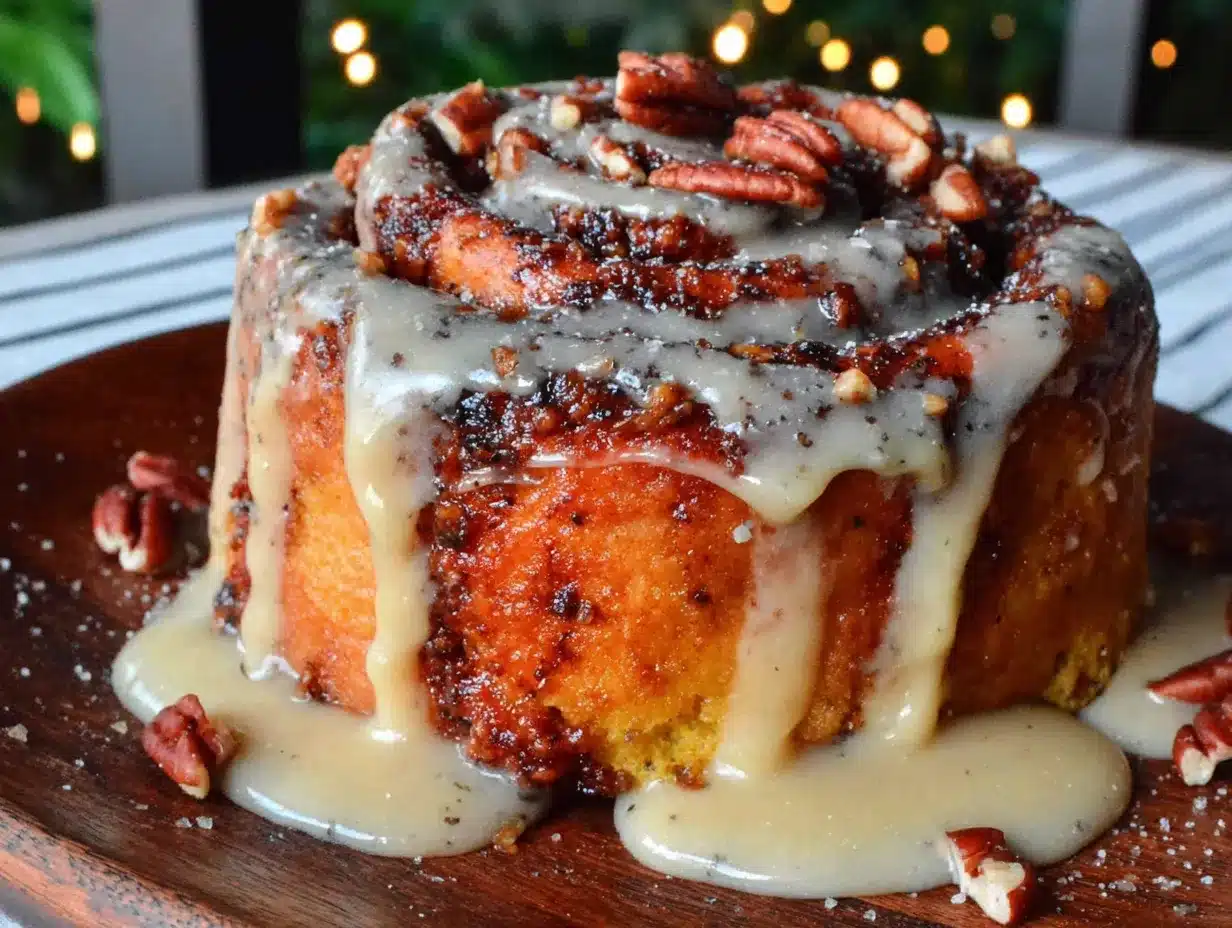
These Cozy Maple Pumpkin Sourdough Cinnamon Rolls are the recipe that almost didn’t happen. They came from a mistake, a moment of frustration, and a leap of faith. And now they’re the recipe I turn to again and again when I want something that feels like a hug in food form. The sourdough tang, the pumpkin warmth, the sticky maple topping—it all comes together in a way that feels both familiar and surprising.
I want you to make these your own. Add more cinnamon. Swap the maple for honey. Throw in some pecans. The beauty of this recipe is that it’s forgiving. It started as a disaster, and it turned into a triumph. Yours will too. If you make them, tag me in your photos—I want to see your sticky, golden, beautiful rolls. And if you have a question, drop it in the comments. I read every single one. Now go bake something that makes your kitchen smell like autumn.
Frequently Asked Questions
Can I use canned pumpkin pie filling instead of pumpkin puree?
No, please don’t. Pumpkin pie filling has added sugar and spices that will throw off the balance of the dough. Use 100% pure pumpkin puree for the best results. If you only have pumpkin pie filling, reduce the sugar in the dough by half and skip the pumpkin pie spice.
My dough is too sticky. What should I do?
This is normal! Pumpkin puree adds a lot of moisture. Resist the urge to add too much flour. Instead, wet your hands with water or oil before handling the dough. A bench scraper also helps. The dough will firm up after the cold proof.
Can I skip the overnight cold proof?
You can, but you’ll lose a lot of flavor. The cold proof is where the sourdough tang develops. If you’re short on time, let the dough bulk ferment for 4-6 hours at room temperature, then shape and bake immediately. The rolls will be softer and less complex, but still tasty.
How do I know when the rolls are fully baked?
The tops should be deep golden brown, and the filling should be bubbly. For precision, use an instant-read thermometer—the internal temperature should reach 190°F (88°C). If you don’t have a thermometer, tap the top of a roll; it should sound hollow.
Can I make these rolls ahead of time for a party?
Absolutely. Assemble the rolls through step 7 (cutting and placing in the pan), then cover and refrigerate for up to 24 hours. The next day, let them come to room temperature for about 1 hour before baking. This is my go-to method for Thanksgiving morning—no early wake-up call required.
Pin This Recipe!
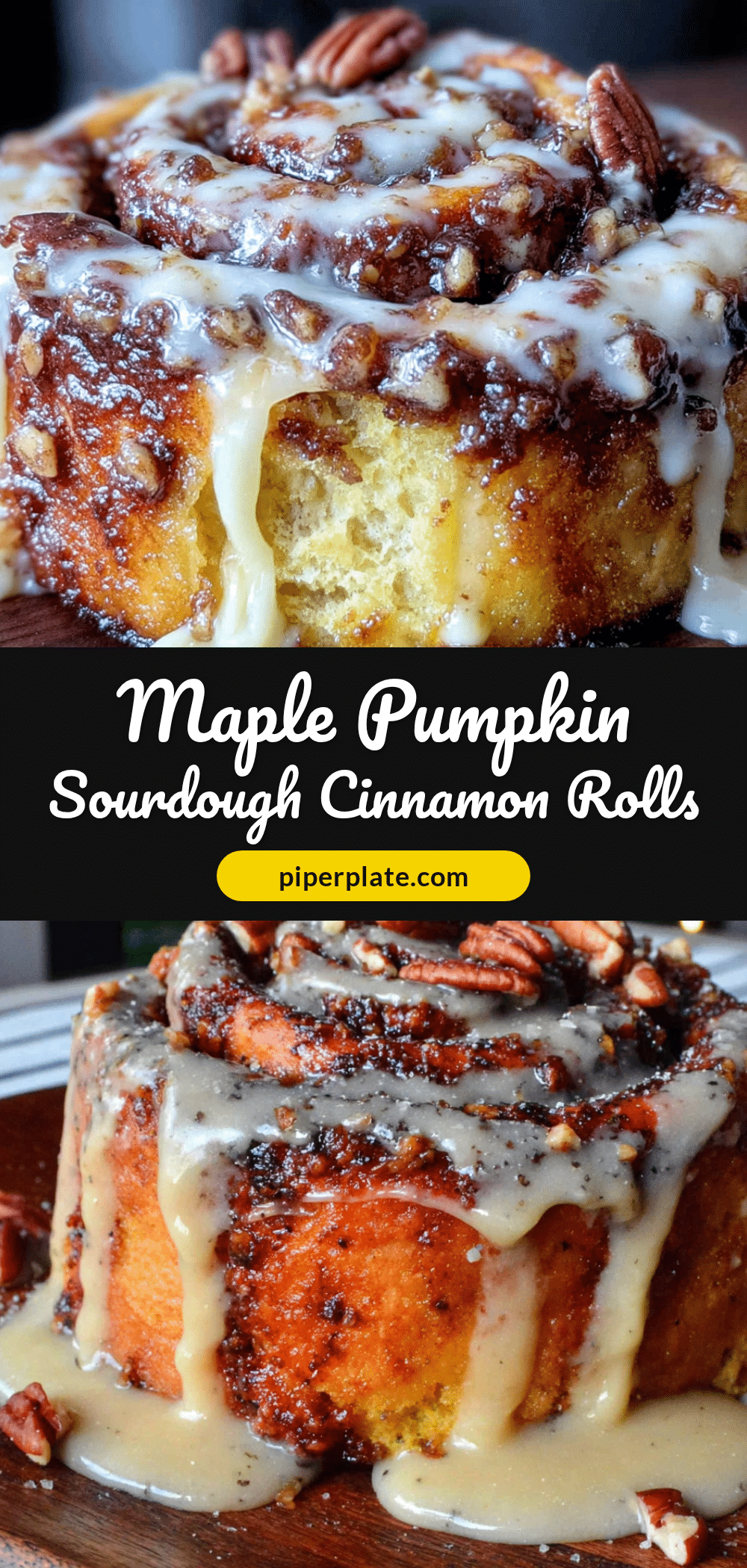
Cozy Maple Pumpkin Sourdough Cinnamon Rolls
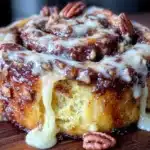
These soft, pillowy cinnamon rolls combine the tang of sourdough with the warmth of pumpkin and maple syrup, creating a perfect fall treat. The overnight cold proof develops a complex flavor, and the sticky maple-pumpkin topping takes them over the top.
- Prep Time: 30 minutes
- Cook Time: 30 minutes
- Total Time: 14 hours (includes overnight proof)
- Yield: 12 servings 1x
- Category: Breakfast
- Cuisine: American
Ingredients
- 1 cup (240g) pumpkin puree (not pumpkin pie filling)
- 1/2 cup (120ml) maple syrup (Grade A dark amber preferred)
- 1/2 cup (120ml) milk (whole or 2%; oat or almond milk work)
- 1/4 cup (60g) unsalted butter, melted
- 1 large egg, room temperature
- 1 teaspoon vanilla extract
- 1 cup (240g) active sourdough starter (fed and bubbly)
- 3 1/2 cups (440g) all-purpose flour (plus more for dusting; up to 1 cup can be substituted with white whole wheat flour)
- 1 teaspoon salt
- 1 teaspoon pumpkin pie spice (or mix of cinnamon, nutmeg, ginger, cloves)
- 1/2 cup (100g) brown sugar, packed (light or dark)
- 2 tablespoons maple syrup
- 1 tablespoon ground cinnamon
- 1/4 teaspoon ground nutmeg
- 1/4 cup (60g) unsalted butter, softened (for filling)
- 1/4 cup (60g) unsalted butter, melted (for topping)
- 1/4 cup (60ml) maple syrup (for topping)
- 1/4 cup (50g) brown sugar (for topping)
- 2 tablespoons pumpkin puree (for topping)
- Pinch of salt (for topping)
Instructions
- Make the dough: In the bowl of a stand mixer, combine pumpkin puree, maple syrup, milk, melted butter, egg, and vanilla extract. Whisk until smooth. Add the active sourdough starter and mix until combined. In a separate bowl, whisk together flour, salt, and pumpkin pie spice. Add dry ingredients to wet mixture. Mix on low speed with dough hook until a shaggy dough forms, about 2 minutes.
- Knead the dough: Increase speed to medium-low and knead for 8 minutes. The dough will be sticky—resist adding too much flour. It should clear the sides of the bowl but still stick to the bottom. If kneading by hand, lightly oil your hands and work surface.
- Bulk fermentation: Place dough in a lightly oiled bowl, cover with plastic wrap, and let rise at room temperature until doubled in size, about 4-6 hours depending on temperature and starter strength.
- Cold proof: After dough has doubled, punch it down gently, cover tightly, and refrigerate for 8-12 hours (overnight).
- Make the topping and filling: The next morning, prepare the sticky maple-pumpkin topping by whisking together melted butter, maple syrup, brown sugar, pumpkin puree, and a pinch of salt. Pour into the bottom of a 9×13-inch baking pan and spread evenly. For the filling, combine brown sugar, maple syrup, cinnamon, and nutmeg in a bowl. Set aside.
- Roll and fill the dough: Turn cold dough out onto a lightly floured surface. Roll into a 12×18-inch rectangle. Spread softened butter over the entire surface, leaving a 1/2-inch border on one long edge. Sprinkle the brown sugar-cinnamon mixture evenly over the butter. Starting from the long edge opposite the border, roll tightly into a log. Pinch the seam to seal.
- Cut the rolls: Using a sharp knife or bench scraper, cut the log into 12 equal rolls, about 1.5 inches each. Place them cut-side down in the prepared pan on top of the sticky topping.
- Final proof: Cover the pan with plastic wrap and let rolls rise at room temperature until puffy and touching each other, about 1.5 to 2 hours.
- Bake: Preheat oven to 350°F (175°C). Bake rolls on the middle rack until golden brown on top and filling is bubbly, 25-30 minutes. If tops brown too quickly, tent with foil halfway through. Let cool in pan for 5 minutes, then invert onto a serving platter.
Notes
Don’t over-flour the dough; a wetter dough yields softer rolls. Cold dough is easier to roll. Use unflavored dental floss to cut rolls cleanly. Don’t skip the invert step—let rolls cool in pan for exactly 5 minutes before inverting to prevent the caramel from hardening. For best flavor, do not skip the overnight cold proof.
Nutrition
- Serving Size: 1 roll
- Calories: 320
- Sugar: 22
- Fat: 12
- Saturated Fat: 7
- Carbohydrates: 48
- Fiber: 2
- Protein: 6
Keywords: sourdough cinnamon rolls, pumpkin cinnamon rolls, maple cinnamon rolls, fall breakfast, sourdough breakfast, pumpkin sourdough