Love this? Save it for later!
Share the inspiration with your friends
I was at the farmers market last October, standing in front of a cooler full of bratwurst, completely frozen. Not the brats—me. There were so many kinds. Smoked, fresh, with cheese, without. A man next to me, probably in his seventies with a faded Green Bay Packers hat, watched me pick up and put down the same package three times. He didn’t say anything at first. Then he just pointed at a bundle of pale, unassuming links and said, “Those. And don’t you dare boil them.”
That was it. No name, no explanation. He walked away with his own pack and a bag of onions. I stood there holding those brats like they were a secret I’d just been let in on. Honestly, I almost put them back. But something about his certainty stuck with me. So I bought them, grabbed some sauerkraut from the Amish stand, and went home determined to figure out what he meant.
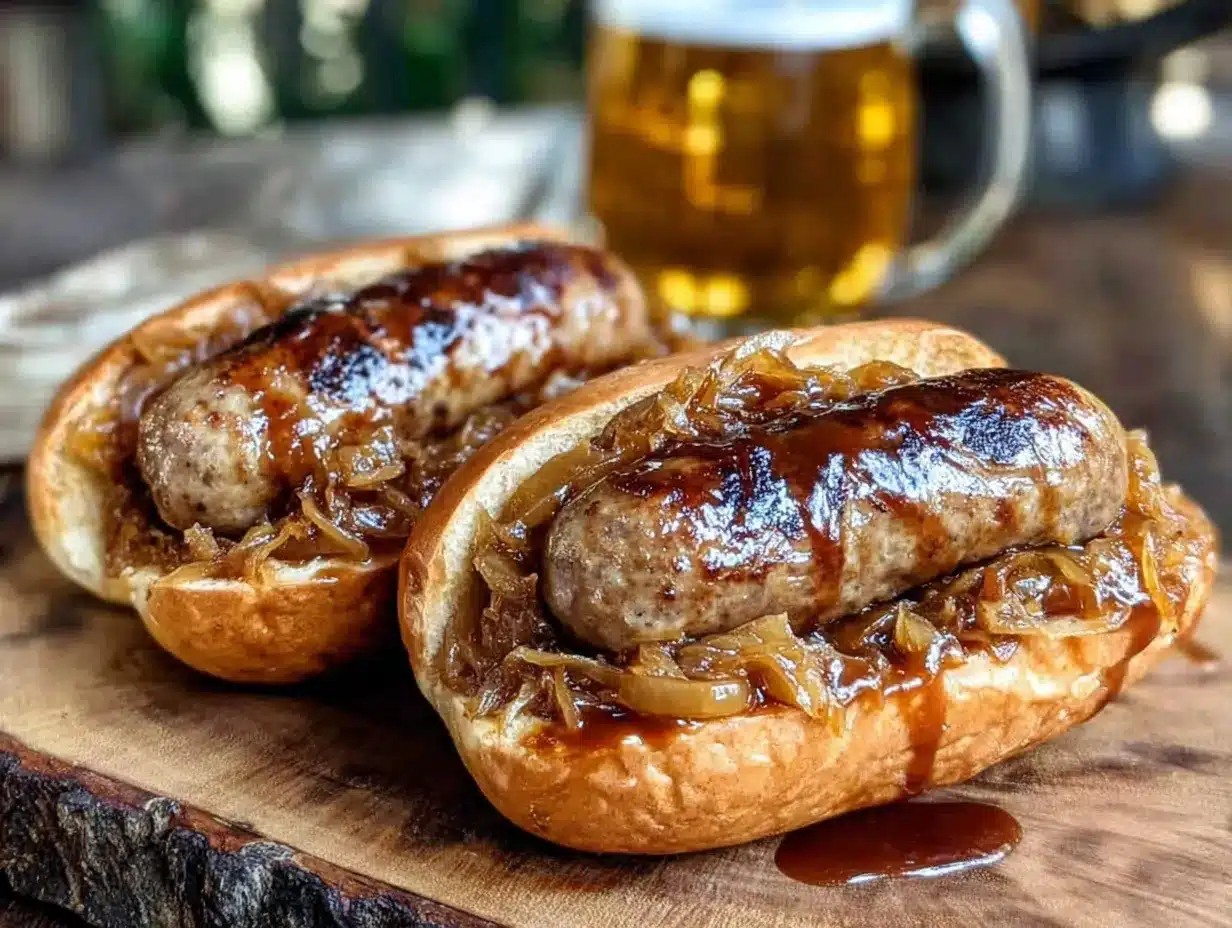
I messed up the first batch—overcooked them, the kraut was too sour, and I’d used a light beer that added nothing. But that second attempt? Let me tell you, something clicked. I simmered the brats in a dark German lager with slices of sweet onion until they were plump and fragrant, then finished them on a hot grill pan. The kraut got the same treatment—cooked down with the beer and onions until it turned almost caramelized, losing that sharp edge and becoming this rich, savory-sweet companion. The first bite made me laugh out loud. Not because it was funny, but because it was so good I didn’t know what else to do.
I’ve made this dish maybe thirty times since that day. It’s become my go-to for game days, casual dinners with friends, and those nights when I want something deeply satisfying without spending hours in the kitchen. There’s something about the way the beer mellows the sauerkraut and the onions turn jammy that just works. Maybe you’ve been there—standing in a grocery aisle, overwhelmed by choices, wishing someone would just tell you what to buy. Well, this is me pointing at those brats and saying, “These. And don’t you dare boil them.”
Why You’ll Love This Recipe
This isn’t just another bratwurst recipe. I’ve tested this method more times than I care to count, tweaking the beer ratio, the onion thickness, the simmer time. What I landed on is the version I’d serve to anyone who asked for “the best” German beer brats. Here’s why it stands out:
- One-Pan Simplicity: Everything happens in one skillet or pot. Less cleanup, more time enjoying your food.
- Bold, Balanced Flavor: The beer tames the sauerkraut’s tang while the onions add natural sweetness. No sugar needed.
- Perfect for Crowds: This recipe scales beautifully. Feeding four or fourteen? Same method, just bigger pot.
- Ready in 45 Minutes: From fridge to table in under an hour. That includes the caramelizing time.
- Foolproof Technique: No special skills required. If you can open a beer and slice an onion, you can nail this.
What makes this different from every other brat recipe out there is the two-step cooking process. You simmer first, then sear. That simmering step infuses the brats with beer flavor and keeps them juicy, while the final sear gives you that crispy, browned exterior everyone fights over. The sauerkraut isn’t an afterthought either—it’s cooked right in the same beer-onion mixture, absorbing all those flavors until it’s unrecognizable from the jarred stuff.
This is the kind of meal that makes you slow down. It’s hearty without being heavy, simple without being boring. Perfect for a Tuesday night when you need comfort food fast, or for a Sunday afternoon when you want something that feels like an event. Every time I make it, someone asks for the recipe. Now you’ve got it.
What Ingredients You Will Need
This recipe uses simple, honest ingredients to build layers of flavor. Nothing fancy here—just good, quality components that work together.
For the Brats
- 4-6 fresh bratwurst links (about 1.5 pounds)—look for uncooked, uncured brats from a butcher or quality brand like Johnsonville or Usinger’s. Avoid pre-smoked or fully cooked links.
- 2 bottles (12 oz each) German lager or bock beer—I prefer a dark beer like Warsteiner Dunkel or Ayinger Altbairisch Dunkel for deeper flavor. Avoid light beers or IPAs, which can turn bitter.
- 1 tablespoon unsalted butter—adds richness during the searing stage.
- 1 teaspoon caraway seeds (optional)—adds that classic German bakery note.
For the Sweet Onion Sauerkraut
- 2 large sweet onions (like Vidalia or Walla Walla)—halved and thinly sliced into half-rings. Sweet onions are key here; yellow onions work but won’t get as sweet.
- 1 jar (24 oz) sauerkraut—drained but not rinsed. I recommend Bubbies or Wildbrine for fermented kraut with good texture. Avoid the canned stuff if you can.
- 1 tablespoon olive oil—for sautéing the onions.
- 1 tablespoon brown sugar—helps caramelize the onions and balances the kraut’s acidity.
- 1 teaspoon whole black peppercorns—adds subtle heat.
- 2 bay leaves—for aromatic depth.
For Serving
- 4-6 hoagie or brat buns—toasted lightly. Look for sturdy rolls that won’t get soggy.
- Spicy brown mustard or whole-grain mustard—the sharpness cuts through the richness.
- Optional toppings: shredded Swiss cheese, pickled jalapeños, fresh parsley.
Ingredient Tip: If you can’t find sweet onions, use regular yellow onions and add an extra teaspoon of brown sugar. For the beer, any malty lager works—I’ve used Sam Adams Boston Lager in a pinch and it turned out great. Just stay away from anything too hoppy or fruity.
Equipment Needed
You don’t need a German grandmother’s cast-iron collection for this. Here’s what I use and what you can substitute:
- Large skillet or Dutch oven (12-inch or larger)—a heavy-bottomed pot works best for even heat. I use my enameled cast-iron Dutch oven. A stainless steel skillet with a lid works fine too.
- Tongs—for flipping brats without piercing them. Piercing releases juices and dries them out.
- Slotted spoon—for removing brats from the simmering liquid.
- Cutting board and sharp knife—for slicing onions. A dull knife will make you cry more.
- Grill pan or cast-iron skillet—for the final sear. If you don’t have one, you can use the same pot you simmered in, just drain the liquid first.
- Meat thermometer (optional but recommended)—brats are safe at 160°F, but I pull them at 155°F and let carryover cooking finish the job.
Budget-Friendly Tip: No Dutch oven? Use a deep nonstick skillet with a lid. No grill pan? Broil the brats for 3-4 minutes per side after simmering. Works like a charm.
Preparation Method
Let’s get cooking. This method has two phases—simmering and searing—and neither is complicated. I’ve timed everything so you can relax and enjoy the process.
Step 1: Prep the Onions and Kraut (5 minutes)
Peel both onions and slice them in half through the root end. Slice each half into thin half-rings, about ¼-inch thick. Don’t stress about uniformity, but try to keep them similar so they cook evenly. Open the sauerkraut and drain it in a colander. Give it a quick rinse if you prefer milder kraut, but I don’t bother—the beer and onions will mellow it out. Set everything aside.
Step 2: Sear the Brats Briefly (5 minutes)
Heat 1 tablespoon of olive oil in your large skillet or Dutch oven over medium-high heat. Add the bratwurst links and cook for 2-3 minutes per side, just until they develop a light brown crust. Don’t cook them through—you’re just building flavor here. Remove the brats to a plate. They’ll look pale and underdone. That’s perfect.
Step 3: Cook the Onions (10 minutes)
Reduce the heat to medium. Add the butter to the same pot. Once it melts, add the sliced onions. Stir to coat them in the butter and any browned bits left from the brats. Cook for 8-10 minutes, stirring occasionally, until the onions turn soft and translucent. If they start to stick, add a splash of beer. You want them to sweat, not burn.
Step 4: Build the Beer-Kraut Mixture (5 minutes)
Add the drained sauerkraut, brown sugar, caraway seeds (if using), peppercorns, and bay leaves to the pot with the onions. Pour in both bottles of beer. Stir everything together, scraping up any browned bits from the bottom. Bring the mixture to a gentle simmer—bubbles should just break the surface. This is where the magic starts.
Step 5: Simmer the Brats (20 minutes)
Nestle the bratwurst back into the pot, making sure they’re mostly submerged in the liquid. Cover the pot with a lid, reduce the heat to low, and let everything simmer gently for 20 minutes. Don’t let it boil—a gentle simmer keeps the brats tender. After 20 minutes, the brats should be cooked through and plump, and the sauerkraut will have absorbed the beer’s color and flavor.
Step 6: Sear the Brats (5 minutes)
This step is non-negotiable. Remove the brats from the pot using tongs and set them on a plate. Heat a separate grill pan or cast-iron skillet over medium-high heat. Add a tiny bit of oil if needed. Sear the brats for 2-3 minutes per side, until they’re deeply browned and crispy in spots. While they sear, keep the sauerkraut mixture warm over low heat, removing the bay leaves and peppercorns if you can find them.
Step 7: Assemble and Serve (2 minutes)
Toast your buns lightly—I pop them under the broiler for 60 seconds. Place a brat in each bun. Top generously with the sweet onion sauerkraut, using a slotted spoon so excess liquid doesn’t soggy the bun. Add a swipe of mustard and any other toppings. Serve immediately.
Sensory Cue: When the brats are done simmering, they should feel firm but springy when pressed. The kraut should smell malty and sweet, with no harsh vinegar notes. When you bite into the finished brat, the casing should snap, and the inside should be juicy, not dry.
Cooking Tips & Techniques
I’ve learned these the hard way so you don’t have to. Here’s what I wish someone had told me before my first attempt.
Don’t Prick the Brats. I know some recipes tell you to poke holes so they don’t burst. Ignore that. Pricking releases the juices and fat inside, leaving you with dry, sad brats. They won’t burst if you simmer gently—boiling is what causes explosions. Keep the heat low and steady.
Use the Right Beer. This matters more than you’d think. A dark, malty German lager adds richness and a subtle sweetness. Light beer or pilsner will work, but the flavor will be thinner. Avoid IPAs entirely—the bitterness intensifies as it cooks and can make the kraut taste harsh. I’ve made that mistake exactly once.
Toast the Buns. This seems minor, but untoasted buns get soggy within minutes. A quick toast creates a barrier that keeps the bun sturdy. I use the residual heat from the grill pan after searing the brats—just split the buns and press them cut-side down for 30 seconds.
Timing is Everything. Start your onions first, then prep the kraut while they cook. Simmer the brats while you set the table or make a side dish. Sear them right before serving. This flows naturally if you don’t rush.
My Biggest Failure: The first time I made this, I used a cheap light beer and skipped the final sear. The brats were pale, flabby, and tasted like watered-down beer. My husband ate one, smiled politely, and asked if we had hot dogs. That’s when I knew I had to fix it. The sear isn’t optional—it’s what transforms good brats into great ones.
Variations & Adaptations
This recipe is forgiving. Here are some ways to make it your own.
Dietary Adaptations
Gluten-Free: Use gluten-free bratwurst (many brands make them) and a gluten-free beer like Glutenberg or Omission. The rest of the ingredients are naturally gluten-free. Check your sauerkraut label—some brands add malt vinegar.
Low-Carb/Keto: Skip the bun and serve the brats and kraut in a bowl. Top with melted Swiss cheese and mustard. You won’t miss the bread.
Dairy-Free: Use olive oil instead of butter in the onion step. Everything else is dairy-free.
Flavor Twists
Spicy Version: Add 2 sliced jalapeños or 1 teaspoon red pepper flakes when you cook the onions. Use a spicy brown mustard for serving.
Apple-Kraut: Add 1 peeled, grated apple to the sauerkraut along with the beer. The apple adds sweetness and a subtle fruitiness that pairs beautifully with pork.
Smoked Brats: If you can find smoked bratwurst, reduce the simmer time to 10 minutes—they’re already cooked. Still sear them at the end for texture.
Cooking Method Variations
Grill Method: After simmering, grill the brats over medium-high heat for 3-4 minutes per side. The smoky char adds another layer of flavor. Grill the buns too.
Slow Cooker: Sear the brats, then transfer everything to a slow cooker. Cook on low for 4-6 hours. The texture will be softer, but the flavor is still excellent. Sear the brats in a pan before serving if you want that crispy exterior.
My Personal Favorite Variation
I sometimes swap half the sauerkraut for thinly sliced red cabbage. It adds color and a slightly earthier flavor. My German friend told me this is “not traditional at all,” but she also asked for seconds, so I’m calling it a win.
Serving & Storage Suggestions
These brats are best fresh, but leftovers are still pretty fantastic. Here’s how to handle both.
Serving
Serve the brats hot off the sear, piled high with kraut and a swipe of mustard. I like to set up a little topping bar so everyone can customize—extra mustard, pickled peppers, shredded cheese, fresh herbs. For sides, German potato salad, crispy fries, or a simple cucumber salad all work beautifully. A cold German beer on the side isn’t a bad idea either.
Storage
Store leftover brats and sauerkraut separately in airtight containers. The brats keep for 3-4 days in the fridge. The kraut actually gets better after a day—the flavors continue to meld. Keep the buns at room temperature and toast them fresh when you reheat.
Reheating
The best way to reheat brats is in a skillet over medium heat with a splash of beer or water. Cover and cook for 3-4 minutes, then uncover and let the liquid evaporate so the casings crisp up again. Microwave works in a pinch, but the casing will be soft. For the kraut, reheat in a small saucepan over low heat, adding a splash of beer if it seems dry.
Freezer
You can freeze the cooked brats and kraut for up to 3 months. Cool completely, then pack in freezer bags. Thaw overnight in the fridge and reheat as directed above. The texture won’t be quite as perfect as fresh, but it’s still a solid meal on a busy night.
Nutritional Information & Benefits
This isn’t health food, but it’s not as indulgent as you might think. Here’s a rough breakdown per serving (one brat with kraut, no bun):
- Calories: ~380
- Protein: 18g
- Fat: 28g
- Carbohydrates: 12g
- Fiber: 4g
- Sodium: 980mg
The sauerkraut is the unsung hero here. It’s fermented, which means it contains probiotics that support gut health. It’s also low in calories and high in vitamin C and fiber. The onions provide quercetin, an antioxidant with anti-inflammatory properties. And the beer? Well, it adds flavor and a small amount of B vitamins. Not exactly a superfood, but it makes the brats taste incredible.
If you’re watching sodium, look for low-sodium sauerkraut or rinse it well before cooking. For a lighter meal, skip the bun and serve the brats and kraut over a bed of greens or roasted vegetables.
Conclusion
This recipe is the one I keep coming back to, and I think you will too. It’s simple enough for a weeknight but impressive enough for company. The combination of juicy, beer-infused brats with sweet, tangy kraut and caramelized onions is one of those perfect pairings that just works.
I love that this recipe doesn’t pretend to be something it’s not. It’s not low-fat, it’s not trendy, and it doesn’t require any fancy techniques. It’s just honest, satisfying food that makes people happy. Every time I make it, I think about that man at the farmers market and his simple advice. He was right. Don’t boil them. Simmer them in good beer, sear them until they’re crispy, and pile on that sweet onion kraut.
I’d love to hear how yours turn out. Did you try a variation? Find a beer you love? Make a mess of your stovetop? Drop a comment below and let me know. And if you share a photo on social media, tag me—I want to see those beautiful, golden-brown brats. Now go make some. You’ve got this.
Frequently Asked Questions
Can I use any type of beer for this recipe?
You can, but dark German lagers or bocks work best. Light beers produce a thinner flavor, and IPAs can turn bitter during cooking. Stick with malty, not hoppy.
Do I have to simmer the brats before grilling or searing?
Yes. Simmering ensures the brats cook through evenly and absorb the beer flavor. Skipping this step will leave you with undercooked centers or burnt exteriors.
Can I make this recipe in advance for a party?
Absolutely. Simmer the brats and cook the kraut up to 2 days ahead. Refrigerate separately. When you’re ready to serve, sear the brats and reheat the kraut. It actually saves time and stress.
How do I keep the buns from getting soggy?
Toast them lightly before assembling. Use a slotted spoon to drain excess liquid from the kraut before piling it on. Serve immediately after assembling.
What’s the best way to reheat leftover brats?
Skillet method is best. Add a splash of beer or water, cover, and heat over medium for 3-4 minutes. Uncover and let the liquid evaporate to crisp the casing. Avoid the microwave if you can—it makes the casing rubbery.
Pin This Recipe!
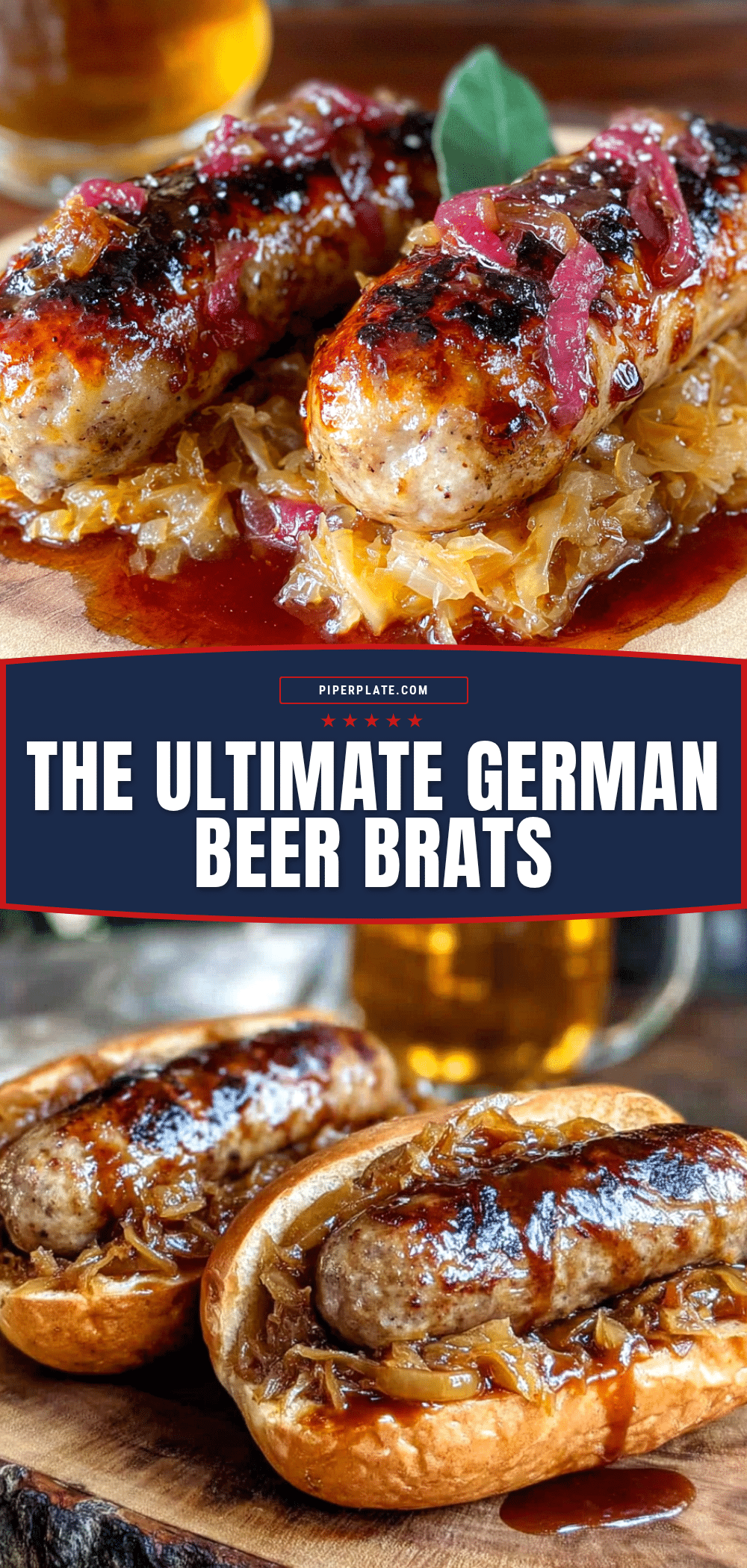
Best German Beer Brats with Sweet Onion Sauerkraut
Juicy beer-simmered bratwurst with caramelized sweet onion sauerkraut, finished with a crispy sear. A one-pan, foolproof recipe perfect for game days or casual dinners.
- Prep Time: 15 minutes
- Cook Time: 30 minutes
- Total Time: 45 minutes
- Yield: 4-6 servings 1x
- Category: Main Course
- Cuisine: German
Ingredients
- 4–6 fresh bratwurst links (about 1.5 pounds)
- 2 bottles (12 oz each) German lager or bock beer (e.g., Warsteiner Dunkel or Ayinger Altbairisch Dunkel)
- 1 tablespoon unsalted butter
- 1 teaspoon caraway seeds (optional)
- 2 large sweet onions (like Vidalia or Walla Walla), halved and thinly sliced into half-rings
- 1 jar (24 oz) sauerkraut, drained but not rinsed
- 1 tablespoon olive oil
- 1 tablespoon brown sugar
- 1 teaspoon whole black peppercorns
- 2 bay leaves
- 4–6 hoagie or brat buns, toasted lightly
- Spicy brown mustard or whole-grain mustard, for serving
- Optional toppings: shredded Swiss cheese, pickled jalapeños, fresh parsley
Instructions
- Prep the onions and kraut: Peel and slice onions into thin half-rings. Drain sauerkraut in a colander; rinse if desired for milder flavor. Set aside.
- Sear the brats briefly: Heat 1 tablespoon olive oil in a large skillet or Dutch oven over medium-high heat. Add bratwurst links and cook for 2-3 minutes per side until lightly browned. Remove to a plate.
- Cook the onions: Reduce heat to medium. Add butter to the pot. Once melted, add sliced onions and cook for 8-10 minutes, stirring occasionally, until soft and translucent.
- Build the beer-kraut mixture: Add drained sauerkraut, brown sugar, caraway seeds (if using), peppercorns, and bay leaves to the pot. Pour in both bottles of beer. Stir, scraping up browned bits. Bring to a gentle simmer.
- Simmer the brats: Nestle brats back into the pot, mostly submerged. Cover, reduce heat to low, and simmer gently for 20 minutes. Do not boil.
- Sear the brats: Remove brats from pot with tongs. Heat a separate grill pan or cast-iron skillet over medium-high heat. Sear brats for 2-3 minutes per side until deeply browned and crispy. Keep sauerkraut warm over low heat, removing bay leaves and peppercorns if possible.
- Assemble and serve: Toast buns lightly. Place a brat in each bun. Top generously with sweet onion sauerkraut using a slotted spoon. Add mustard and other toppings. Serve immediately.
Notes
Don’t prick the brats—it releases juices. Use a dark, malty German lager for best flavor; avoid IPAs. Toast buns to prevent sogginess. For gluten-free, use gluten-free bratwurst and beer. For low-carb, skip the bun and serve in a bowl.
Nutrition
- Serving Size: 1 brat with kraut (n
- Calories: 380
- Sugar: 6
- Sodium: 980
- Fat: 28
- Saturated Fat: 10
- Carbohydrates: 12
- Fiber: 4
- Protein: 18
Keywords: German beer brats, bratwurst, sweet onion sauerkraut, one-pan meal, game day recipe, Oktoberfest