Love this? Save it for later!
Share the inspiration with your friends
I swore I wasn’t a squash person. For years, I’d politely push roasted butternut to the side of my plate and murmur something about preferring “savory” flavors. My friend Jenna, a farmer’s market devotee, would just shake her head every time she saw me bypass the winter squash display. “You haven’t met the right squash yet,” she’d say. I’d roll my eyes. It’s squash. It’s sweet. It’s fine. I was wrong. So wrong.
Three winters ago, on a particularly gray Tuesday, Jenna showed up at my door with a knobby, pale-orange acorn squash tucked under her arm like it was a secret. She marched straight into my kitchen, announced she was making dinner, and told me to sit down. Honestly, I was annoyed. I had a plan for leftover pasta. But she was already pulling out a heavy pot and muttering about arborio rice. And let me tell you, the smell that filled my apartment in the next hour made me eat every single word I’d ever said about squash.
I remember standing over the stove, watching her slowly stir in ladlefuls of warm broth, the squash melting into the rice, turning everything this incredible shade of sunset. She didn’t say “I told you so.” She didn’t have to. When I finally took a bite—creamy, nutty, with that little pop of salty, crispy sage on top—I closed my eyes. Maybe you’ve been there, where a single dish makes you rethink an entire food category you’d written off. That was this risotto for me. It wasn’t just good. It was the kind of meal that makes a gray Tuesday feel like a celebration. I’ve been making it ever since, and it still has that same magic.
Why You’ll Love This Recipe
This isn’t just another risotto recipe. I’ve tested this version more times than I can count, tweaking the liquid ratio and the squash prep until it hit that perfect spot between creamy and comforting. It’s the kind of dish I bring to friends who need a warm hug in a bowl, and it never, ever disappoints. Here’s why you’re going to love it too:
- Surprisingly Simple: Risotto has a reputation for being fussy, but this recipe is forgiving and straightforward. You don’t need a culinary degree to nail it.
- Deeply Satisfying: The combination of creamy arborio rice, sweet roasted squash, and crispy sage is pure comfort food magic. It feels fancy without being complicated.
- Perfect for Fall Gatherings: Whether it’s a cozy weeknight dinner or a holiday side dish, this risotto fits right in. It’s impressive enough for guests, but easy enough for a Tuesday.
- Naturally Vegetarian: Made with vegetable broth, this dish is a hearty, satisfying main or a stunning side for any meal. No one will miss the meat.
- Texture Perfection: The creamy rice against the crispy, almost-candied sage leaves is a textural experience you’ll crave. It’s al dente meets melt-in-your-mouth.
What makes this recipe different is the method. Instead of just stirring pureed squash into the rice, I roast the squash first until it’s caramelized, then fold half of it in at the end. This gives you two textures: a creamy, squash-infused base and little pockets of sweet, roasted squash in every bite. It’s a small step that makes a huge difference. This isn’t just good risotto—it is the kind that makes you pause mid-bite and just… savor it. It’s comfort food that feels like a warm blanket on a cold night.
What Ingredients You Will Need
This recipe relies on simple, wholesome ingredients that work together to create something truly special. Most of these are pantry staples, and the squash is the star of the show. Let’s break down what you’ll need and why each ingredient matters.
- For the Roasted Squash:
- 1 medium acorn squash (about 1.5 lbs / 680g): Look for one that feels heavy for its size with a deep green color and a splash of orange. This is the heart of the dish.
- 2 tablespoons olive oil: Helps the squash caramelize in the oven. I prefer a good quality extra-virgin here.
- Pinch of salt and black pepper: To season the squash before roasting.
- For the Risotto Base:
- 4 cups (960ml) vegetable broth, warmed: Use a good-quality broth here—it’s the backbone of the flavor. Low-sodium is best so you can control the salt.
- 1 cup (240ml) dry white wine: Something you’d drink, like a Sauvignon Blanc or Pinot Grigio. The acidity balances the richness of the squash.
- 1 small yellow onion, finely diced (about 1 cup / 150g): The aromatic base. Don’t skip it.
- 2 cloves garlic, minced: Adds that subtle savory depth.
- 1 ½ cups (300g) arborio rice: This is non-negotiable. Arborio’s high starch content is what gives risotto its creamy texture. Carnaroli or vialone nano also work well.
- 4 tablespoons (60g) unsalted butter, divided: Two tablespoons go into the risotto, and two are for finishing. Use European-style butter for extra richness if you have it.
- ½ cup (50g) freshly grated Parmesan cheese: Please, please grate it yourself. Pre-shredded cheese has anti-caking agents that prevent it from melting smoothly.
- Salt and black pepper, to taste: Season as you go.
- For the Crispy Sage & Garnish:
- 12-15 fresh sage leaves: Look for vibrant green leaves without any brown spots. This is where the magic happens.
- 2 tablespoons olive oil or butter: For frying the sage. Butter gives a nuttier flavor, while olive oil is cleaner.
- Additional Parmesan, for serving: Because you can never have too much.
Ingredient Tips & Substitutions:
- For a dairy-free version, use a good quality vegan butter and omit the Parmesan or use a nutritional yeast-based substitute. The texture will be slightly different, but still delicious.
- If you don’t have white wine, you can substitute with an equal amount of additional vegetable broth mixed with a tablespoon of lemon juice. The acidity is important.
- I recommend using Pacific Foods or Better Than Bouillon vegetable base for the broth. They have a clean, rich flavor that doesn’t overpower the squash.
- In the peak of fall, you can swap the acorn squash for butternut or kabocha squash. Just note that cooking times may vary slightly due to density.
Equipment Needed
You don’t need a lot of fancy gear for this recipe, but having the right tools makes the process smoother and more enjoyable. Here’s what you’ll need:
- Large, heavy-bottomed pot or Dutch oven: A 5-6 quart pot is ideal. The heavy bottom distributes heat evenly and prevents the rice from scorching. I use my trusty Le Creuset, but any heavy pot works.
- Baking sheet: For roasting the squash. A rimmed sheet is best to catch any juices.
- Wooden spoon or silicone spatula: For stirring. A wooden spoon is traditional and won’t scratch your pot.
- Ladle: For adding the warm broth. A ½-cup ladle is perfect.
- Small skillet: For frying the sage leaves. A non-stick or well-seasoned cast iron works beautifully.
- Chef’s knife and cutting board: For prepping the squash and onion.
- Vegetable peeler: Optional, but helpful if you want to peel the squash. I usually leave the skin on acorn squash as it’s edible when roasted, but you can peel it if you prefer.
- Measuring cups and spoons: Accuracy matters in risotto, especially with the liquid.
If you don’t have a Dutch oven, a deep stainless steel pot will work just fine. Just keep an eye on the heat and stir a little more frequently to prevent sticking. And honestly, if you don’t have a small skillet for the sage, you can crisp them in the microwave between paper towels for about 45 seconds. It’s not quite as good, but it works in a pinch!
Preparation Method

Let’s get cooking. This recipe has a few steps, but I promise they’re all worth it. Take your time, pour yourself a glass of that wine you’re using, and enjoy the process. Risotto is a labor of love, and that’s part of what makes it so satisfying.
- Roast the Squash (This can be done a day ahead): Preheat your oven to 400°F (200°C). Carefully cut the acorn squash in half from stem to tip. Scoop out the seeds and stringy bits with a spoon. You can save the seeds to roast later if you like! Place the halves cut-side down on a baking sheet lined with parchment paper. Roast for 35-45 minutes, until the flesh is fork-tender and starting to caramelize at the edges. Let it cool until you can handle it. Scoop the flesh from the skin and set aside. You should have about 1 ½ cups of roasted squash. Mash half of it with a fork and leave the rest in small, rustic chunks. This is your texture secret.
- Warm the Broth: In a small saucepan, bring the vegetable broth to a gentle simmer. Keep it warm over low heat while you cook the risotto. Cold broth will shock the rice and slow down the cooking process.
- Sauté the Aromatics: In your large pot or Dutch oven, melt 2 tablespoons of butter over medium heat. Add the finely diced onion and a pinch of salt. Cook, stirring occasionally, for 5-7 minutes, until the onion is translucent and soft but not browned. Add the minced garlic and cook for another 30 seconds until fragrant. Your kitchen should smell amazing right about now.
- Toast the Rice: Add the arborio rice to the pot. Stir it around with the onion and butter for 1-2 minutes. The grains will start to look slightly translucent at the edges. This toasting step is crucial—it helps the rice hold its shape and absorb the liquid evenly. You’ll hear a faint clicking sound as the grains move around the pot. That’s a good sign.
- Deglaze with Wine: Pour in the white wine. It will sizzle and steam. Stir constantly until the wine is mostly absorbed by the rice. This should take about 2 minutes. The alcohol cooks off, leaving behind a lovely acidity that balances the sweetness of the squash.
- The Slow Addition of Broth: This is the risotto dance. Add a ladleful (about ½ cup / 120ml) of warm broth to the rice. Stir gently and frequently until the liquid is mostly absorbed. The rice should look creamy but not dry. Add another ladleful and repeat. This process will take about 18-22 minutes total. You don’t have to stir constantly, but don’t walk away for more than a minute. You’re looking for the rice to be tender but still have a slight bite in the center (al dente). You may not use all the broth, or you might need a splash of hot water at the end. Trust your instincts.
- Fold in the Squash: Once the rice is perfectly al dente and the risotto is creamy and flowing (not stiff), remove the pot from the heat. Gently fold in the mashed squash and the reserved roasted squash chunks. Stir to combine. The mashed squash will melt into the risotto, creating a beautiful golden color, while the chunks provide little bursts of sweetness.
- Mantecatura (The Final Creaming): This is the Italian finishing technique that takes risotto from good to extraordinary. Add the remaining 2 tablespoons of butter and the grated Parmesan. Stir vigorously for about a minute until the butter and cheese are fully melted and emulsified. The risotto will become incredibly creamy and glossy. Taste and adjust salt and pepper. Remember that the Parmesan is salty, so go easy on the salt.
- Fry the Sage Leaves: While the risotto rests for a minute, heat 2 tablespoons of olive oil or butter in a small skillet over medium-high heat. When the oil shimmers, carefully add the sage leaves one at a time. They will sizzle and crisp up in about 10-15 seconds. Use tongs to flip them once. Transfer them to a paper towel-lined plate and sprinkle with a tiny pinch of salt. They’ll be brittle and perfect.
- Serve Immediately: Risotto waits for no one. Spoon the risotto into warm bowls. Top with a few crispy sage leaves and an extra shower of Parmesan. The contrast of the creamy, warm risotto and the shatteringly crisp sage is honestly one of the best things you’ll ever eat.
Cooking Tips & Techniques
Over the years, I’ve made every risotto mistake you can imagine. I’ve scorched the bottom, added broth too fast, and ended up with a gluey mess. But each failure taught me something. Here are the tips I wish I’d known from the start:
- Low and Slow is the Mantra: Keep your heat at a steady medium-low to medium. If the rice is bubbling aggressively, the liquid will evaporate before the rice has a chance to absorb it. You want a gentle, lazy simmer. The sound should be a soft murmur, not a roar.
- The Perfect Bite: Start checking the rice for doneness around the 16-minute mark. It should be tender with a tiny, firm core. If it’s still crunchy, keep adding broth. If it’s mushy, you’ve gone too far. Better to undercook slightly than overcook.
- Don’t Rinse the Rice: I know it’s tempting, but never rinse arborio rice before cooking. That starchy coating on the outside is what creates the creamy texture. Rinsing it would be like washing away all the potential.
- Rest Before Serving: Let the finished risotto sit off the heat for 2-3 minutes before serving. This allows the starches to settle and the texture to become perfectly creamy. It also gives you time to fry the sage.
- Make-Ahead Wisdom: Risotto is best fresh, but you can prep the roasted squash up to 3 days in advance. You can also fry the sage leaves a few hours ahead and store them in an airtight container at room temperature. Reheat the risotto with a splash of broth or water to loosen it up.
One of my biggest failures? I once tried to rush the process by adding all the broth at once, like I was making rice pilaf. It was a disaster. The rice cooked unevenly, and the texture was more like porridge than risotto. I ate it anyway, but it taught me that some things just can’t be rushed. This dish rewards patience.
Variations & Adaptations
This recipe is a beautiful base, and it’s endlessly adaptable. Here are some of my favorite ways to change it up depending on the season or what’s in my fridge:
- Make it a Meal: Add 1 cup of shredded rotisserie chicken or cooked Italian sausage in the last few minutes of stirring. For a seafood twist, fold in some seared scallops or sautéed shrimp right before serving.
- Go Vegan: Use a high-quality vegan butter and replace the Parmesan with 2-3 tablespoons of nutritional yeast or a store-bought vegan Parmesan. The flavor will be a little different, but still creamy and satisfying.
- Seasonal Swaps: In the spring, swap the roasted squash for 1 cup of blanched asparagus tips and fresh peas. In the summer, try roasted cherry tomatoes and basil. This risotto technique works with almost any vegetable.
- Herb Variations: Not a sage fan? Rosemary or thyme also pair beautifully with squash. Fry the rosemary sprigs the same way as the sage, or stir in fresh thyme leaves at the end.
- Add Some Heat: A pinch of red pepper flakes or a drizzle of chili oil over the finished risotto adds a lovely warmth that cuts through the richness. I did this once on a whim, and now I do it half the time.
- Nutty Crunch: Toast ¼ cup of chopped walnuts or pecans in a dry skillet and sprinkle them on top with the sage. The crunch is incredible against the creamy rice.
Serving & Storage Suggestions
This risotto is a showstopper on its own, but it loves company. Here’s how to serve and store it like a pro.
Serving: Serve the risotto immediately in warm bowls. It’s a first course or a main dish with a simple green salad on the side. For a complete fall feast, pair it with roasted chicken or pork chops. A glass of the same white wine you used in the cooking is the perfect drink pairing. Garnish each bowl with the crispy sage leaves and a generous shower of Parmesan. Don’t be shy with the sage—it’s the crown jewel.
Storage: Risotto is best eaten fresh, but leftovers are still delicious. Let the risotto cool completely, then transfer it to an airtight container. It will keep in the refrigerator for up to 3 days. The texture will firm up as it cools, which is normal.
Reheating: This is the most important part. Don’t just microwave it. Place the leftover risotto in a saucepan with a splash of vegetable broth or water (about ¼ cup per serving). Reheat over low heat, stirring gently, until warmed through. The liquid will help restore the creamy texture. It won’t be quite as perfect as day one, but it’ll be close. I actually love the leftovers—the flavors meld together overnight and become even more complex.
Freezing: I don’t recommend freezing risotto. The texture of the rice changes significantly upon thawing, and it becomes grainy. If you must, freeze it in a freezer-safe bag for up to 1 month, but expect the texture to be more like a thick soup when reheated. It’s better to just make a fresh batch.
Nutritional Information & Benefits
While this is definitely a comfort food, it also has some surprising nutritional perks. Here’s a rough breakdown per serving (based on 4 servings, without additional Parmesan for garnish):
- Calories: ~420
- Fat: 18g
- Carbohydrates: 55g
- Fiber: 4g
- Protein: 9g
Health Highlights:
- Acorn Squash: This winter squash is packed with Vitamin A, Vitamin C, and potassium. It’s also a good source of fiber, which helps keep you full and satisfied.
- Olive Oil & Butter: While we’re not skimping on fat, using a mix of olive oil and butter gives you the heart-healthy monounsaturated fats from the oil along with the rich flavor of butter.
- Parmesan: A good source of calcium and protein, Parmesan adds a savory depth that allows you to use less salt overall.
Dietary Considerations: This recipe is naturally vegetarian and can be made gluten-free (just double-check your broth and Parmesan labels). To make it vegan, use the substitutions mentioned in the variations section. It is not low-carb due to the rice, but the fiber from the squash helps moderate blood sugar response.
I’m not a nutritionist, but I believe in balance. This risotto is a celebration of seasonal eating—it’s nourishing, satisfying, and makes you feel good without any guilt. It’s the kind of meal that fills your belly and warms your soul.
Conclusion
This acorn squash risotto with crispy sage leaves has become my go-to dish for fall entertaining and quiet nights alike. It’s the recipe that proved me wrong about squash, and it’s the one I turn to when I want to feel like a really good cook without spending hours in the kitchen. The creamy texture, the sweet roasted squash, the salty pop of crispy sage—it’s a combination that just works.
I hope you give it a try, and I hope it becomes a favorite in your kitchen too. Maybe you’ll even convert a squash skeptic at your own table. That would make me smile. Feel free to play with the variations and make it your own—that’s what cooking is all about.
If you make this recipe, I’d love to hear about it! Leave a comment below and let me know how it turned out. Did you add any twists? Serve it for a special occasion? Tag me in your photos on social media—I’m always looking for dinner inspiration. Until next time, happy cooking, and may your kitchen always smell like sage and butter.
Frequently Asked Questions
Can I use a different type of squash?
Absolutely! Butternut, kabocha, or even delicata squash all work beautifully. Just keep in mind that cooking times may vary slightly. Kabocha is naturally sweeter and creamier, while butternut is a bit firmer. Adjust your roasting time based on the squash you choose—you want it fork-tender.
My risotto turned out too sticky. What went wrong?
This usually happens when you stir too vigorously or too often, which breaks down the rice grains. You want to stir gently and frequently, but not constantly. Also, make sure your heat isn’t too high. If the liquid is boiling, it can cause the rice to release too much starch too quickly. Next time, try lowering the heat and using a gentler hand.
Can I make this risotto in an Instant Pot or pressure cooker?
Yes, you can! Sauté the onion and garlic using the sauté function, then add the rice and toast it. Deglaze with the wine, then add the broth and roasted squash. Pressure cook on high for 6 minutes, then do a quick release. Stir in the butter and Parmesan at the end. The texture will be slightly different—less al dente and more uniform—but it’s a great time-saver for busy nights.
How do I know when the risotto is done?
The best test is to taste it. The rice should be tender with a tiny, firm center—al dente, like good pasta. Visually, the risotto should be creamy and flow slowly when you drag a spoon through it. It shouldn’t be stiff or watery. If it holds its shape in a mound, it’s done. If it spreads out like a puddle, it needs a little more time.
Can I use dried sage instead of fresh?
You can, but the texture and flavor will be different. Dried sage is more potent and won’t crisp up the same way. If you’re using dried, skip the frying step and stir about 1 teaspoon of dried sage into the risotto during the last few minutes of cooking. For the garnish, I really recommend fresh sage—the crispy texture is a huge part of what makes this dish special.
Pin This Recipe!
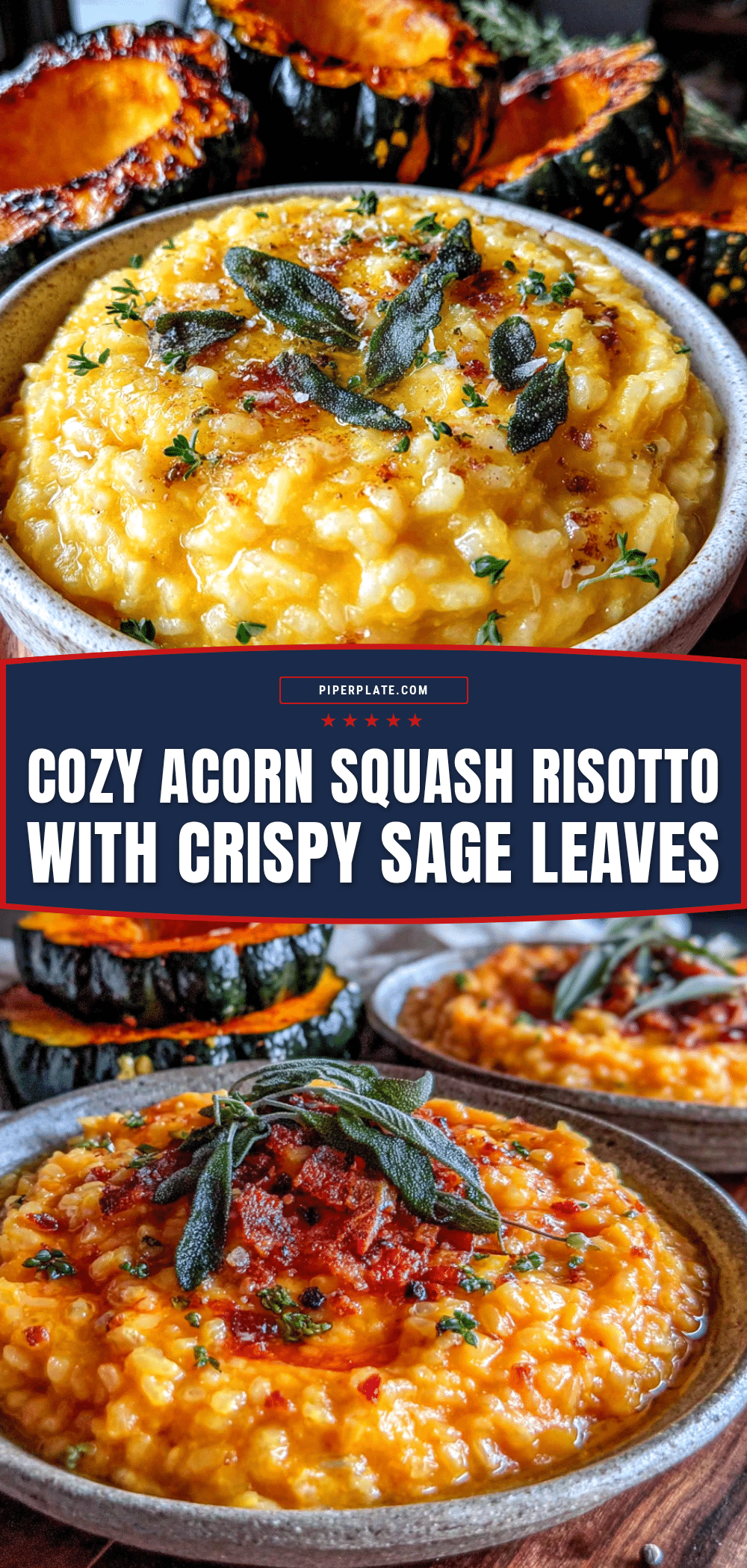
Cozy Acorn Squash Risotto with Crispy Sage

A creamy, comforting risotto featuring roasted acorn squash and crispy sage leaves. This dish is perfect for fall gatherings and proves that squash can be savory and satisfying.
- Prep Time: 15 minutes
- Cook Time: 45 minutes
- Total Time: 1 hour
- Yield: 4 servings 1x
- Category: Main Course
- Cuisine: Italian
Ingredients
- 1 medium acorn squash (about 1.5 lbs / 680g)
- 2 tablespoons olive oil
- Pinch of salt and black pepper
- 4 cups (960ml) vegetable broth, warmed
- 1 cup (240ml) dry white wine
- 1 small yellow onion, finely diced (about 1 cup / 150g)
- 2 cloves garlic, minced
- 1 ½ cups (300g) arborio rice
- 4 tablespoons (60g) unsalted butter, divided
- ½ cup (50g) freshly grated Parmesan cheese
- Salt and black pepper, to taste
- 12–15 fresh sage leaves
- 2 tablespoons olive oil or butter (for frying sage)
- Additional Parmesan, for serving
Instructions
- Preheat oven to 400°F (200°C). Cut acorn squash in half, scoop out seeds, and place cut-side down on a parchment-lined baking sheet. Roast for 35-45 minutes until fork-tender. Let cool, then scoop out flesh. Mash half and leave half in chunks.
- In a small saucepan, warm the vegetable broth over low heat.
- In a large pot or Dutch oven, melt 2 tablespoons butter over medium heat. Add onion and a pinch of salt; cook 5-7 minutes until translucent. Add garlic and cook 30 seconds.
- Add arborio rice and stir for 1-2 minutes until edges are translucent.
- Pour in white wine and stir until mostly absorbed, about 2 minutes.
- Add warm broth one ladleful (about ½ cup) at a time, stirring frequently, until each addition is mostly absorbed. Continue for 18-22 minutes until rice is al dente and creamy.
- Remove pot from heat. Fold in mashed and chunked roasted squash.
- Add remaining 2 tablespoons butter and grated Parmesan. Stir vigorously for 1 minute until creamy and glossy. Season with salt and pepper.
- In a small skillet, heat 2 tablespoons olive oil or butter over medium-high heat. Fry sage leaves for 10-15 seconds per side until crisp. Transfer to paper towels and sprinkle with salt.
- Serve risotto immediately in warm bowls, topped with crispy sage leaves and extra Parmesan.
Notes
Risotto is best served fresh. Leftovers can be refrigerated for up to 3 days and reheated with a splash of broth. For a vegan version, use vegan butter and nutritional yeast. The roasted squash can be prepared up to 3 days in advance.
Nutrition
- Serving Size: 1 serving
- Calories: 420
- Sugar: 6
- Sodium: 600
- Fat: 18
- Saturated Fat: 8
- Carbohydrates: 55
- Fiber: 4
- Protein: 9
Keywords: acorn squash risotto, crispy sage, fall risotto, vegetarian risotto, creamy risotto