Love this? Save it for later!
Share the inspiration with your friends
I was standing in the frozen foods aisle last Tuesday, staring at a box of pre-made meatloaf with gravy, when the smell hit me. It wasn’t from the store—it was in my head. That sweet, tangy, slightly caramelized scent of brown sugar glaze bubbling over a meatloaf fresh from the oven. And suddenly I was seven years old, standing on a step stool in my Aunt Margie’s tiny kitchen, watching her brush that glossy dark syrup over the top of her famous meatloaf like she was painting a masterpiece.
Aunt Margie passed about five years ago now, and honestly, I haven’t had a meatloaf that tasted like hers since. Not from a restaurant, not from a friend’s dinner table, and definitely not from that sad frozen box in my hand. I put the box back and walked out of the store empty-handed, but my mind was already racing. I had to figure it out. I had to get that taste back.
So I spent the next three Sundays making meatloaf. The first one was too dry. The second fell apart when I tried to slice it. The third had good flavor but the glaze was all wrong—too runny, like it was embarrassed to commit. You know that feeling when you’re so close but not quite there? That was me, standing over a sink full of greasy pans, wondering if I’d ever crack the code.
Then I remembered what Aunt Margie always said: “Don’t overthink it, honey. Meatloaf is supposed to be easy.” And she was right. I stopped trying to be fancy and went back to basics. A simple blend of ground beef and pork, some pantry seasonings, and that brown sugar glaze that turns into a sticky, sweet-tart crust that makes the whole house smell like Sunday dinner.
This easy classic meatloaf with brown sugar glaze isn’t just a recipe to me anymore. It’s a time machine. It’s the smell that makes my kids wander into the kitchen asking what’s for dinner. It’s the taste that makes my husband close his eyes after the first bite and just breathe. And if you’ve been chasing that same memory—or just need a reliable, no-fuss dinner that actually delivers—I promise this one’s worth the trip to the grocery store.
Why You’ll Love This Recipe
Let me tell you why this easy classic meatloaf with brown sugar glaze is the one you’ll come back to again and again. I’ve tested this recipe more times than I care to admit, tweaking ratios and swapping ingredients until every single element worked in harmony. This isn’t just another meatloaf recipe—it’s the one I’d serve to a dinner party without apology and the one I make on a tired Tuesday when I need a win.
- Quick & Easy: From start to table in about an hour, with only 15 minutes of active prep. The oven does the heavy lifting while you unload the dishwasher or help with homework.
- Simple Ingredients: You probably have most of these in your kitchen right now. No trips to specialty stores, no hunting down obscure spices. Ground beef, breadcrumbs, eggs, ketchup, brown sugar—the basics, done right.
- Perfect for Weeknights: This recipe respects your time. Mix it up, pop it in the oven, and get on with your evening. It’s the kind of dinner that makes you feel like you’ve got your act together even when you’re barely hanging on.
- Crowd-Pleaser: Kids devour it. Adults ask for seconds. It’s the rare dish that satisfies picky eaters and food snobs alike. I’ve served it to my in-laws and my toddler’s playgroup, and both groups cleaned their plates.
- Unbelievably Delicious: That brown sugar glaze isn’t just for looks. It caramelizes into a sticky, tangy-sweet crust that contrasts perfectly with the savory, juicy meatloaf underneath. The texture is tender but sliceable, moist but not mushy.
What makes this version different from all the others? Two things: the glaze technique and the moisture balance. Most recipes tell you to just spoon the glaze on top and call it done. I brush it on in two layers—once halfway through cooking and once at the end—so you get that thick, glossy, almost candied crust. And for moisture, I use a mix of milk-soaked breadcrumbs and a touch of Worcestershire sauce that keeps the meatloaf tender without making it soggy. It’s not revolutionary, but it’s precise. It’s tested. It works every single time.
This is the kind of meal that makes you close your eyes after the first bite. It’s comfort food the way it was meant to be—simple, honest, and deeply satisfying.
What Ingredients You Will Need
This easy classic meatloaf with brown sugar glaze uses simple, everyday ingredients to deliver big flavor and perfect texture. Nothing fancy here, just smart combinations that work. Here’s what you’ll need, along with a few notes from my testing kitchen to help you get the best results.
For the Meatloaf
- Ground beef (80/20), 2 pounds — I strongly recommend 80/20 here. Leaner blends (like 90/10) make the meatloaf dry and crumbly. You need that fat for moisture and flavor. If you can find it, grass-fed beef adds a nice depth, but regular grocery store beef works perfectly.
- Ground pork, 1/2 pound — This is my secret weapon. The pork adds fat and a subtle sweetness that plays beautifully with the brown sugar glaze. If you can’t find it, substitute with more ground beef, but honestly, the pork makes a noticeable difference.
- Yellow onion, 1 medium, finely diced — Sweat it in a pan first, don’t just throw it in raw. Raw onion releases water as it cooks and can make your meatloaf soggy. Sautéing it for 3-4 minutes until translucent concentrates the flavor and removes excess moisture.
- Garlic, 3 cloves, minced — Fresh garlic is non-negotiable here. The jarred stuff has a metallic taste that throws off the whole dish. Trust me on this one.
- Plain breadcrumbs, 1 cup — I use plain, unseasoned breadcrumbs so I can control the seasoning myself. Panko works in a pinch but gives a slightly looser texture. If you’re gluten-free, use certified GF breadcrumbs or crushed pork rinds for a low-carb option.
- Whole milk, 1/2 cup — Pour this over the breadcrumbs and let them soak for a few minutes before mixing. This creates what’s called a panade, which keeps the meatloaf tender and moist. Any milk works, but whole milk gives the best richness.
- Large eggs, 2 — These bind everything together. Make sure they’re at room temperature so they incorporate evenly. Cold eggs can seize the fat and make the meatloaf dense.
- Worcestershire sauce, 2 tablespoons — This adds umami and depth. I use Lea & Perrins, but any brand works. Don’t skip it—it’s doing more heavy lifting than you think.
- Ketchup, 1/4 cup — Adds tang and moisture to the meat mixture itself. Use a brand you like the taste of, because it’s a prominent flavor.
- Dried thyme, 1 teaspoon — Earthy and slightly floral, thyme pairs perfectly with beef. If you have fresh thyme, use 1 tablespoon of leaves, chopped.
- Dried parsley, 1 teaspoon — Adds a fresh note and a little color. Optional but nice.
- Salt, 1 1/2 teaspoons — Use kosher salt if you have it. If using table salt, reduce to 1 teaspoon. Seasoning the meat properly is the difference between a good meatloaf and a great one.
- Black pepper, 1/2 teaspoon — Freshly ground is always better. Pre-ground pepper has less punch.
- Smoked paprika, 1/2 teaspoon — Not traditional, but I add it for a subtle smokiness that rounds out the sweetness of the glaze. You can skip it if you don’t have it.
For the Brown Sugar Glaze
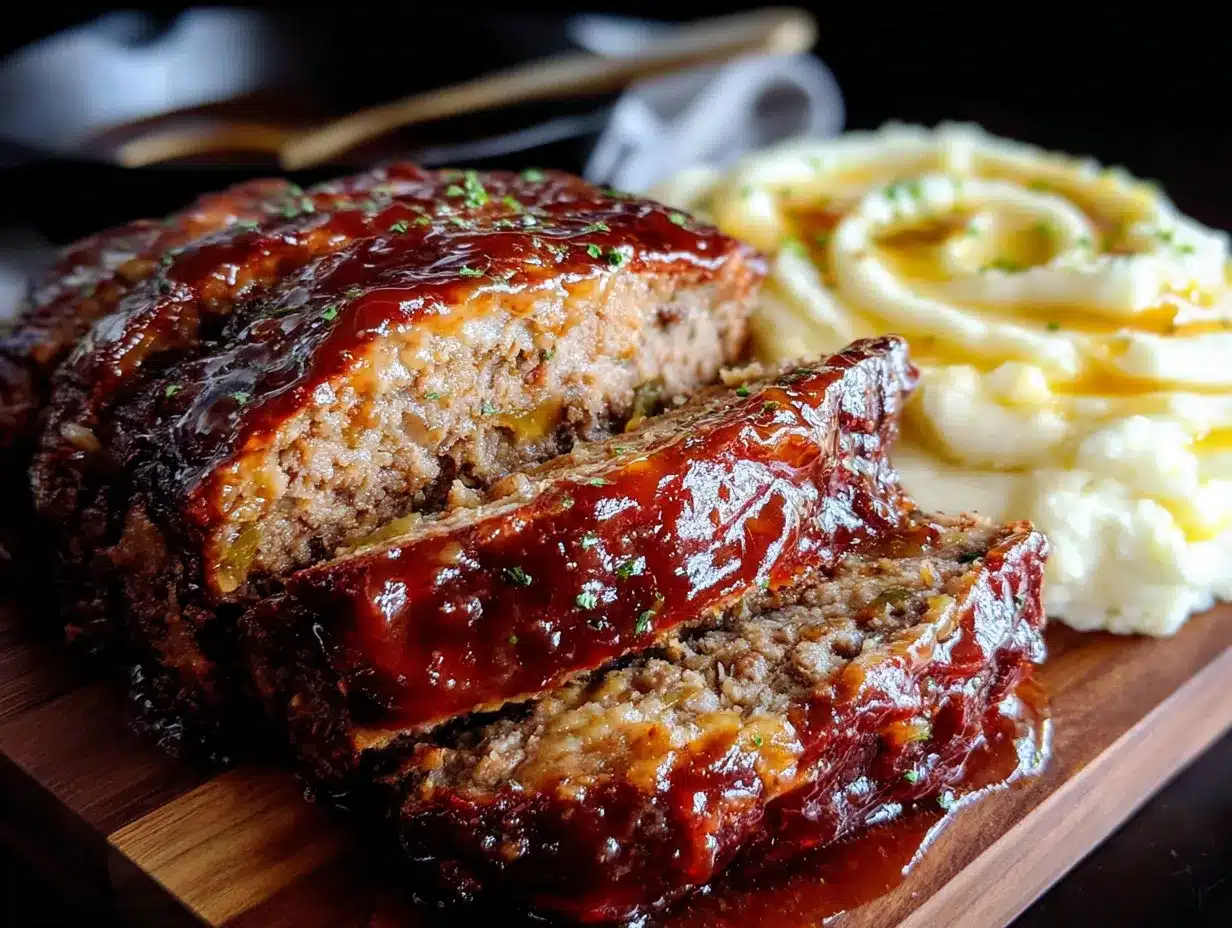
- Ketchup, 1/2 cup — This is the base of the glaze. Cheap ketchup works fine, but I prefer one with a good balance of sweet and tangy, like Heinz.
- Light brown sugar, 1/3 cup, packed — Pack it firmly into the measuring cup. This gives the glaze its signature sweetness and that sticky, caramelized texture. Dark brown sugar works too but will be more molasses-forward.
- Apple cider vinegar, 1 tablespoon — This cuts through the sweetness and adds the tang that makes the glaze so addictive. Don’t substitute with white vinegar—it’s too harsh.
- Dijon mustard, 1 teaspoon — Adds a subtle kick and helps emulsify the glaze. You won’t taste mustard specifically, but you’ll notice if it’s missing.
- Worcestershire sauce, 1/2 teaspoon — A little extra umami in the glaze never hurts.
- Garlic powder, 1/4 teaspoon — Just enough to add savory depth without being garlicky.
Ingredient Selection Tip: For the best texture, avoid pre-seasoned breadcrumbs or flavored ketchup. You want full control over the flavor profile. And if you’re buying ground beef from the butcher counter, ask them to grind it fresh—it makes a difference in texture and flavor.
Equipment Needed
You don’t need a fancy kitchen to make this easy classic meatloaf with brown sugar glaze. Here’s what you’ll actually use:
- Large mixing bowl — Big enough to get your hands in there. I use a stainless steel bowl because it doesn’t retain odors, but any large bowl works.
- 9×5-inch loaf pan — This gives the classic meatloaf shape. If you don’t have one, you can form the meatloaf free-form on a rimmed baking sheet. The loaf pan helps contain the juices and makes for a more uniform shape.
- Rimmed baking sheet — Place the loaf pan on this to catch any overflow. Trust me, you’ll be glad you did.
- Small saucepan — For making the glaze. A 1-quart pot is perfect.
- Pastry brush — For applying the glaze in even layers. A silicone brush is easiest to clean. If you don’t have one, you can spoon the glaze over the meatloaf and spread it with the back of the spoon.
- Chef’s knife and cutting board — For dicing the onion and mincing the garlic. A sharp knife makes this job infinitely easier.
- Skillet — For sautéing the onion and garlic. Any non-stick or stainless steel pan works.
- Measuring cups and spoons — For accuracy. I know some people eyeball it, but meatloaf is forgiving only up to a point.
- Meat thermometer — This is non-negotiable for food safety and perfect doneness. An instant-read thermometer is best. I’ve ruined too many meatloaves by guessing, so learn from my mistakes.
- Parchment paper or aluminum foil — For lining the loaf pan if you want easy cleanup. I use parchment because it doesn’t react with the glaze.
- Cooling rack — Let the meatloaf rest on a rack for 10 minutes after baking. This lets the juices redistribute and makes for cleaner slices.
Budget-Friendly Option: If you’re just starting out, skip the loaf pan and form the meatloaf free-form on a baking sheet lined with foil. It cooks slightly faster and you don’t need any special equipment. I did this for years before I owned a loaf pan.
Preparation Method
Follow these steps carefully, and you’ll have a perfect easy classic meatloaf with brown sugar glaze every time. I’ve included time estimates and sensory cues so you know exactly what to look for at each stage.
- Preheat your oven to 350°F (175°C). Position the rack in the center of the oven. While it’s heating, line your loaf pan with parchment paper if using, or lightly grease it with cooking spray. Place the loaf pan on a rimmed baking sheet to catch any drips.
- Make the panade. In your large mixing bowl, combine 1 cup of plain breadcrumbs and 1/2 cup of whole milk. Stir gently and let it sit for 5 minutes. The breadcrumbs will absorb the milk and turn into a thick, pasty mixture. This is the panade, and it’s the key to a moist, tender meatloaf. Don’t rush this step—the breadcrumbs need time to fully hydrate.
- Sauté the aromatics. While the panade rests, heat a small skillet over medium heat. Add a drizzle of olive oil (about 1 teaspoon) and the finely diced onion. Cook for 3-4 minutes, stirring occasionally, until the onion is translucent and fragrant. Add the minced garlic and cook for 30 seconds more, until you can smell it. Remove from heat and let it cool slightly. Pro tip: If you add hot onions to the meat mixture, it can start cooking the meat prematurely. Let them cool for at least 2-3 minutes.
- Make the glaze. In a small saucepan, combine 1/2 cup ketchup, 1/3 cup packed light brown sugar, 1 tablespoon apple cider vinegar, 1 teaspoon Dijon mustard, 1/2 teaspoon Worcestershire sauce, and 1/4 teaspoon garlic powder. Whisk together over medium heat. Bring to a gentle simmer—you’ll see small bubbles around the edges—then reduce the heat to low and cook for 3-4 minutes, stirring occasionally. The glaze should thicken slightly and darken in color. Remove from heat and set aside. Sensory cue: The glaze should smell sweet and tangy, like a cross between barbecue sauce and caramel.
- Combine the meatloaf ingredients. To the bowl with the panade, add 2 pounds ground beef, 1/2 pound ground pork, the sautéed onion and garlic, 2 large eggs (lightly beaten), 2 tablespoons Worcestershire sauce, 1/4 cup ketchup, 1 teaspoon dried thyme, 1 teaspoon dried parsley, 1 1/2 teaspoons kosher salt, 1/2 teaspoon black pepper, and 1/2 teaspoon smoked paprika. Use your hands to gently mix everything together. Important: Don’t overmix! Mix just until everything is combined—about 30 seconds of gentle folding and pressing. Overmixing makes the meatloaf dense and tough. You should still see small flecks of different ingredients; it doesn’t need to be perfectly uniform.
- Shape the meatloaf. Transfer the mixture to your prepared loaf pan. Gently press it into an even shape, making sure there are no air pockets. Don’t pack it down too firmly—you want it to hold together but still be tender. Smooth the top with your hands or the back of a spoon.
- First glaze application. Brush about one-third of the glaze over the top of the meatloaf. Reserve the remaining glaze for later. This first layer will bake into the meatloaf and start building that caramelized crust.
- Bake for 40 minutes. Place the loaf pan on the baking sheet and put it in the oven. Set a timer for 40 minutes. At this point, the meatloaf should be mostly cooked through but not quite done. The top should be starting to brown and the glaze should be bubbling. Sensory cue: Your kitchen should smell incredible at this point—sweet, savory, and a little tangy.
- Second glaze application. Remove the meatloaf from the oven (carefully—it’s hot!). Brush another one-third of the glaze over the top. This second layer will create that thick, glossy, caramelized crust that makes this recipe special. Return the meatloaf to the oven.
- Bake for another 15-20 minutes. The total baking time should be 55-60 minutes. Start checking for doneness at the 55-minute mark. The internal temperature should reach 160°F (71°C) when measured with a meat thermometer inserted into the center of the meatloaf. Sensory cue: The glaze should be dark, sticky, and bubbling. The edges of the meatloaf should be pulling away slightly from the sides of the pan.
- Rest the meatloaf. Remove from the oven and let it rest in the pan for 10 minutes. This is crucial—don’t skip it! During this time, the juices redistribute throughout the meatloaf, making it moist and sliceable. If you cut into it immediately, it will fall apart. While it rests, brush the remaining glaze over the top for an extra glossy finish.
- Slice and serve. After resting, carefully lift the meatloaf out of the pan using the parchment paper (if you used it) or a spatula. Transfer to a cutting board. Use a sharp knife to slice into 1-inch thick pieces. Serve warm with your favorite sides.
Troubleshooting Tip: If your meatloaf cracks on top during baking, don’t panic. This usually happens when the mixture is too dry or the oven temperature is too high. Next time, add an extra tablespoon of milk to the panade or reduce the oven temperature to 325°F. The cracks don’t affect the taste, and the glaze covers most of them anyway.
Cooking Tips & Techniques
After making this easy classic meatloaf with brown sugar glaze more times than I can count (and messing it up plenty along the way), I’ve gathered some tips that will save you time, frustration, and disappointment.
Don’t skip the panade. I know it seems like an extra step, but the milk-soaked breadcrumbs are what keep this meatloaf from turning into a dry, crumbly brick. I once tried to save time by skipping this step and just adding dry breadcrumbs directly to the meat. Big mistake. The texture was dense and sandy. The panade creates a tender, almost velvety texture that’s worth the 5-minute wait.
Use a light hand when mixing. This is probably the most common mistake I see. People treat meatloaf like they’re kneading bread dough, working it over and over until it’s smooth and uniform. Stop! Overmixing develops the proteins in the meat and makes the final product tough. Mix just until everything comes together. You should still see small pieces of onion and flecks of herbs. Your meatloaf will thank you.
Let the meatloaf rest. I cannot emphasize this enough. The 10-minute rest after baking is not optional. When you pull the meatloaf out of the oven, the juices are bubbling and moving around inside. If you slice into it right away, those juices run out onto the cutting board and you’re left with a dry, crumbly mess. Let it rest, and the juices settle back into the meat. Your slices will be clean, moist, and picture-perfect.
Double the glaze. The recipe above makes a generous amount of glaze, but I always make extra. I like to serve the meatloaf with a small bowl of extra glaze on the side for drizzling. Plus, leftover glaze is amazing on meatballs, chicken, or even roasted vegetables. It keeps in the fridge for up to two weeks.
Test with a thermometer, not a timer. Ovens vary wildly. Your 350°F might actually be 325°F or 375°F. Don’t rely on the timer alone. Use an instant-read meat thermometer to check for doneness. 160°F is the magic number for ground beef. The first time I made this recipe, I pulled it out at exactly 55 minutes and it was perfect. The next time, it needed 65 minutes. Trust the thermometer, not the clock.
Let the meat come to room temperature. If you have time, take the ground beef and pork out of the fridge 20-30 minutes before mixing. Cold meat doesn’t mix as evenly and takes longer to cook. Room temperature meat blends more easily and cooks more consistently. Just don’t leave it out for more than 30 minutes—food safety matters.
My biggest failure: I once tried to make this recipe with ground turkey to be “healthier.” It was a disaster. Turkey is much leaner and drier than beef, and without adjusting the fat content, the meatloaf turned into something that resembled a hockey puck. If you want to use turkey, add an extra egg and a tablespoon of olive oil to compensate for the missing fat. Or better yet, stick with the beef and pork blend and just enjoy it in moderation.
Variations & Adaptations
This easy classic meatloaf with brown sugar glaze is wonderfully adaptable. Here are some variations I’ve tried and loved, along with notes on what works and what doesn’t.
Dietary Variations
- Gluten-Free: Substitute the breadcrumbs with gluten-free breadcrumbs or crushed pork rinds. The pork rinds add extra fat and flavor, making the meatloaf incredibly moist. I’ve tested this twice and it worked beautifully both times. Just make sure your Worcestershire sauce is also gluten-free (Lea & Perrins is).
- Low-Carb/Keto: Replace the breadcrumbs with 1/2 cup of almond flour and 1/2 cup of crushed pork rinds. Use sugar-free ketchup and a sugar substitute like Swerve brown sugar in the glaze. The texture is slightly denser but still delicious. My keto friends have given this their seal of approval.
- Dairy-Free: Swap the whole milk for unsweetened almond milk or oat milk. The panade works just as well with non-dairy milk. I’ve used oat milk and couldn’t tell the difference.
Flavor Variations
- Italian-Style: Add 1 teaspoon of dried oregano, 1 teaspoon of dried basil, and 1/4 cup of grated Parmesan cheese to the meat mixture. Swap the brown sugar glaze for a simple marinara glaze (just brush on your favorite marinara sauce). Serve with spaghetti on the side.
- BBQ Meatloaf: Replace the brown sugar glaze with your favorite barbecue sauce. Use a smoky BBQ sauce for extra depth. This is my husband’s favorite variation—he says it tastes like a burger in loaf form.
- Cheesy Stuffed Meatloaf: After shaping half of the meat mixture in the pan, make a shallow well down the center and fill it with 1 cup of shredded cheddar cheese or mozzarella. Cover with the remaining meat mixture and bake as directed. The cheese melts into a gooey, delicious core. Just be careful when slicing—the cheese will be hot!
Method Variations
- Air Fryer Meatloaf: Shape the meatloaf into a smaller, flatter loaf that fits in your air fryer basket (about 6×4 inches). Cook at 350°F for 25-30 minutes, applying the glaze in two layers as directed. Check internal temperature at 25 minutes. The air fryer creates an especially crispy crust.
- Instant Pot Meatloaf: Shape the meatloaf and place it on a trivet in the Instant Pot with 1 cup of beef broth. Cook on high pressure for 25 minutes, then natural release for 10 minutes. Broil the glazed meatloaf for 3-4 minutes to caramelize the top. This method is faster but doesn’t develop the same crust as oven-baking.
- Mini Meatloaves: Divide the mixture into 6-8 individual portions and shape into small loaves on a baking sheet. Bake at 375°F for 20-25 minutes. These cook faster and are perfect for meal prep or portion control. My kids love having their own mini meatloaf.
A personal variation I love: I sometimes add 1/2 cup of finely grated carrot to the meat mixture. It adds moisture, a hint of sweetness, and a little extra nutrition without changing the flavor. My kids have never noticed, and I feel slightly better about serving them meatloaf for dinner.
Serving & Storage Suggestions
This easy classic meatloaf with brown sugar glaze is versatile enough for a casual weeknight dinner or a special Sunday supper. Here’s how to serve it, store it, and enjoy it all over again.
Serving Suggestions
Serve the meatloaf warm, sliced into 1-inch thick pieces. I like to spoon a little extra glaze over each slice right before serving. The classic sides are mashed potatoes and green beans, but don’t be afraid to mix it up. Creamy mac and cheese, roasted broccoli, or a simple side salad all work beautifully. The sweet-tangy glaze pairs especially well with something starchy and buttery to balance the flavors.
For a full comfort meal, try serving with buttery mashed potatoes, roasted carrots, and a side of crusty bread to soak up any extra glaze on the plate. If you’re feeling fancy, a sprinkle of fresh parsley on top adds a pop of color and freshness.
Storage Instructions
Refrigerator: Store leftover meatloaf in an airtight container in the refrigerator for up to 4 days. Wrap it tightly in plastic wrap or aluminum foil to prevent it from drying out. I like to slice it before storing so I can grab individual portions.
Freezer: Meatloaf freezes beautifully. Let it cool completely, then wrap it tightly in plastic wrap, followed by a layer of aluminum foil. Label with the date and freeze for up to 3 months. To freeze individual slices, place them on a baking sheet in the freezer for 1 hour, then transfer to a freezer bag. This way you can thaw just what you need.
Reheating Methods
- Oven: Preheat to 350°F. Place slices on a baking sheet and cover loosely with foil. Heat for 10-15 minutes, until warmed through. This method preserves the texture best.
- Microwave: Place a slice on a microwave-safe plate and cover with a damp paper towel. Heat on high for 1-2 minutes. Quick and easy, but the texture will be slightly softer.
- Skillet: Heat a non-stick skillet over medium heat. Add a slice of meatloaf and cook for 2-3 minutes per side, until heated through. This gives you a slightly crispy exterior.
- Air Fryer: Reheat slices at 350°F for 3-4 minutes. The air fryer restores some of the crust’s crispiness.
Flavor Development Note: Leftover meatloaf often tastes even better the next day. The flavors have time to meld and deepen overnight. I’ve been known to make a double batch just so I can have meatloaf sandwiches for lunch. A cold slice of meatloaf on white bread with a smear of ketchup is one of life’s simple pleasures.
Make-Ahead Tips
You can assemble the meatloaf up to 24 hours in advance. Mix everything together, shape it in the loaf pan, and cover it tightly with plastic wrap. Refrigerate until ready to bake. Add about 10-15 minutes to the baking time since you’re starting from cold. The glaze can also be made ahead and stored in the refrigerator for up to a week.
Nutritional Information & Benefits
While this easy classic meatloaf with brown sugar glaze is definitely comfort food, it does have some nutritional redeeming qualities. Here’s a rough breakdown per serving (based on 8 servings):
| Nutrient | Amount Per Serving |
|---|---|
| Calories | 385 |
| Protein | 28g |
| Fat | 22g |
| Saturated Fat | 8g |
| Carbohydrates | 18g |
| Fiber | 1g |
| Sugar | 12g |
| Sodium | 680mg |
Health Benefits: Ground beef is an excellent source of protein, iron, zinc, and B vitamins, especially B12. The iron in beef is heme iron, which is more easily absorbed by the body than plant-based iron. The onions and garlic provide antioxidants and compounds that support immune health. And while the brown sugar glaze adds sugar, it’s a relatively small amount spread across the entire dish—you’re not eating spoonfuls of it.
Dietary Considerations: This recipe contains gluten (from breadcrumbs), dairy (from milk), and eggs. For gluten-free, use GF breadcrumbs. For dairy-free, use almond milk. For egg-free, try a flax egg (1 tablespoon ground flaxseed mixed with 3 tablespoons water, let sit for 5 minutes). The flax egg works but the texture will be slightly less tender.
Allergen Note: Worcestershire sauce contains anchovies, so this is not suitable for those with fish allergies. Look for vegan Worcestershire sauce if needed.
My perspective: I’m not here to tell you meatloaf is health food. It’s not. But it’s real food made from real ingredients, and there’s something to be said for that. When I serve this to my family, I know exactly what’s in it. No preservatives, no weird additives, no mystery ingredients. And when paired with a generous serving of vegetables and a sensible portion size, it fits perfectly into a balanced diet. Sometimes a little comfort is exactly what you need.
Conclusion
This easy classic meatloaf with brown sugar glaze is more than just a recipe to me. It’s the taste of Sunday dinners at Aunt Margie’s house, the smell that fills my kitchen and makes everyone wander in asking what’s for dinner, and the feeling of pulling off a meal that looks like you spent hours on it when really it came together in 15 minutes of active work.
I’ve made this recipe for potlucks, for sick friends, for busy weeknights, and for quiet Sunday suppers. Every single time, it delivers. The glaze caramelizes into that sticky-sweet crust that everyone fights over. The meatloaf stays moist and tender, slice after slice. And the leftovers? They might be the best part—cold meatloaf sandwiches for lunch the next day are practically a religious experience.
But here’s the thing I really want you to take away: don’t be afraid to make this recipe your own. Add more garlic if you love garlic. Swap in ground turkey if that’s what you have. Throw in some shredded cheese or chopped mushrooms. Meatloaf is forgiving. It wants to be played with. The first time I made this, I forgot the Worcestershire sauce and it was still good. The second time, I added too much salt and it was still edible. The third time, I nailed it. And so will you.
So go ahead. Get your hands dirty. Make a mess. And when that meatloaf comes out of the oven, all glossy and glazed and smelling like home, take a moment to appreciate what you’ve made. Then slice it up, serve it with your favorite sides, and watch everyone at your table go quiet for a minute. That’s the sound of a good meal doing its job.
I’d love to hear how yours turns out. Did you try a variation? Did your kids ask for seconds? Did you burn the glaze like I did the first time? Drop a comment below and let me know. And if you loved this recipe, share it with a friend who needs a good dinner in their life. Happy cooking!
Frequently Asked Questions
Can I make this meatloaf without a loaf pan?
Absolutely. Form the meat mixture into a free-form loaf shape on a rimmed baking sheet lined with parchment paper or foil. It will cook slightly faster (check for doneness at 45 minutes) and you’ll get more caramelized edges, which are delicious.
Why did my meatloaf fall apart when I sliced it?
This usually happens for one of two reasons: you didn’t let it rest long enough after baking, or your mixture was too dry. Let the meatloaf rest for at least 10 minutes before slicing. If it still crumbles, add an extra egg to the mixture next time to help it bind better.
Can I use ground turkey instead of beef?
Yes, but you’ll need to make adjustments. Ground turkey is much leaner, so add 1 tablespoon of olive oil and an extra egg to the mixture to keep it moist. You may also want to reduce the baking time by 5-10 minutes since turkey cooks faster. Use a meat thermometer to check for 165°F internal temperature.
How do I prevent the glaze from burning?
The brown sugar in the glaze can burn if it’s exposed to high heat for too long. That’s why I apply it in two layers—once halfway through and once near the end. If you notice the glaze getting too dark before the meatloaf is cooked through, tent the loaf pan loosely with aluminum foil for the last 10-15 minutes of baking.
Can I freeze this meatloaf before baking?
Yes, and it works great. Assemble the meatloaf in the loaf pan, wrap it tightly in plastic wrap and then aluminum foil, and freeze for up to 3 months. Thaw overnight in the refrigerator before baking. You may need to add 10-15 minutes to the baking time since you’re starting from cold.
Pin This Recipe!
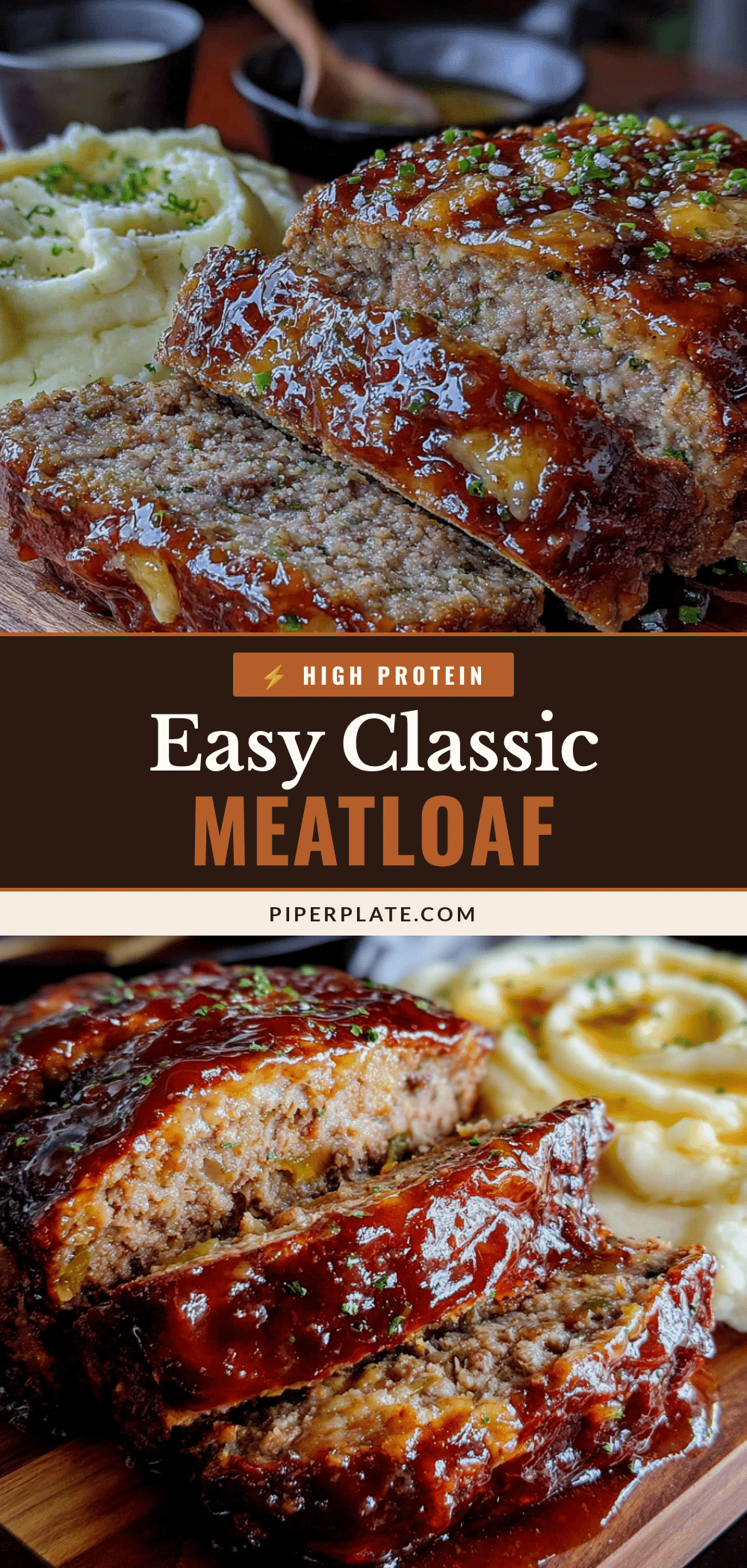
Easy Classic Meatloaf with Brown Sugar Glaze

This easy classic meatloaf with brown sugar glaze is a comforting, nostalgic dish that brings back memories of Sunday dinners. With a simple blend of ground beef and pork, pantry seasonings, and a sticky-sweet-tart glaze that caramelizes into a perfect crust, it’s a reliable, no-fuss dinner that delivers every time.
- Prep Time: 15 minutes
- Cook Time: 55-60 minutes
- Total Time: 1 hour 10-15 minutes
- Yield: 8 servings 1x
- Category: Main Course
- Cuisine: American
Ingredients
- 2 pounds ground beef (80/20)
- 1/2 pound ground pork
- 1 medium yellow onion, finely diced
- 3 cloves garlic, minced
- 1 cup plain breadcrumbs
- 1/2 cup whole milk
- 2 large eggs, lightly beaten
- 2 tablespoons Worcestershire sauce
- 1/4 cup ketchup
- 1 teaspoon dried thyme
- 1 teaspoon dried parsley
- 1 1/2 teaspoons kosher salt
- 1/2 teaspoon black pepper
- 1/2 teaspoon smoked paprika
- 1/2 cup ketchup (for glaze)
- 1/3 cup light brown sugar, packed (for glaze)
- 1 tablespoon apple cider vinegar (for glaze)
- 1 teaspoon Dijon mustard (for glaze)
- 1/2 teaspoon Worcestershire sauce (for glaze)
- 1/4 teaspoon garlic powder (for glaze)
Instructions
- Preheat your oven to 350°F (175°C). Position the rack in the center of the oven. Line your loaf pan with parchment paper if using, or lightly grease it with cooking spray. Place the loaf pan on a rimmed baking sheet to catch any drips.
- Make the panade: In your large mixing bowl, combine 1 cup of plain breadcrumbs and 1/2 cup of whole milk. Stir gently and let it sit for 5 minutes until the breadcrumbs absorb the milk and turn into a thick, pasty mixture.
- Sauté the aromatics: While the panade rests, heat a small skillet over medium heat. Add a drizzle of olive oil (about 1 teaspoon) and the finely diced onion. Cook for 3-4 minutes, stirring occasionally, until the onion is translucent and fragrant. Add the minced garlic and cook for 30 seconds more. Remove from heat and let it cool slightly.
- Make the glaze: In a small saucepan, combine 1/2 cup ketchup, 1/3 cup packed light brown sugar, 1 tablespoon apple cider vinegar, 1 teaspoon Dijon mustard, 1/2 teaspoon Worcestershire sauce, and 1/4 teaspoon garlic powder. Whisk together over medium heat. Bring to a gentle simmer, then reduce the heat to low and cook for 3-4 minutes, stirring occasionally, until the glaze thickens slightly and darkens in color. Remove from heat and set aside.
- Combine the meatloaf ingredients: To the bowl with the panade, add 2 pounds ground beef, 1/2 pound ground pork, the sautéed onion and garlic, 2 large eggs (lightly beaten), 2 tablespoons Worcestershire sauce, 1/4 cup ketchup, 1 teaspoon dried thyme, 1 teaspoon dried parsley, 1 1/2 teaspoons kosher salt, 1/2 teaspoon black pepper, and 1/2 teaspoon smoked paprika. Use your hands to gently mix everything together just until combined—about 30 seconds of gentle folding and pressing. Do not overmix.
- Shape the meatloaf: Transfer the mixture to your prepared loaf pan. Gently press it into an even shape, making sure there are no air pockets. Don’t pack it down too firmly. Smooth the top with your hands or the back of a spoon.
- First glaze application: Brush about one-third of the glaze over the top of the meatloaf. Reserve the remaining glaze for later.
- Bake for 40 minutes: Place the loaf pan on the baking sheet and put it in the oven. Set a timer for 40 minutes.
- Second glaze application: Remove the meatloaf from the oven. Brush another one-third of the glaze over the top. Return the meatloaf to the oven.
- Bake for another 15-20 minutes: The total baking time should be 55-60 minutes. Start checking for doneness at the 55-minute mark. The internal temperature should reach 160°F (71°C) when measured with a meat thermometer inserted into the center of the meatloaf.
- Rest the meatloaf: Remove from the oven and let it rest in the pan for 10 minutes. While it rests, brush the remaining glaze over the top for an extra glossy finish.
- Slice and serve: After resting, carefully lift the meatloaf out of the pan using the parchment paper or a spatula. Transfer to a cutting board. Use a sharp knife to slice into 1-inch thick pieces. Serve warm with your favorite sides.
Notes
Don’t skip the panade (milk-soaked breadcrumbs) as it keeps the meatloaf moist. Use a light hand when mixing to avoid a dense texture. Let the meatloaf rest for 10 minutes after baking to allow juices to redistribute. For best results, use a meat thermometer to check for doneness (160°F). The glaze can be made ahead and stored in the refrigerator for up to a week.
Nutrition
- Serving Size: 1 slice (1-inch thic
- Calories: 385
- Sugar: 12
- Sodium: 680
- Fat: 22
- Saturated Fat: 8
- Carbohydrates: 18
- Fiber: 1
- Protein: 28
Keywords: meatloaf, brown sugar glaze, classic meatloaf, comfort food, easy dinner, ground beef, ground pork, weeknight dinner