Love this? Save it for later!
Share the inspiration with your friends
The Thanksgiving potluck at my office was in four hours and I’d completely forgotten. Everyone else would be bringing their grandmother’s legendary cornbread dressing or that sausage stuffing that’s been perfected over three generations. I had a bag of gluten-free bread that was going stale on my counter, a half-empty jar of dried herbs, and about forty-five minutes before I needed to leave. Honestly, I almost called in sick. I mean, who shows up to a Thanksgiving-themed potluck with a recipe they just made up on the spot? Someone who forgot, apparently.
I started pulling things out of the pantry, muttering to myself about how I should have set a reminder. The celery was a little limp, the onions were fine, and I had just enough butter. I grabbed the dried sage, thyme, and rosemary—the holy trinity of Thanksgiving herbs, if you ask me. I figured I’d just toast the bread cubes, sauté the aromatics, and hope for the best. The whole thing came together in a blur of chopping and stirring. I didn’t even have time to taste it before I ran out the door, Tupperware in hand.
At the potluck, I set my dish down next to a beautifully layered stuffing that looked like it came from a magazine cover. I felt a little sheepish, honestly. But then people started trying mine. And then they went back for seconds. And then my coworker, Maria, asked for the recipe. The simple, thrown-together, gluten-free stuffing that I’d made under pressure was the one that got the most compliments. Maybe you’ve been there—the recipe you least expect to work ends up being the one everyone remembers. That’s this stuffing for me. It’s the cozy, herb-filled, gluten-free Thanksgiving stuffing that proved you don’t need a family heirloom recipe to steal the show. You just need a little panic, a lot of butter, and some really good herbs.
Why You’ll Love This Recipe
Let me tell you why this gluten-free herb stuffing is about to become your new Thanksgiving go-to. I’ve tested this recipe more times than I can count, tweaking the herb ratios and the bread texture until it was just right. It’s not just another gluten-free stuffing that crumbles into a sad, dry mess. This one has staying power.
- Quick & Easy: Comes together in under an hour, perfect for the chaotic morning of Thanksgiving or a last-minute potluck like mine.
- Simple Ingredients: No fancy grocery trips needed. You likely already have gluten-free bread, butter, onions, celery, and dried herbs in your kitchen.
- Perfect for Thanksgiving: It’s the ultimate side dish for your holiday table, whether you’re hosting or bringing a dish to share.
- Crowd-Pleaser: Gluten-free or not, everyone loves this stuffing. It always gets rave reviews from kids and adults alike.
- Unbelievably Delicious: The texture is perfectly soft on the inside with crispy, golden edges. The herb flavor is cozy and comforting—it’s next-level comfort food.
What makes this recipe different from the rest? It’s the technique. Instead of just mixing everything together and baking, I toast the bread cubes first to give them structure. Then I sauté the aromatics in plenty of butter until they’re soft and sweet. The result is a stuffing that holds its shape, has a beautiful texture, and tastes like it took hours of effort. Spoiler: it didn’t.
This recipe isn’t just good—it is the kind that makes you close your eyes after the first bite. It’s comfort food reimagined—gluten-free, but with the same soul-soothing satisfaction. Perfect for impressing guests without stress, or turning a simple meal into something memorable.
What Ingredients You Will Need
This recipe uses simple, wholesome ingredients to deliver bold flavor and satisfying texture without the fuss. Most of these are pantry staples, which makes this dish incredibly easy to pull together on a whim.
- Gluten-free bread (1 large loaf, about 10-12 cups cubed): Use a sturdy gluten-free bread, like a white or multigrain loaf. I recommend Schar or Canyon Bakehouse for best texture. Let it go slightly stale for better absorption, or toast it in the oven.
- Unsalted butter (1/2 cup, 1 stick): Adds richness and helps sauté the vegetables. You can use a dairy-free butter alternative if needed.
- Yellow onion (1 large, diced): Provides a savory base. Sweet onion works too.
- Celery (3-4 stalks, diced): Adds that classic stuffing crunch and freshness.
- Garlic (3 cloves, minced): For a subtle aromatic depth.
- Dried sage (2 teaspoons): The star herb of Thanksgiving stuffing. Don’t skip it.
- Dried thyme (1 teaspoon): Adds an earthy, slightly floral note.
- Dried rosemary (1 teaspoon, crushed): Brings a piney, woodsy flavor.
- Fresh parsley (1/4 cup, chopped): For a pop of color and freshness at the end.
- Low-sodium vegetable or chicken broth (1 1/2 to 2 cups): This is what keeps the stuffing moist. Use gluten-free broth to keep the dish entirely gluten-free.
- Eggs (2 large): Acts as a binder to help the stuffing hold together. For a vegan option, use a flax egg (2 tablespoons ground flaxseed mixed with 6 tablespoons water).
- Salt and black pepper (to taste): Season generously.
- Optional: Sausage or mushrooms (1 cup, cooked and crumbled): For a heartier version. I’ve used both, and they’re fantastic additions.
Equipment Needed
You don’t need a lot of fancy equipment for this recipe. Here’s what you’ll need:
- Large baking sheet: For toasting the bread cubes. A rimmed baking sheet works best.
- Large skillet or sauté pan: For cooking the vegetables. A 12-inch skillet is ideal.
- Large mixing bowl: For combining all the ingredients.
- 9×13-inch baking dish: For baking the stuffing. A ceramic or glass dish works well.
- Sharp knife and cutting board: For prepping the vegetables.
- Measuring cups and spoons: For accuracy.
- Wooden spoon or spatula: For stirring.
- Aluminum foil: For covering the dish during the first part of baking.
If you don’t have a 9×13-inch dish, you can use a similar-sized casserole dish or even a cast-iron skillet. I’ve used my trusty 12-inch cast iron before, and it works beautifully—just keep an eye on the baking time.
Preparation Method
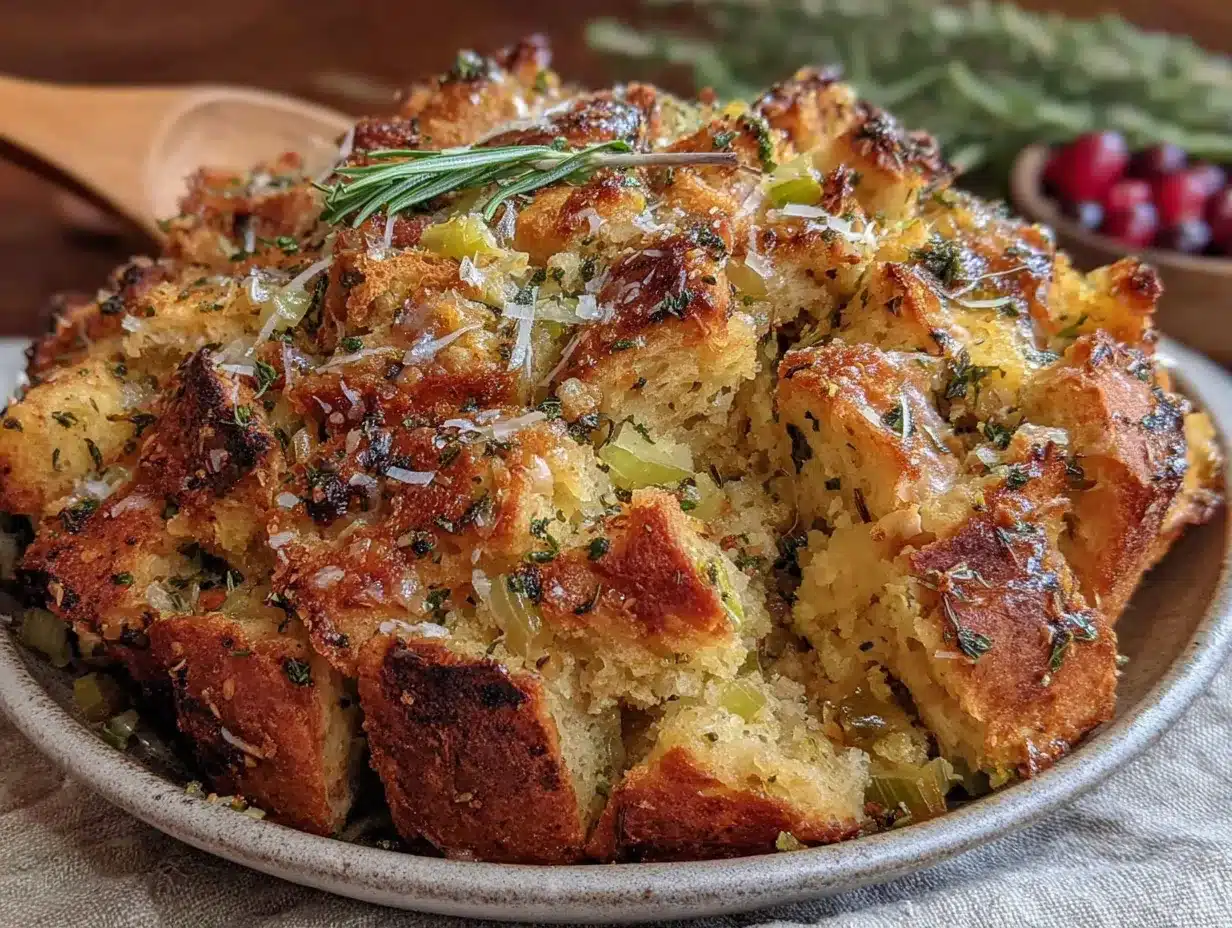
Let’s get cooking. This recipe is straightforward, but following these steps will ensure perfect results every time.
- Preheat your oven to 350°F (175°C). Cut the gluten-free bread into 1-inch cubes. You should have about 10-12 cups. Spread them in a single layer on a large baking sheet. Bake for 10-12 minutes, stirring halfway through, until the cubes are dry and lightly golden. This step is crucial—it prevents the stuffing from turning into mush. Let them cool slightly.
- While the bread toasts, melt the butter in a large skillet over medium heat. Add the diced onion and celery. Cook for 6-8 minutes, stirring occasionally, until the vegetables are soft and translucent. Add the minced garlic and cook for another minute until fragrant. The smell at this point is pure Thanksgiving.
- Remove the skillet from the heat. Stir in the dried sage, thyme, and crushed rosemary. Let the herbs bloom in the residual heat for about a minute. This wakes up their flavors.
- In a large mixing bowl, whisk together the eggs and 1 1/2 cups of the broth. Season with a generous pinch of salt and black pepper. Add the toasted bread cubes and the sautéed vegetable-herb mixture. Toss everything gently until the bread is evenly coated. If the mixture seems dry, add the remaining 1/2 cup of broth. The bread should be moist but not swimming in liquid. Pro tip: Let the mixture sit for 5 minutes so the bread absorbs the liquid.
- Transfer the stuffing to a greased 9×13-inch baking dish. Spread it into an even layer. Cover the dish with aluminum foil and bake for 25 minutes. This steams the stuffing, ensuring it’s soft and tender.
- Remove the foil and bake for an additional 15-20 minutes, or until the top is golden brown and crispy. The edges should be slightly crunchy while the center remains soft. If you like it extra crispy, broil for the last 2-3 minutes—but watch it closely so it doesn’t burn.
- Let the stuffing rest for 5 minutes before serving. Sprinkle with fresh chopped parsley for a burst of color and freshness.
Sensory cues: When it’s done, you’ll smell the warm herbs and toasted bread. The top will be a beautiful golden brown, and you’ll hear a slight crackle when you press the crust. The inside will be soft and steamy, like a warm hug.
Cooking Tips & Techniques
I’ve made this stuffing more times than I care to admit, and I’ve learned a few things along the way. Here are my best tips:
- Don’t skip toasting the bread. I learned this the hard way. The first time I made gluten-free stuffing, I used fresh bread, and it turned into a soggy, gluey mess. Toasting the cubes gives them structure so they can absorb the broth without falling apart.
- Season generously. Gluten-free bread can be a bit bland, so don’t be shy with the salt and herbs. Taste the vegetable mixture before adding it to the bread, and adjust the seasoning.
- Use low-sodium broth. This gives you control over the salt level. You can always add more salt at the end, but you can’t take it out.
- Let it rest. After baking, let the stuffing sit for 5-10 minutes. This allows the steam to settle and the stuffing to firm up slightly, making it easier to serve.
- Timing strategy: You can toast the bread and sauté the vegetables a day ahead. Store them separately in the fridge, then assemble and bake on Thanksgiving day. It saves so much time.
- Consistency tip: If your stuffing seems too dry after baking, drizzle a little warm broth over the top before serving. If it’s too wet, bake it uncovered for a few extra minutes.
Variations & Adaptations
This recipe is incredibly versatile. Here are some ways to make it your own:
- Sausage and Herb Stuffing: Brown 1 pound of gluten-free Italian sausage (casings removed) in the skillet before cooking the vegetables. Crumble it and add it to the bread mixture. It adds a savory, meaty depth that’s hard to resist.
- Mushroom and Leek Stuffing: Swap the celery for 2 cups of sliced cremini mushrooms and 1 large leek (cleaned and sliced). Sauté them in the butter until golden. The earthy mushrooms pair beautifully with the herbs.
- Vegan Version: Use a dairy-free butter alternative and a flax egg (2 tablespoons ground flaxseed + 6 tablespoons water). Use vegetable broth. It works perfectly—I’ve tested it for a vegan friend’s Thanksgiving, and she couldn’t tell the difference.
- Apple and Cranberry Stuffing: Add 1 diced apple (like Honeycrisp or Granny Smith) and 1/2 cup dried cranberries to the vegetable mixture. The sweetness cuts through the savory herbs beautifully.
- Slow Cooker Method: After assembling the stuffing, transfer it to a greased slow cooker. Cook on low for 3-4 hours or on high for 1.5-2 hours. This frees up oven space on Thanksgiving day.
Serving & Storage Suggestions
Serve this stuffing warm, straight from the baking dish. It’s the perfect side for roasted turkey, mashed potatoes, and green bean casserole. I love it with a dollop of cranberry sauce on the side—the tartness cuts through the richness.
Storage: Leftover stuffing can be stored in an airtight container in the refrigerator for up to 4 days. The flavors actually meld together and get even better overnight.
Reheating: To reheat, place the stuffing in a baking dish, cover with foil, and warm in a 350°F (175°C) oven for 15-20 minutes. You can also microwave individual portions for 1-2 minutes, but the oven method keeps the texture better. For a crispy top, uncover for the last 5 minutes.
Freezing: This stuffing freezes beautifully. Assemble it in a freezer-safe dish, but don’t bake it. Cover tightly with foil and freeze for up to 3 months. To bake from frozen, add about 20-30 minutes to the baking time, removing the foil for the last 15 minutes.
Nutritional Information & Benefits
Here’s an approximate nutritional breakdown per serving (based on 8 servings):
- Calories: 280
- Fat: 14g
- Carbohydrates: 32g
- Fiber: 3g
- Protein: 6g
- Sodium: 480mg
This stuffing is gluten-free, making it a safe option for those with celiac disease or gluten sensitivity. The celery and onions provide fiber and vitamins, while the herbs offer antioxidants. Using olive oil or a dairy-free butter can reduce saturated fat if that’s a concern. It’s a comforting side dish that doesn’t have to derail your wellness goals.
Personally, I love that this recipe proves you don’t have to sacrifice flavor for dietary needs. It’s proof that comfort food can be inclusive.
Conclusion
This cozy gluten-free herb Thanksgiving stuffing is more than just a side dish—it’s a reminder that the best recipes often come from unexpected places. Whether you’re a seasoned cook or a Thanksgiving newbie, this stuffing is forgiving, delicious, and guaranteed to earn you compliments.
I encourage you to make it your own. Add sausage, throw in some mushrooms, or keep it classic with just the herbs. Whatever you choose, I promise it’ll be the highlight of your holiday table.
I’d love to hear how it turns out for you. Drop a comment below, share your photos, or tell me about your own Thanksgiving stuffing mishaps. Let’s keep the conversation going—after all, the best recipes are the ones we share.
Happy Thanksgiving, friend. You’ve got this.
Frequently Asked Questions
Can I make this stuffing ahead of time?
Absolutely. You can assemble the stuffing (without baking) up to 24 hours in advance. Cover and refrigerate, then bake just before serving. You may need to add 5-10 minutes to the baking time since it starts cold.
What’s the best gluten-free bread for stuffing?
A sturdy white or multigrain gluten-free bread works best. Avoid soft, airy breads as they can turn mushy. I’ve had great results with Schar and Canyon Bakehouse. Day-old or slightly stale bread is ideal.
Can I use fresh herbs instead of dried?
Yes, you can. Use three times the amount of fresh herbs as dried (e.g., 6 teaspoons fresh sage instead of 2 teaspoons dried). Add them with the garlic so they soften slightly. Fresh herbs will give a brighter, milder flavor.
Why is my stuffing dry?
This usually happens if the bread wasn’t moistened enough before baking. Make sure the bread cubes are evenly coated with the egg-broth mixture. If it looks dry before baking, add a little more broth. Also, covering the dish with foil for the first half of baking helps retain moisture.
Can I make this stuffing dairy-free?
Yes! Simply substitute the butter with a dairy-free alternative like Miyoko’s or Earth Balance. Use a flax egg instead of a regular egg (2 tablespoons ground flaxseed + 6 tablespoons water). The result is just as delicious and creamy.
Pin This Recipe!
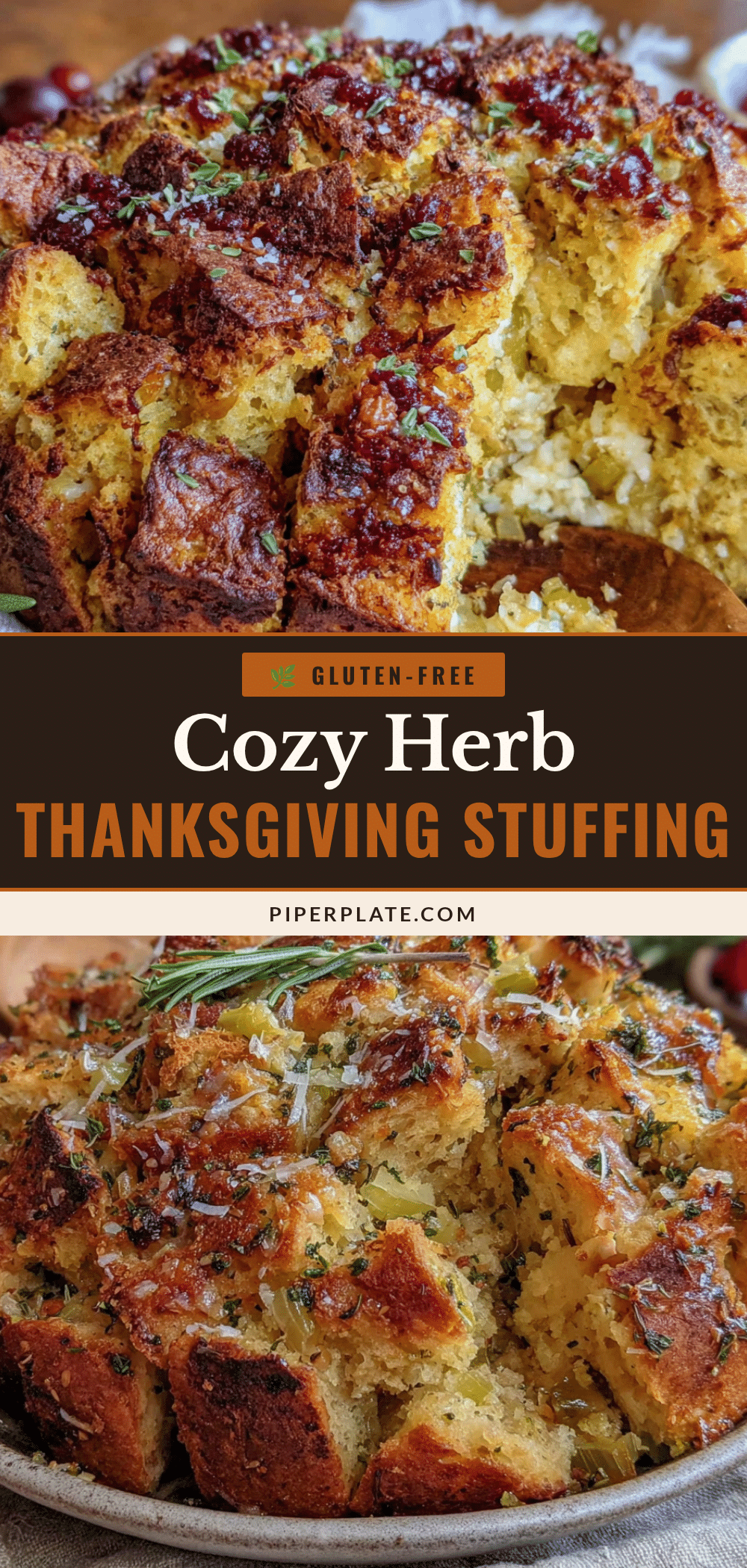
Cozy Gluten-Free Herb Thanksgiving Stuffing
A simple, last-minute gluten-free stuffing made with toasted bread cubes, sautéed aromatics, and dried herbs. It’s quick, easy, and a guaranteed crowd-pleaser for Thanksgiving.
- Prep Time: 15 minutes
- Cook Time: 45 minutes
- Total Time: 1 hour
- Yield: 8 servings 1x
- Category: Side Dish
- Cuisine: American
Ingredients
- 1 large loaf gluten-free bread (about 10–12 cups cubed)
- 1/2 cup unsalted butter (1 stick)
- 1 large yellow onion, diced
- 3–4 stalks celery, diced
- 3 cloves garlic, minced
- 2 teaspoons dried sage
- 1 teaspoon dried thyme
- 1 teaspoon dried rosemary, crushed
- 1/4 cup fresh parsley, chopped
- 1 1/2 to 2 cups low-sodium vegetable or chicken broth
- 2 large eggs
- Salt and black pepper to taste
- Optional: 1 cup cooked and crumbled sausage or mushrooms
Instructions
- Preheat oven to 350°F (175°C). Cut gluten-free bread into 1-inch cubes (10-12 cups). Spread on a large baking sheet and bake for 10-12 minutes, stirring halfway, until dry and lightly golden. Let cool slightly.
- While bread toasts, melt butter in a large skillet over medium heat. Add diced onion and celery; cook 6-8 minutes until soft and translucent. Add minced garlic and cook 1 minute until fragrant.
- Remove skillet from heat. Stir in dried sage, thyme, and crushed rosemary. Let herbs bloom in residual heat for about 1 minute.
- In a large mixing bowl, whisk together eggs and 1 1/2 cups broth. Season with salt and pepper. Add toasted bread cubes and sautéed vegetable-herb mixture. Toss gently until evenly coated. If dry, add remaining 1/2 cup broth. Let sit 5 minutes for absorption.
- Transfer stuffing to a greased 9×13-inch baking dish. Spread evenly. Cover with foil and bake 25 minutes.
- Remove foil and bake 15-20 minutes more until top is golden brown and crispy. For extra crispiness, broil 2-3 minutes, watching closely.
- Let rest 5 minutes before serving. Sprinkle with fresh parsley.
Notes
Toast bread cubes to prevent sogginess. Season generously as gluten-free bread can be bland. Use low-sodium broth for salt control. Let stuffing rest after baking for easier serving. Can be assembled a day ahead and baked just before serving.
Nutrition
- Serving Size: 1 serving (about 1 c
- Calories: 280
- Sugar: 4
- Sodium: 480
- Fat: 14
- Saturated Fat: 8
- Carbohydrates: 32
- Fiber: 3
- Protein: 6
Keywords: gluten-free stuffing, Thanksgiving stuffing, herb stuffing, gluten-free side dish, holiday stuffing, easy stuffing