Love this? Save it for later!
Share the inspiration with your friends
It was 11:47 PM on a rainy Tuesday in early October, and I had an aggressive craving for something warm, spiced, and chewy. You know that feeling when a specific food idea just grabs hold of you and won’t let go? I didn’t have apple butter or apple pie filling in the pantry — the usual suspects for fall cookie recipes. But I did have a half-gallon of fresh apple cider from the weekend farmers market, a stick of butter that was perfectly softened, and this wild idea that maybe, just maybe, I could boil the cider down into something concentrated and magical. Honestly, I was too tired to overthink it. I just went for it.
The kitchen was quiet except for the rain against the window and the soft bubbling of cider reducing on the stove. I remember thinking this was either going to be a brilliant accident or a complete disaster. There was no in-between. I grabbed my favorite mixing bowl — the one with the tiny chip on the rim that I refuse to throw away — and started throwing things together. I forgot to set a timer for the cider reduction and nearly scorched it, which, let me tell you, sends a very specific burnt-apple smell through the house that is not pleasant. But I caught it just in time.
When those cookies came out of the oven, puffed and golden with crackled tops and that intoxicating scent of cinnamon and caramelized apple, I knew I had stumbled onto something special. The first bite was soft, almost cake-like, with this deep apple flavor that tasted like autumn concentrated into a single cookie. I ate three before they even cooled. Maybe you’ve been there — a late-night kitchen experiment that turns into your new favorite thing. These cozy apple cider cookies are that recipe for me, and I’ve been making them nonstop ever since that rainy night.
Why You’ll Love This Recipe
Let me tell you why these apple cider cookies are different from every other fall cookie you’ve tried. I’ve tested this recipe at least seven times since that first late-night batch, tweaking the flour ratio, adjusting the spice blend, and figuring out the exact reduction time for the cider. This is the version that finally made me stop tinkering and start sharing.
- Intense Apple Flavor: Most apple cookies taste like cinnamon with a vague apple hint. By reducing the cider down to a concentrated syrup, you get pure, unapologetic apple taste in every bite. It’s a game-changer.
- Soft and Chewy Texture: These cookies have this perfect bakery-style texture — soft in the center with slightly crisp edges. They stay that way for days, too, if they last that long.
- Simple Pantry Ingredients: No weird specialty items here. You need apple cider (which is everywhere in the fall), basic baking staples, and a few warm spices you probably already own.
- Perfect for Fall Gatherings: These are the cookies you bring to a pumpkin carving party, a Friendsgiving dinner, or just a cozy Tuesday when you need a little comfort. They fit every autumn moment.
- Make-Ahead Friendly: The dough freezes beautifully, so you can prep them weeks ahead and bake fresh cookies whenever the craving hits. I do this constantly during the holiday season.
What really sets this recipe apart is the cider reduction technique. It’s not complicated — you literally just simmer apple cider until it thickens — but it transforms the entire cookie. The concentrated cider adds moisture, sweetness, and that deep apple flavor without making the dough too wet. I’ve tried other methods using apple cider packets or extract, and honestly, nothing compares to the real reduced stuff. This recipe is comfort food reimagined — familiar enough to feel nostalgic, but clever enough to impress anyone who tries them.
What Ingredients You Will Need
This recipe uses simple, wholesome ingredients that come together to create something truly special. Most of these are fall pantry staples, and the star ingredient — apple cider — is easy to find at any grocery store or farmers market during the season.
For the Cider Reduction:
- 1 cup apple cider (unfiltered is best, it has more flavor)
For the Cookies:
- 2 ¼ cups all-purpose flour (280 grams)
- 1 teaspoon baking soda
- ½ teaspoon baking powder
- ½ teaspoon salt
- 1 ½ teaspoons ground cinnamon
- ½ teaspoon ground nutmeg (freshly grated if you have it)
- ¼ teaspoon ground cloves
- ½ cup unsalted butter, softened (1 stick, 113 grams)
- ¾ cup packed light brown sugar (150 grams)
- ¼ cup granulated sugar (50 grams)
- 1 large egg, room temperature
- 1 teaspoon vanilla extract
- ¼ cup reduced apple cider (this is what you make from step one)
For the Cinnamon Sugar Coating:
- ¼ cup granulated sugar
- 1 teaspoon ground cinnamon
A few notes on ingredients. I recommend using unsalted butter so you can control the salt level yourself. If you only have salted butter on hand, just reduce the added salt to ¼ teaspoon. For the apple cider, look for the refrigerated kind, not the shelf-stable stuff. The refrigerated cider has a fresher, brighter apple taste that really shines through after reduction. I like to buy mine from a local orchard when I can, but store-bought works great too.
The spice blend here is important. I’ve experimented with pumpkin pie spice blends, but making your own mix of cinnamon, nutmeg, and cloves gives you a warmer, more balanced flavor. If you want to get fancy, try adding a pinch of cardamom — it’s not traditional, but it adds this lovely floral note that pairs beautifully with the apple.
For the brown sugar, use light brown sugar for a milder molasses flavor that doesn’t overpower the apple. Dark brown sugar will work in a pinch, but the cookies will be slightly darker and have a more caramel-like taste. Both are delicious, just different.
Equipment Needed
You don’t need any fancy equipment for these cookies, which is part of why I love making them. Here’s what you’ll need:
- Medium saucepan — For reducing the apple cider. A 2-quart saucepan works perfectly.
- Large mixing bowl — For whisking dry ingredients together.
- Electric hand mixer or stand mixer — For creaming the butter and sugars. You can do this by hand with a wooden spoon, but it takes some elbow grease.
- Whisk — For combining dry ingredients evenly.
- Rubber spatula — For scraping down the bowl and folding in the flour mixture.
- Baking sheets — Two standard half-sheet pans work great.
- Parchment paper or silicone baking mats — I prefer parchment paper for these cookies because it helps the bottoms brown evenly.
- Cookie scoop — A 1.5-tablespoon scoop gives you consistent cookies every time. If you don’t have one, just use two spoons.
- Cooling rack — Essential for letting the cookies cool properly so they don’t get soggy on the bottom.
If you don’t have a stand mixer, don’t worry. I actually made my first few batches with just a hand mixer, and they turned out perfectly. The most important tool is that saucepan for reducing the cider — everything else is pretty standard kitchen equipment. One tip: invest in good parchment paper. The cheap stuff can stick to your cookies, and nobody wants that.
Preparation Method
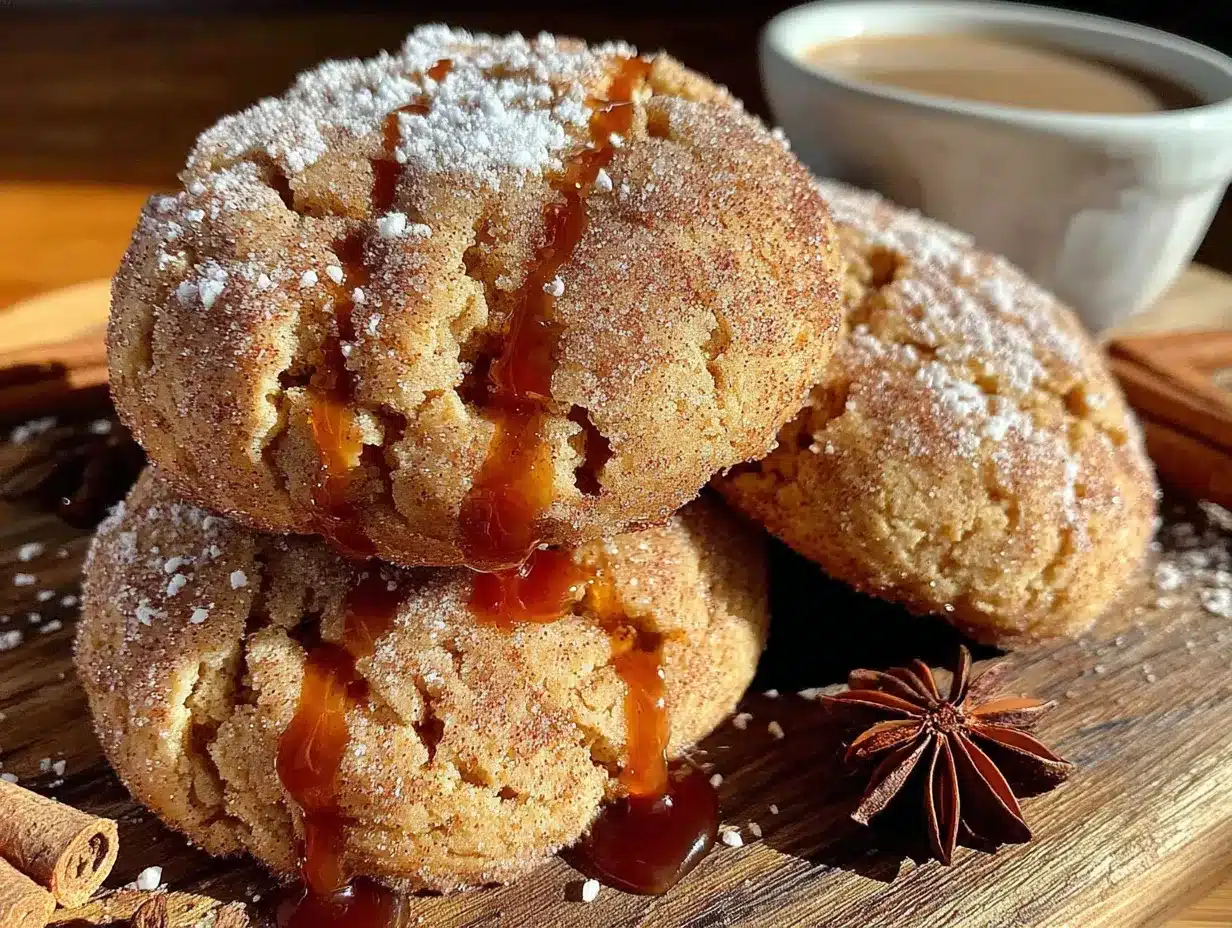
Let me walk you through this step by step. I’ve included all the little details that make the difference between good cookies and unforgettable ones.
-
Reduce the apple cider. Pour 1 cup of apple cider into a medium saucepan. Bring it to a boil over medium-high heat, then reduce the heat to medium-low so it stays at a gentle simmer. Let it bubble away for 15-20 minutes, stirring occasionally, until it reduces to about ¼ cup. It should be thick and syrupy, like maple syrup. Watch it carefully toward the end — it can go from perfect to burnt very quickly. When it’s done, pour it into a small bowl and let it cool completely. You can speed this up by popping it in the fridge for 10 minutes.
-
Preheat and prep. Preheat your oven to 350°F (175°C). Line two baking sheets with parchment paper. In a small bowl, mix together the ¼ cup sugar and 1 teaspoon cinnamon for the coating. Set aside.
-
Whisk dry ingredients. In a medium bowl, whisk together the flour, baking soda, baking powder, salt, cinnamon, nutmeg, and cloves. Make sure everything is evenly distributed — nobody wants a pocket of baking soda in their cookie.
-
Cream butter and sugars. In a large mixing bowl, beat the softened butter, brown sugar, and granulated sugar together on medium speed until light and fluffy, about 2-3 minutes. Scrape down the sides of the bowl halfway through. The mixture should look pale and airy. This step is important for creating that soft, tender texture.
-
Add wet ingredients. Beat in the egg and vanilla extract until well combined, about 30 seconds. Then add the cooled reduced apple cider and mix until just incorporated. Don’t overmix here — you just want everything to come together.
-
Combine wet and dry. Gradually add the flour mixture to the wet ingredients, mixing on low speed or folding with a spatula until just combined. You should see a few streaks of flour remaining — that’s your cue to stop. Overmixing at this stage will make your cookies tough.
-
Chill the dough. This step is not optional. Cover the bowl with plastic wrap and refrigerate the dough for at least 30 minutes, or up to 24 hours. Chilling firms up the butter and allows the flavors to meld together. The cookies will spread less and have a better texture. I know it’s hard to wait, but trust me on this.
-
Scoop and coat. Using a cookie scoop or two spoons, portion the dough into 1.5-tablespoon balls. Roll each ball between your palms to make it round, then roll it in the cinnamon sugar mixture until fully coated. Place them on the prepared baking sheets about 2 inches apart — they spread a bit.
-
Bake. Bake for 10-12 minutes, or until the edges are set and lightly golden. The centers will look slightly underdone and puffy — that’s exactly what you want. They’ll continue baking on the hot sheet pan after you pull them out. If you overbake them, they’ll be dry.
-
Cool. Let the cookies cool on the baking sheet for 5 minutes. This allows them to set up properly without falling apart. Then transfer them to a wire rack to cool completely. Or, you know, eat one warm and burn your tongue a little. I won’t judge.
Cooking Tips & Techniques
After making these cookies more times than I care to count, I’ve picked up a few tricks that make the process smoother and the results more consistent.
Don’t rush the cider reduction. This is the most common mistake I see. People try to crank up the heat to speed things up, but that just leads to uneven reduction and a higher chance of burning. Keep it at a gentle simmer and be patient. The reduction is where all the flavor lives. One time I got distracted and let it reduce too far — it turned into a sticky, caramel-like mess that was impossible to work with. Learn from my mistakes and keep an eye on it.
Use room temperature ingredients. Your egg and butter should both be at room temperature. Cold ingredients don’t cream together properly, which affects the texture of your cookies. If you forgot to take the egg out ahead of time, place it in a bowl of warm water for 5 minutes. For the butter, you can microwave it in 5-second bursts, but be careful — you want it softened, not melted.
Measure flour correctly. The number one reason cookies turn out dry or flat is incorrect flour measurement. Spoon the flour into your measuring cup and level it off with a knife. Don’t scoop directly from the bag — that packs the flour down and adds too much. If you have a kitchen scale, use it. I switched to weighing my ingredients a few years ago, and my baking has been so much more consistent.
Chill the dough thoroughly. I cannot stress this enough. Warm dough spreads into flat, sad cookies. Chilled dough bakes up thick and chewy. If you’re in a hurry, you can pop the dough in the freezer for 15 minutes instead of the fridge for 30, but the fridge method gives better results. I’ve even made the dough a day ahead and baked them the next afternoon — the flavor was even better.
Rotate your baking sheets halfway through. Most ovens have hot spots. Halfway through baking, swap the top rack sheet to the bottom and rotate them front to back. This ensures even browning on all your cookies. I learned this the hard way after a batch came out with half the cookies perfectly golden and the other half pale.
Variations & Adaptations
One of the best things about this recipe is how adaptable it is. Here are some variations I’ve tried that turned out great.
Gluten-Free Version: Substitute the all-purpose flour with a 1:1 gluten-free baking flour blend that contains xanthan gum. I’ve had good results with both Bob’s Red Mill and King Arthur brands. The texture is slightly more delicate, so handle the dough gently. Everything else stays the same.
Apple Cider Maple Cookies: Replace half of the granulated sugar with pure maple syrup. Reduce the reduced cider by 1 tablespoon to account for the extra liquid from the maple syrup. The result is a deeper, more complex sweetness that pairs beautifully with the apple flavor. These are my go-to for Thanksgiving.
Spiced Apple Cider Cookies with Dried Fruit: Fold in ½ cup of dried cranberries or chopped dried apples along with ½ cup of toasted pecans or walnuts. Add them right after the flour mixture is incorporated. The dried fruit adds little bursts of sweetness, and the nuts give a nice crunch. This version feels extra special for holiday cookie platters.
Vegan Adaptation: Replace the butter with vegan butter sticks (not margarine) and use a flax egg (1 tablespoon ground flaxseed mixed with 3 tablespoons water, let sit for 5 minutes). The cookies will be slightly less tender but still delicious. Make sure your sugar is vegan-friendly as well.
Apple Cider Cookie Sandwiches: Bake the cookies slightly smaller and use them to make sandwich cookies with a cream cheese frosting or a cinnamon buttercream. This is next-level indulgent and perfect for when you want to impress someone. I made these for a fall bake sale once, and they sold out in 20 minutes.
Serving & Storage Suggestions
These cookies are best served slightly warm, when the edges are still a little soft and the cinnamon sugar coating is at its most fragrant. I like to serve them on a rustic wooden board with a hot cup of spiced chai or a mug of mulled cider. They also pair beautifully with a scoop of vanilla bean ice cream for a simple but impressive dessert.
Room Temperature Storage: Store the cookies in an airtight container at room temperature for up to 5 days. Place a slice of bread in the container to help keep them soft — the cookies will absorb moisture from the bread. Just replace the bread slice every couple of days. I’ve been using this trick for years, and it works like magic.
Freezer Storage: These cookies freeze beautifully. You have two options. First, you can freeze the baked cookies in a single layer on a baking sheet, then transfer them to a freezer-safe bag or container. They’ll keep for up to 3 months. Thaw at room temperature for about 30 minutes. Second, you can freeze the unbaked dough balls on a baking sheet, then transfer them to a freezer bag. Bake from frozen, adding 2-3 minutes to the baking time. This is my preferred method — fresh cookies on demand with zero effort.
Reheating: To refresh day-old cookies, pop them in a 300°F oven for 3-5 minutes. They’ll come out tasting freshly baked. You can also microwave them for 10-15 seconds, but be careful — they can get chewy. The oven method is better if you have the time.
The flavors actually deepen after a day or two. The apple cider flavor becomes more pronounced, and the spices meld together beautifully. So don’t worry if you can’t eat them all immediately — they might even be better on day two.
Nutritional Information & Benefits
Here’s the approximate nutritional breakdown for one cookie (based on a recipe yield of 24 cookies):
| Nutrient | Amount per Cookie |
|---|---|
| Calories | 145 |
| Total Fat | 5g |
| Saturated Fat | 3g |
| Cholesterol | 20mg |
| Sodium | 85mg |
| Total Carbohydrates | 23g |
| Dietary Fiber | 0.5g |
| Sugars | 14g |
| Protein | 2g |
These cookies are a treat, no doubt about it, but they do offer some nutritional benefits worth noting. Apple cider is rich in antioxidants, particularly polyphenols, which help fight inflammation in the body. The cinnamon in the recipe has been shown to help regulate blood sugar levels, which is a nice bonus when you’re eating something sweet. And the butter provides a small amount of vitamin A.
For those with dietary restrictions, this recipe contains gluten, dairy, and eggs. I’ve included gluten-free and vegan variations above if you need them. As always, these are cookies — enjoy them in moderation as part of a balanced diet. I believe in treating yourself without guilt, especially when the treat is this delicious.
Conclusion
These cozy apple cider cookies have become my signature fall recipe, and I have a feeling they’ll become yours too. They capture everything I love about autumn — the warmth, the spices, the comforting flavors that make you want to curl up with a good book and a hot drink. That late-night kitchen experiment turned into something I genuinely look forward to making every year when the leaves start to change.
I’d love to hear how these turn out for you. Did you try any of the variations? Did you discover a new favorite spice combination? Drop a comment below and let me know — I read every single one, and I love hearing about your kitchen adventures. And if you share these on social media, tag me so I can see your beautiful cookies. Happy fall baking, friends. You’ve got this.
Frequently Asked Questions
Can I use apple cider vinegar instead of apple cider?
No, absolutely not. Apple cider vinegar has a completely different flavor profile and acidity level. It will not work for this recipe. Stick with real apple cider for the best results.
Why did my cookies spread too much?
This usually happens when the dough wasn’t chilled long enough or the butter was too soft. Make sure you chill the dough for at least 30 minutes, and if your kitchen is warm, consider chilling it for an hour. Also, check that your baking soda and baking powder are fresh — old leavening agents can cause spreading issues.
Can I use apple juice instead of apple cider?
You can, but the flavor won’t be as rich. Apple cider is unfiltered and has a deeper, more complex apple taste. Apple juice is thinner and sweeter. If you use apple juice, reduce it the same way, but expect a milder apple flavor in the final cookies.
How do I know when the cider is reduced enough?
The reduced cider should have a syrupy consistency, similar to maple syrup. It should coat the back of a spoon and measure about ¼ cup. If you tilt the pan and the cider moves slowly, you’re there. If it moves quickly, it needs more time.
Can I make these cookies ahead of time for a party?
Yes, and I actually recommend it. You can make the dough up to 3 days in advance and keep it refrigerated, or freeze the dough balls for up to 3 months. Bake them fresh the day of your party for the best texture and flavor. Your guests will think you spent hours in the kitchen.
Pin This Recipe!

Cozy Apple Cider Cookies: Easy Fall Baking Recipe

These soft and chewy apple cider cookies are packed with intense apple flavor from reduced cider, warm spices, and a cinnamon sugar coating. Perfect for fall gatherings, they’re easy to make with simple pantry ingredients and freeze beautifully.
- Prep Time: 30 minutes
- Cook Time: 12 minutes
- Total Time: 1 hour 2 minutes
- Yield: 24 servings 1x
- Category: Dessert
- Cuisine: American
Ingredients
- 1 cup apple cider (unfiltered is best)
- 2 ¼ cups all-purpose flour (280 grams)
- 1 teaspoon baking soda
- ½ teaspoon baking powder
- ½ teaspoon salt
- 1 ½ teaspoons ground cinnamon
- ½ teaspoon ground nutmeg (freshly grated if available)
- ¼ teaspoon ground cloves
- ½ cup unsalted butter, softened (1 stick, 113 grams)
- ¾ cup packed light brown sugar (150 grams)
- ¼ cup granulated sugar (50 grams)
- 1 large egg, room temperature
- 1 teaspoon vanilla extract
- ¼ cup reduced apple cider (from step one)
- ¼ cup granulated sugar (for coating)
- 1 teaspoon ground cinnamon (for coating)
Instructions
- Reduce the apple cider: Pour 1 cup of apple cider into a medium saucepan. Bring to a boil over medium-high heat, then reduce heat to medium-low and simmer for 15-20 minutes, stirring occasionally, until reduced to about ¼ cup and syrupy like maple syrup. Watch carefully toward the end to avoid burning. Pour into a small bowl and let cool completely (refrigerate for 10 minutes to speed up).
- Preheat oven to 350°F (175°C). Line two baking sheets with parchment paper. In a small bowl, mix together ¼ cup sugar and 1 teaspoon cinnamon for the coating. Set aside.
- In a medium bowl, whisk together flour, baking soda, baking powder, salt, cinnamon, nutmeg, and cloves until evenly distributed.
- In a large mixing bowl, beat softened butter, brown sugar, and granulated sugar together on medium speed until light and fluffy, about 2-3 minutes. Scrape down sides halfway through.
- Beat in egg and vanilla extract until well combined, about 30 seconds. Add cooled reduced apple cider and mix until just incorporated.
- Gradually add flour mixture to wet ingredients, mixing on low speed or folding with a spatula until just combined (a few streaks of flour remaining is fine). Do not overmix.
- Cover bowl with plastic wrap and refrigerate dough for at least 30 minutes, or up to 24 hours.
- Using a cookie scoop or two spoons, portion dough into 1.5-tablespoon balls. Roll each ball between palms to round, then roll in cinnamon sugar mixture until fully coated. Place on prepared baking sheets about 2 inches apart.
- Bake for 10-12 minutes, until edges are set and lightly golden. Centers will look slightly underdone and puffy.
- Let cookies cool on baking sheet for 5 minutes, then transfer to a wire rack to cool completely.
Notes
Don’t rush the cider reduction; keep at a gentle simmer. Use room temperature ingredients for best texture. Measure flour correctly by spooning into cup and leveling off. Chill dough thoroughly to prevent spreading. Rotate baking sheets halfway through baking for even browning. For gluten-free, use 1:1 gluten-free flour blend with xanthan gum. For vegan, use vegan butter sticks and flax egg. Store in airtight container at room temperature for up to 5 days; place a slice of bread in container to keep soft. Freeze baked cookies for up to 3 months or unbaked dough balls for up to 3 months. Reheat in 300°F oven for 3-5 minutes.
Nutrition
- Serving Size: 1 cookie
- Calories: 145
- Sugar: 14
- Sodium: 85
- Fat: 5
- Saturated Fat: 3
- Carbohydrates: 23
- Fiber: 0.5
- Protein: 2
Keywords: apple cider cookies, fall cookies, soft cookies, chewy cookies, cinnamon sugar cookies, easy baking recipe, autumn dessert, apple cookies