Love this? Save it for later!
Share the inspiration with your friends
I wasn’t trying to reinvent lunch. Honestly, I’d stopped by my neighbor Jen’s house on a Tuesday morning to borrow a screwdriver — and the smell hit me before I even got past her screen door. Toasted sesame, soy, something warm and savory. She was packing jars at her kitchen counter, completely nonchalant, like she was just putting away groceries. “Oh, those?” she said when I asked. “Just noodles. For the kids.”
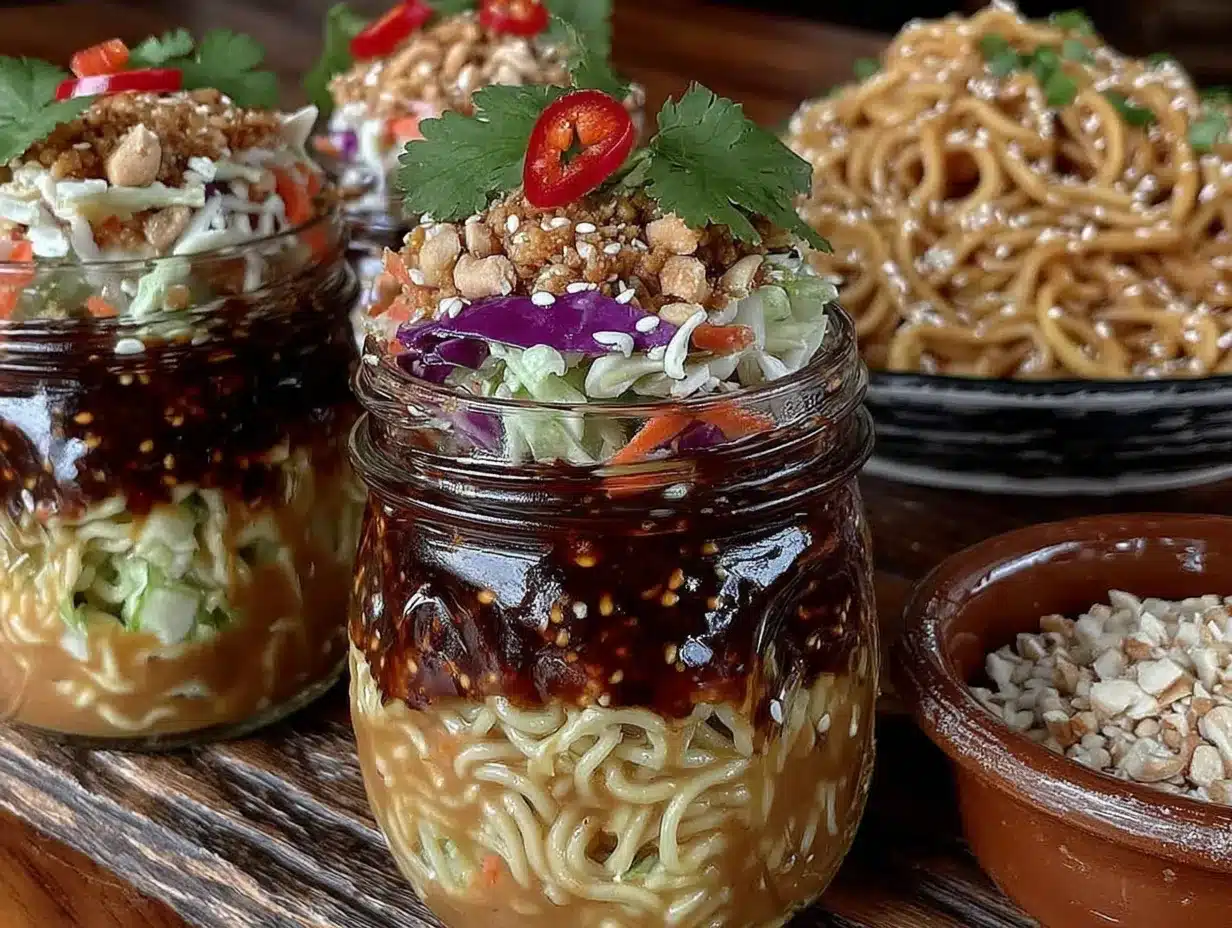
Let me tell you — those were not “just noodles.” The casualness was almost offensive. She had these beautiful layers in mason jars: cold noodles, shredded veggies, a glossy dark sauce pooled at the bottom. She didn’t even look up when she explained it. “You just dump it out and eat it cold. Or shake it. Whatever.” Whatever! I stood there, screwdriver in hand, genuinely considering whether I could just… stay for lunch. She handed me a jar. That was two years ago, and I haven’t stopped making these Easy Cold Sesame Noodle Lunchbox Jars since.
The beauty of this recipe is that it practically makes itself. You cook noodles, you whisk a sauce, you chop a few things — and then you layer them in jars for the week ahead. The flavors get better as they sit. The noodles soak up that sesame-soy magic. And when you’re staring down a busy Wednesday at noon, you just grab a jar, shake it, and eat. Maybe you’ve been there — standing in front of an open fridge at 12:15, wondering what happened to your meal prep ambitions? This is the answer. It’s the lunch that makes you feel like you actually have your life together, even when you don’t.
Why You’ll Love This Recipe
These aren’t just another meal prep idea. I’ve tested this recipe about a dozen times — tweaking the sauce ratios, trying different noodles, figuring out the best layering order so nothing gets soggy. What I landed on is genuinely the best version. Here’s why it works:
- Quick & Easy: From start to finish, you’re looking at about 20 minutes of active work. The rest is just waiting for noodles to cook and jars to chill.
- Simple Ingredients: Soy sauce, sesame oil, rice vinegar, peanut butter — these are things you probably already have in your pantry. No fancy grocery store detours.
- Perfect for Busy Weeks: Make four jars on Sunday, and you’ve got lunch covered Monday through Thursday. No thinking, no assembling, no excuses.
- Crowd-Pleaser: I’ve brought these to potlucks and park picnics. Kids love them. Adults love them. Even my dad — who is suspicious of any noodle that isn’t spaghetti — asked for the recipe.
- Unbelievably Delicious: The texture is what gets me. Cold noodles with that chewy bite, crunchy veggies, and a sauce that’s creamy and tangy and savory all at once. It’s comfort food that doesn’t weigh you down.
This isn’t just another noodle recipe. The trick is in the layering — keeping the sauce at the bottom so the noodles stay dry until you’re ready to eat. It’s a small detail, but it makes everything better. No sad, soggy lunches here.
What Ingredients You Will Need
This recipe uses simple, honest ingredients that come together to make something surprisingly complex. Most of these are pantry staples, which is exactly the point. Here’s what you’ll need, broken down by category for easy shopping:
For the Noodles & Veggies
- 8 oz dried ramen noodles (or lo mein noodles, or even spaghetti — I’ve used all three, and they all work)
- 1 large carrot, julienned or grated (adds crunch and color)
- 1 cucumber, seeded and cut into thin matchsticks (keeps things fresh and cool)
- 2 green onions, thinly sliced (for that mild onion kick)
- 1/2 cup edamame, shelled (frozen works great, just thaw them first)
- 1/4 cup cilantro, roughly chopped (optional, but I love it)
- 1/4 cup soy sauce (I prefer low-sodium so I can control the salt)
- 2 tablespoons sesame oil (toasted is best — it’s the backbone of this whole dish)
- 2 tablespoons rice vinegar (adds brightness)
- 2 tablespoons peanut butter (creamy, not chunky — this gives the sauce body)
- 1 tablespoon honey (or maple syrup if you’re vegan)
- 1 clove garlic, minced (fresh, not jarred — trust me on this)
- 1 teaspoon fresh ginger, grated (adds warmth and zing)
- 1 tablespoon sesame seeds (for garnish and texture)
- 4 wide-mouth mason jars (16 oz each) — These are ideal because they fit a generous lunch portion and the wide mouth makes layering easy. I’ve used regular jars too, but they’re harder to eat out of.
- Large pot for boiling noodles
- Colander for draining
- Small bowl for whisking the sauce
- Chef’s knife and cutting board — A sharp knife makes julienning the veggies so much easier
- Vegetable peeler (optional, but helpful for carrot ribbons)
- Measuring spoons — The sauce ingredients are small quantities, so accuracy matters
- Bottom layer: Divide the sauce evenly among the four jars. About 2 tablespoons per jar.
- Second layer: Add the cold noodles on top of the sauce. Don’t stir. The sauce stays at the bottom until you’re ready to eat.
- Third layer: Add the edamame and carrot. These heartier veggies create a barrier between the noodles and the more delicate toppings.
- Fourth layer: Add the cucumber and green onions.
- Top layer: Sprinkle with cilantro and sesame seeds.
- Don’t overcook the noodles. Mushy noodles are the enemy of cold noodle salads. Cook them a minute less than the package says, then rinse with cold water immediately. You want that firm, springy bite.
- Dry your veggies thoroughly. After washing, pat everything dry with a clean kitchen towel or paper towels. Extra moisture makes the noodles soggy and dilutes the sauce. I learned this the hard way after a particularly watery batch.
- Let the jars sit for at least an hour. The flavors need time to meld. I know it’s tempting to eat one right away, but they’re so much better after a few hours in the fridge. The noodles absorb the sauce slowly, and everything becomes more cohesive.
- Shake, don’t stir. When you’re ready to eat, put the lid on tight and shake the jar like you mean it. This distributes the sauce evenly without smashing the noodles. If you dump it into a bowl, toss gently with chopsticks.
- Double the sauce if you like it saucy. Some people prefer their noodles swimming in dressing. If that’s you, make 1.5 times the sauce recipe. I’ve done it, and it’s delicious — just know the noodles will be wetter.
- Spicy Sesame Noodles: Add 1 teaspoon of sriracha or chili crisp to the sauce. The heat pairs beautifully with the cool cucumber. I’ve also used gochujang for a deeper, fermented spice.
- Protein-Packed Version: Add shredded rotisserie chicken, sliced grilled tofu, or hard-boiled eggs. Layer the protein on top of the noodles for easy access. I often add leftover chicken from Sunday dinner — it stretches the recipe into a full meal.
- Veggie Swap: Use whatever vegetables you have on hand. Bell peppers, shredded cabbage, snap peas, or even roasted sweet potato work well. Just keep the moisture content in mind — watery veggies like zucchini should be used sparingly.
- Gluten-Free Option: Use rice noodles or soba noodles (check that they’re 100% buckwheat). The rest of the ingredients are naturally gluten-free if you use tamari instead of soy sauce.
- Peanut-Free Version: Substitute the peanut butter with tahini or sunflower seed butter. The flavor changes, but it’s still delicious — just a little nuttier and more complex.
- Calories: 380
- Protein: 14g
- Fat: 16g
- Carbohydrates: 46g
- Fiber: 6g
- Sugar: 8g
For the Sesame Sauce
Substitution Notes
Use tamari or coconut aminos instead of soy sauce for a gluten-free option. If peanut butter isn’t your thing, tahini works beautifully — it makes the sauce a little earthier. For a nut-free version, sunflower seed butter is surprisingly good here. And if you don’t have ramen noodles, soba noodles or even udon are fantastic substitutes. I’ve also made this with zucchini noodles when I wanted something lighter, and it still worked — just don’t let them sit too long or they’ll get watery.
Equipment Needed
You don’t need much for this recipe. That’s part of the charm. Here’s what you’ll want to have on hand:
If you don’t have mason jars, any airtight container will work. I’ve used glass meal prep bowls with snap-on lids, and even plastic takeout containers (washed, of course). The key is having a tight seal so nothing leaks. I learned that one the hard way — sesame oil in a backpack is not a smell you forget.
Preparation Method
This is where the magic happens. Follow these steps, and you’ll have lunch ready for the whole week. I’ve included time estimates and sensory cues so you know exactly what to look for.
Step 1: Cook the Noodles (10 minutes)
Bring a large pot of salted water to a rolling boil. Add your noodles and cook according to package directions — usually about 3-4 minutes for ramen. You want them al dente, not mushy. They’ll continue to soften slightly as they cool. Drain the noodles in a colander and rinse them under cold running water until they’re cool to the touch. This stops the cooking and removes excess starch. Shake off as much water as you can. Toss the noodles with a teaspoon of sesame oil to keep them from sticking together. Set aside.
Step 2: Make the Sauce (5 minutes)
In a small bowl, whisk together the soy sauce, sesame oil, rice vinegar, peanut butter, honey, minced garlic, and grated ginger. Whisk until the peanut butter is fully incorporated and the sauce is smooth and glossy. Taste it. It should be salty, tangy, a little sweet, and deeply savory. If it’s too thick, add a teaspoon of warm water and whisk again. If you want more heat, add a pinch of red pepper flakes. This sauce is forgiving — adjust it to your taste.
Step 3: Prep the Veggies (5 minutes)
While the noodles cool, prep your vegetables. Julienne the carrot into thin matchsticks. Seed the cucumber and cut it into similar-sized pieces. Slice the green onions. If you’re using frozen edamame, run them under warm water to thaw, then pat them dry. Having everything prepped and ready makes layering so much smoother.
Step 4: Layer the Jars (5 minutes)
This is the most important part. The order of layering determines whether your lunch is perfect or a soggy mess. Here’s the sequence that works every time:
Step 5: Seal and Refrigerate (1 minute)
Put the lids on tightly and refrigerate the jars. They’ll keep for up to 4 days. When you’re ready to eat, just shake the jar vigorously — or dump everything into a bowl and toss. The sauce coats everything evenly, and the noodles stay perfectly chewy.
Cooking Tips & Techniques
I’ve made this recipe enough times to know where things can go wrong. Here’s what I’ve learned:
Variations & Adaptations
This recipe is endlessly adaptable. Here are a few ways I’ve changed it up over the years:
Serving & Storage Suggestions
These jars are designed to be eaten cold, straight from the fridge. But they’re also great at room temperature if you let them sit out for 15 minutes. The flavors actually open up a bit when they’re not ice-cold.
For serving, I like to shake the jar, then dump everything into a bowl. Sprinkle extra sesame seeds and a squeeze of lime on top. They pair beautifully with a simple miso soup or a handful of edamame on the side. If you’re packing these for lunch, throw in a fortune cookie or a piece of fruit for a complete meal.
Storage is straightforward: keep the jars sealed in the refrigerator for up to 4 days. Do not freeze them — the texture of the noodles and veggies will suffer. The flavors actually get better on day 2 and 3, as the sauce has more time to penetrate the noodles. By day 4, the cucumbers might start to lose their crunch, but they’re still perfectly edible.
Nutritional Information & Benefits
Each jar (with the ingredients listed above) contains approximately:
This meal is packed with plant-based protein from the edamame and peanut butter, plus healthy fats from the sesame oil. The vegetables provide fiber, vitamins A and C, and antioxidants. It’s a balanced lunch that keeps you full without feeling heavy. If you’re watching your sodium, use low-sodium soy sauce and reduce the salt. For a lower-carb version, swap the noodles for zucchini noodles or shirataki noodles.
Conclusion
These Easy Cold Sesame Noodle Lunchbox Jars are the kind of recipe that makes you wonder why you ever struggled with lunch. They’re simple, forgiving, and genuinely delicious. I’ve made them for busy work weeks, for road trips, for picnics — and every time, someone asks for the recipe. That’s the mark of a keeper.
I hope you give them a try. Play with the veggies, adjust the sauce, make them your own. And when you do, come back and tell me how it went. I’d love to hear your variations — especially if you discover a combination I haven’t tried yet. Drop a comment below, or tag me in your jar photos. Happy eating!
Frequently Asked Questions
Can I use a different type of noodle?
Absolutely. Ramen, lo mein, soba, udon, spaghetti, or even rice noodles all work. Just cook them al dente and rinse with cold water to stop the cooking.
How long do these jars last in the fridge?
They’ll stay fresh for up to 4 days. The cucumbers might soften slightly by day 4, but the flavors will be even better. Don’t freeze them — the texture won’t hold up.
Can I make these vegan?
Yes! Just swap the honey for maple syrup or agave. Everything else is plant-based. Use tamari instead of soy sauce for a gluten-free version.
Do I have to eat them cold?
Not at all. You can let them sit at room temperature for 15-20 minutes, or even microwave the jar (without the lid) for 30 seconds. They’re great cold, warm, or anywhere in between.
Can I add meat to these jars?
Definitely. Shredded rotisserie chicken, grilled tofu, or hard-boiled eggs are all excellent additions. Layer them on top of the noodles so they don’t get soggy.
Pin This Recipe!
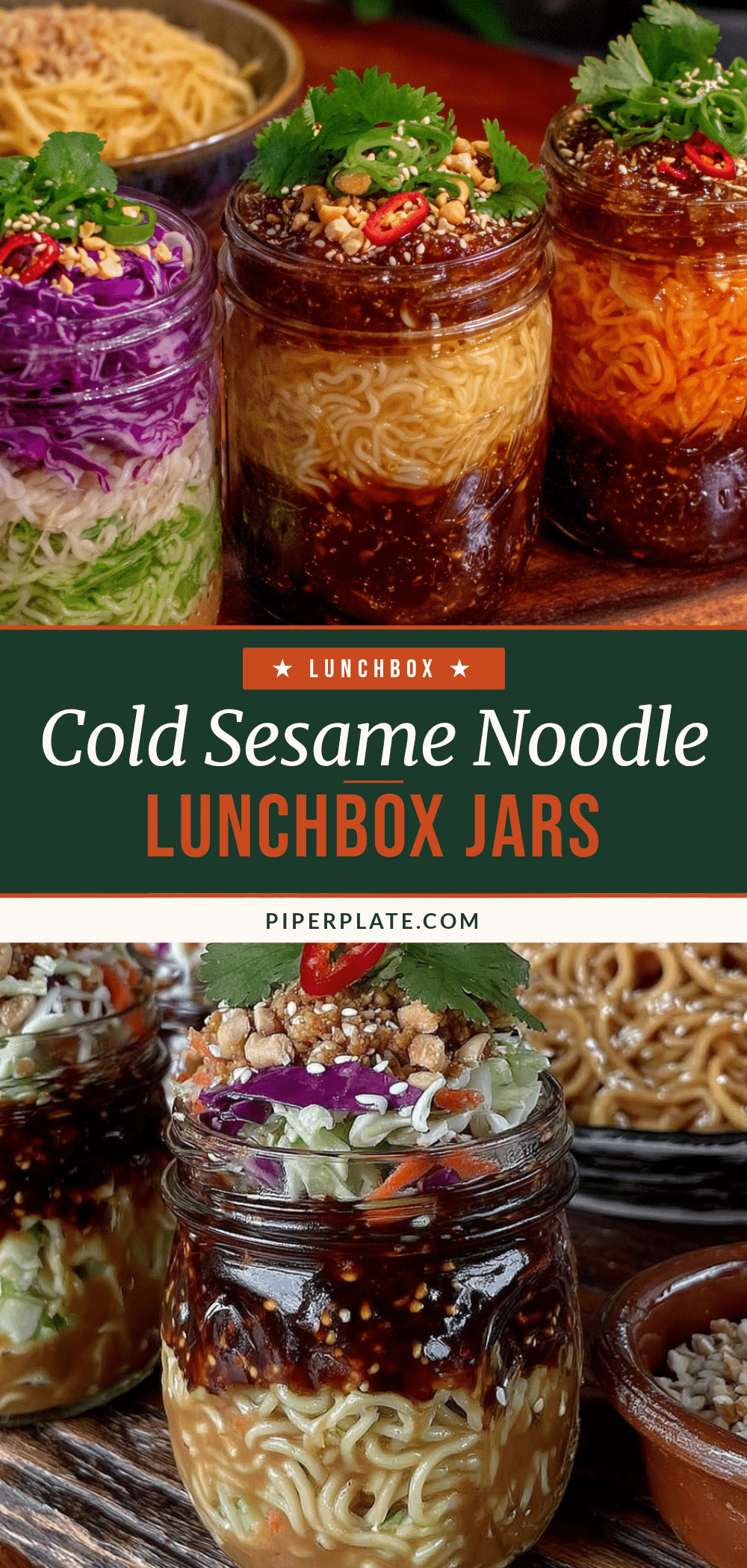
Easy Cold Sesame Noodle Lunchbox Jars
These make-ahead cold sesame noodle jars are the perfect grab-and-go lunch. Layered with chewy noodles, crunchy veggies, and a savory sesame sauce, they keep for days and taste even better as the flavors meld.
- Prep Time: 20 minutes
- Cook Time: 10 minutes
- Total Time: 30 minutes
- Yield: 4 servings 1x
- Category: Main Course
- Cuisine: Asian
Ingredients
- 8 oz dried ramen noodles (or lo mein, spaghetti, soba, or udon)
- 1 large carrot, julienned or grated
- 1 cucumber, seeded and cut into thin matchsticks
- 2 green onions, thinly sliced
- 1/2 cup shelled edamame (frozen, thawed)
- 1/4 cup cilantro, roughly chopped (optional)
- 1/4 cup low-sodium soy sauce (or tamari for gluten-free)
- 2 tablespoons toasted sesame oil
- 2 tablespoons rice vinegar
- 2 tablespoons creamy peanut butter (or tahini, sunflower seed butter)
- 1 tablespoon honey (or maple syrup for vegan)
- 1 clove garlic, minced
- 1 teaspoon fresh ginger, grated
- 1 tablespoon sesame seeds (for garnish)
Instructions
- Cook the noodles: Bring a large pot of salted water to a rolling boil. Add noodles and cook according to package directions until al dente (about 3-4 minutes for ramen). Drain and rinse under cold running water until cool. Shake off excess water, then toss with 1 teaspoon sesame oil to prevent sticking. Set aside.
- Make the sauce: In a small bowl, whisk together soy sauce, sesame oil, rice vinegar, peanut butter, honey, minced garlic, and grated ginger until smooth and glossy. Taste and adjust—add a teaspoon of warm water if too thick, or a pinch of red pepper flakes for heat.
- Prep the veggies: Julienne the carrot into thin matchsticks. Seed the cucumber and cut into similar-sized pieces. Slice green onions. If using frozen edamame, thaw under warm water and pat dry.
- Layer the jars: Divide the sauce evenly among 4 wide-mouth 16 oz mason jars (about 2 tablespoons per jar). Add cold noodles on top of the sauce (do not stir). Layer edamame and carrot next, then cucumber and green onions. Top with cilantro and sesame seeds.
- Seal and refrigerate: Tightly seal jars and refrigerate for at least 1 hour (or up to 4 days). When ready to eat, shake jar vigorously or dump into a bowl and toss. Serve cold or at room temperature.
Notes
Layer sauce at the bottom to keep noodles dry until serving. For best flavor, let jars sit at least 1 hour. Double the sauce if you prefer extra dressing. Do not freeze. Cucumbers may soften by day 4 but are still edible.
Nutrition
- Serving Size: 1 jar
- Calories: 380
- Sugar: 8
- Sodium: 720
- Fat: 16
- Saturated Fat: 2.5
- Carbohydrates: 46
- Fiber: 6
- Protein: 14
Keywords: cold sesame noodles, lunchbox jars, make-ahead lunch, meal prep, Asian noodles, sesame noodles, vegetarian lunch