Love this? Save it for later!
Share the inspiration with your friends
It was 11:47 PM on a particularly damp Tuesday, and I had a jar of sourdough discard staring at me from the fridge like a neglected pet. I didn’t have the energy for a complicated recipe, but I had this nagging feeling that I couldn’t just toss it. The idea arrived as I was digging through the pantry for something—anything—that felt like comfort. A bag of flour, some olive oil, and a sprig of rosemary that was starting to look a little sad. I figured, why not try something reckless?
Honestly, I wasn’t expecting much. My previous attempts at focaccia had been dense, sad little breads that felt more like bricks than pillows. But that night, something clicked. Maybe it was the late hour loosening my usual rules, or maybe I just didn’t care enough to overthink it. I mixed the dough with my hands, let it rest on the counter while I scrolled through my phone, and when I pulled it out of the oven, it was this gorgeous, golden, crispy thing. I mean, the bottom was so crunchy it made that perfect crackling sound when I tapped it.
You know that feeling when you stumble onto something good by accident? That was this recipe. It’s become my go-to for using up discard, and let me tell you—it’s the kind of bread that makes you want to eat the whole thing in one sitting. Maybe you’ve been there, staring at a jar of discard and wondering what to do. This crispy rosemary sourdough discard focaccia is your answer.
Why You’ll Love This Recipe
This isn’t just another focaccia recipe. After testing this dozens of times—burning a few, under-proofing others, and once forgetting the salt entirely (don’t ask)—I can confidently say this version is the one. It’s been approved by my picky neighbor, a professional baker friend, and my own late-night cravings.
- Quick & Easy: It comes together in about 2.5 hours with minimal hands-on time. Perfect for a lazy weekend or a weekday baking session.
- Simple Ingredients: You probably have everything already—flour, olive oil, rosemary, salt, and that jar of sourdough discard you’ve been ignoring.
- Perfect for Using Discard: This is the ultimate way to use up sourdough discard without the fuss of a complicated recipe.
- Crowd-Pleaser: That crispy, golden crust and soft, airy interior always gets rave reviews. Even people who don’t love sourdough ask for seconds.
- Unbelievably Delicious: The combination of crispy edges, fragrant rosemary, and the tangy depth from the discard is next-level comfort food.
What makes this one different? It’s the technique. I blend the discard with a bit of commercial yeast for a reliable rise, then add a generous amount of olive oil to the pan. The result? A focaccia that’s crispy on the bottom, soft on the inside, and absolutely bursting with flavor. It’s not just good—it’s the kind that makes you close your eyes after the first bite.
What Ingredients You Will Need
This recipe uses simple, pantry-friendly ingredients to deliver bold flavor and that perfect crispy texture. Most of these are likely already in your kitchen, which makes this a great last-minute baking project.
- All-purpose flour (3 cups / 375g): Provides the structure. I prefer King Arthur Flour for consistent results, but any brand works.
- Sourdough discard (1 cup / 240g): Use unfed discard straight from the fridge. It adds a subtle tang and helps with texture. If you don’t have discard, you can substitute with a preferment or more water and yeast.
- Warm water (1 cup / 240ml, around 110°F): Helps activate the yeast and hydrates the flour. Too hot will kill the yeast, so check with your wrist.
- Active dry yeast (1 teaspoon): Gives a reliable rise, even if your discard is a bit sluggish. You can omit it for a longer, wild fermentation, but the rise will be slower.
- Olive oil (1/4 cup / 60ml, plus more for the pan): The key to that crispy, golden crust. Use a good-quality extra virgin olive oil for the best flavor.
- Fresh rosemary (2 tablespoons, finely chopped): Adds that fragrant, woodsy aroma. Dried rosemary works in a pinch, but fresh is much better.
- Salt (1 1/2 teaspoons): Enhances the flavor of the bread and the rosemary. I use flaky sea salt for the topping.
- Flaky sea salt (for topping): Adds a nice crunch and burst of saltiness. Maldon is my go-to.
Substitution Guidance: For a gluten-free version, use a 1:1 gluten-free flour blend, but the texture will be denser. You can swap the rosemary with thyme or oregano for a different flavor profile. If you don’t have discard, use an extra 1/2 cup of water and 1/2 cup of flour.
Equipment Needed
You don’t need fancy tools for this recipe, which is part of its charm. Here’s what you’ll need:
- Large mixing bowl: For mixing the dough. I use a glass bowl so I can see the bubbles forming.
- 9×13-inch baking pan: The ideal size for a thick, fluffy focaccia. A metal pan works best for that crispy bottom. I’ve used a ceramic dish before, and it didn’t get as crunchy.
- Measuring cups and spoons: For accuracy, especially with the yeast and salt.
- Kitchen scale (optional but recommended): Weighing the flour ensures consistent results, especially with sourdough discard.
- Plastic wrap or a clean kitchen towel: To cover the dough while it rises.
- Bench scraper or spatula: For folding the dough and scraping it out of the bowl.
Don’t stress if you don’t have a 9×13 pan. A cast-iron skillet works wonderfully—just adjust the baking time slightly. I once used a round cake pan, and it came out just fine, though a bit thicker.
Preparation Method
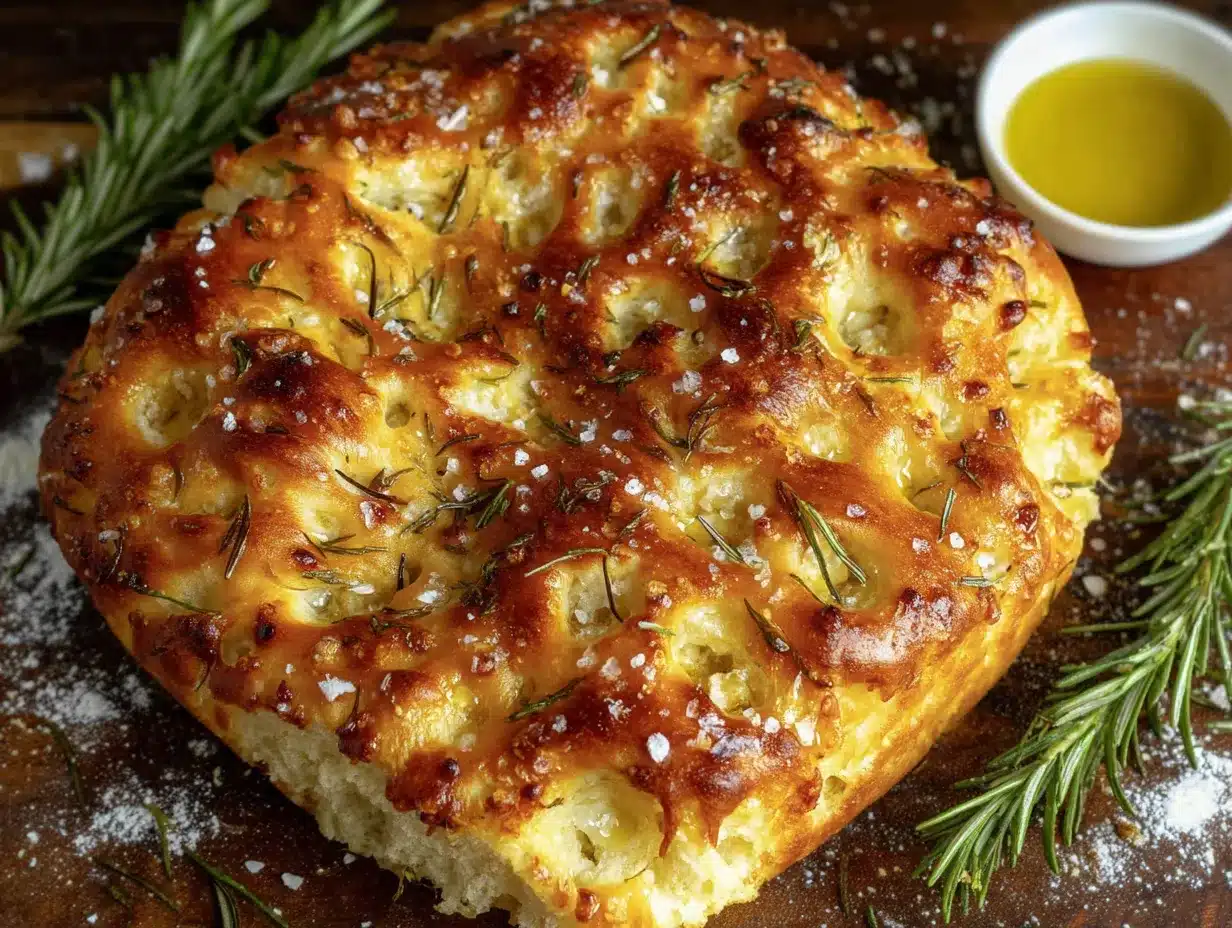
Let’s get baking. This process is forgiving, so don’t worry if things aren’t perfect. The dough is quite wet and sticky, which is exactly what we want for a light, airy texture.
- Activate the yeast: In a small bowl, combine the warm water (1 cup / 240ml) and the active dry yeast (1 teaspoon). Let it sit for 5-10 minutes until it becomes foamy. If it doesn’t foam, your yeast might be dead—start over with fresh yeast.
- Mix the dough: In a large mixing bowl, combine the all-purpose flour (3 cups / 375g) and salt (1 1/2 teaspoons). Add the sourdough discard (1 cup / 240g), the yeast mixture, and the olive oil (1/4 cup / 60ml). Mix with a spatula or your hands until a shaggy, sticky dough forms. It will look messy—that’s good.
- First rise: Cover the bowl with plastic wrap or a damp towel and let it rest at room temperature for 1 hour. The dough should puff up slightly and show some bubbles on the surface. If your kitchen is cold, it might take longer.
- Fold the dough: After the first rise, perform a series of folds to strengthen the dough. With wet hands, grab one side of the dough, stretch it up, and fold it over the center. Repeat on all four sides. This takes about 30 seconds. Cover and let it rest for another 30 minutes.
- Prepare the pan: Pour a generous amount of olive oil (about 2 tablespoons) into your 9×13-inch baking pan. Use your fingers to spread it evenly over the bottom and up the sides. This oil is crucial for that crispy, golden crust.
- Transfer the dough: Gently scrape the dough into the oiled pan. Don’t deflate it too much. Let it rest for 10 minutes, then use your fingertips to gently stretch and press the dough to fill the pan. It might not reach the edges—that’s fine. Cover and let it rise for another 45 minutes to 1 hour, until it’s puffy and almost doubled.
- Preheat the oven: About 20 minutes before the second rise is done, preheat your oven to 425°F (220°C). Place a rack in the middle position.
- Dimple the dough: Drizzle a little more olive oil over the top. Using your fingertips, press deep dimples all over the surface of the dough. Don’t be shy—go all the way down to the bottom of the pan. This creates those classic focaccia pockets.
- Add the toppings: Sprinkle the chopped fresh rosemary (2 tablespoons) and a generous pinch of flaky sea salt evenly over the top. Press them gently into the dimples.
- Bake: Place the pan in the preheated oven and bake for 25-30 minutes, until the top is deep golden brown and the bottom is crispy. If you tap the bottom, it should sound hollow. For extra crispiness, remove the focaccia from the pan and bake it directly on the oven rack for the last 2-3 minutes.
- Cool: Let the focaccia cool in the pan for 5 minutes, then transfer it to a wire rack. Resist the urge to cut into it immediately—the texture sets as it cools. Wait at least 10 minutes.
Sensory cues: At step 8, the dimples should hold their shape. The dough should feel pillowy and soft. At step 10, the kitchen should smell like rosemary and toasted olive oil. The top should be a rich amber color.
Cooking Tips & Techniques
After a few disasters—like the time I used too much discard and the dough was a sticky mess—I’ve learned a few things. Here are my best tips for perfect results every time.
- Don’t skip the oil: The olive oil in the pan is non-negotiable. It creates that crispy, almost fried bottom that makes this focaccia so addictive. I’ve tried using less, and it just wasn’t the same.
- Use wet hands: When handling the sticky dough, wet your hands with water or oil. It prevents sticking without adding extra flour, which can make the bread dense.
- Let it rise properly: Don’t rush the second rise. The dough should be visibly puffy and jiggly when you dimple it. If it’s not, give it another 15-20 minutes.
- Watch the oven: Ovens vary, so check the focaccia at the 20-minute mark. If the top is browning too fast, tent it loosely with foil. If the bottom isn’t crispy, bake it directly on the oven rack for a few minutes.
- One mistake I made: I once forgot to dimple the dough before baking. The result was a flat, dense bread with no those lovely oil pockets. Don’t skip that step—it’s what makes focaccia special.
Variations & Adaptations
This recipe is a great base for experimentation. Here are a few ways to change it up:
- Herb & Garlic: Add 2 minced garlic cloves to the olive oil before pouring it into the pan. Swap the rosemary for a mix of thyme and oregano. The garlic infuses the oil and adds a subtle warmth.
- Everything Bagel Focaccia: After dimpling, sprinkle the top with everything bagel seasoning (sesame seeds, poppy seeds, dried garlic, dried onion, and salt). It adds a savory, crunchy crust that’s incredible with cream cheese.
- Caramelized Onion & Parmesan: Before adding the dough to the pan, spread a layer of caramelized onions on the bottom. Top the baked focaccia with grated Parmesan and fresh parsley. It’s rich and savory—perfect as a side dish.
- Gluten-Free Option: Use a 1:1 gluten-free flour blend. Add an extra tablespoon of olive oil and let the dough rest for 30 minutes longer to hydrate the flour properly. The texture will be slightly more cake-like, but still delicious.
I once tried a sun-dried tomato and olive version, and it was a hit at a potluck. Just press halved cherry tomatoes and sliced olives into the dimples before baking. The tomatoes get jammy and sweet.
Serving & Storage Suggestions
This focaccia is versatile. Here’s how to serve and store it:
- Serving Temperature: It’s best served warm, straight from the oven. But it’s also delicious at room temperature, especially the next day.
- Presentation: Cut it into squares or slices and serve on a wooden board. Drizzle with a little extra olive oil and a sprinkle of flaky salt for a beautiful finish.
- Pairings: It’s perfect with soups (like minestrone or tomato basil), salads (a simple green salad with lemon vinaigrette), or as a side for pasta dishes. For a snack, serve it with olive oil and balsamic vinegar for dipping.
- Storage: Store leftovers in an airtight container at room temperature for up to 2 days. Do not refrigerate—it will dry out the bread. For longer storage, wrap it tightly in plastic wrap and freeze for up to 3 months.
- Reheating: To bring back that crispy crust, reheat slices in a 350°F (175°C) oven for 5-7 minutes, or in a toaster oven. Avoid the microwave—it will make the bread soggy.
The flavors actually develop overnight. I find the second day, the rosemary and olive oil have melded together beautifully, and the texture is even more tender.
Nutritional Information & Benefits
Here’s an estimated breakdown per serving (based on 8 servings):
- Calories: 280
- Fat: 12g
- Carbohydrates: 38g
- Protein: 5g
- Fiber: 1g
- Sugar: 0g
Health Benefits: Sourdough discard is easier to digest than commercial yeast bread because the fermentation process breaks down gluten and phytic acid. Rosemary is rich in antioxidants and anti-inflammatory compounds. Olive oil provides healthy monounsaturated fats, which are good for heart health.
Dietary Considerations: This recipe is vegetarian and can be made vegan by ensuring the discard is from a vegan starter. It’s not gluten-free unless you use the substitution mentioned above. Potential allergens include wheat (gluten).
Honestly, I love that this bread feels indulgent but uses simple, wholesome ingredients. It’s comfort food that doesn’t leave you feeling heavy.
Conclusion
This crispy rosemary sourdough discard focaccia is one of those recipes that feels like a secret weapon. It’s simple enough for a weeknight, but impressive enough to serve guests. The crispy bottom, the soft, airy crumb, and the fragrant rosemary—it’s a combination that never gets old.
I hope you give it a try. Don’t be afraid to make it your own—add your favorite herbs, experiment with toppings, or just enjoy it plain with a drizzle of olive oil. I’d love to hear how it turns out. Leave a comment below and let me know what variations you tried. Did you add garlic? Did you use a different herb? Share your creations!
Happy baking, friends. May your kitchen smell like rosemary and your bread always be crispy.
Frequently Asked Questions
Can I use only sourdough discard without commercial yeast?
Yes, you can. Omit the commercial yeast and increase the first rise to 8-12 hours (overnight) at room temperature. The rise will be slower, and the bread will have a stronger tangy flavor. Just make sure your discard is active and bubbly.
Why is my focaccia dough so sticky?
That’s normal! This is a high-hydration dough, which means it’s wetter than regular bread dough. Resist the urge to add more flour. Use wet hands or oiled tools to handle it, and trust the process—the stickiness creates that light, airy texture.
Can I use dried rosemary instead of fresh?
Absolutely. Use 1 tablespoon of dried rosemary instead of 2 tablespoons fresh. Dried rosemary has a more concentrated flavor, so you don’t need as much. Crush it between your fingers before sprinkling to release the oils.
How do I get a super crispy bottom?
The key is a generous amount of olive oil in the pan and a hot oven. Bake the focaccia in a metal pan for the best heat conduction. For extra crispiness, remove the focaccia from the pan and bake it directly on the oven rack for the last 2-3 minutes.
Can I freeze the baked focaccia?
Yes! Wrap it tightly in plastic wrap, then in foil, and freeze for up to 3 months. To reheat, thaw at room temperature, then warm in a 350°F (175°C) oven for 10 minutes. The crispy crust will come back beautifully.
Pin This Recipe!
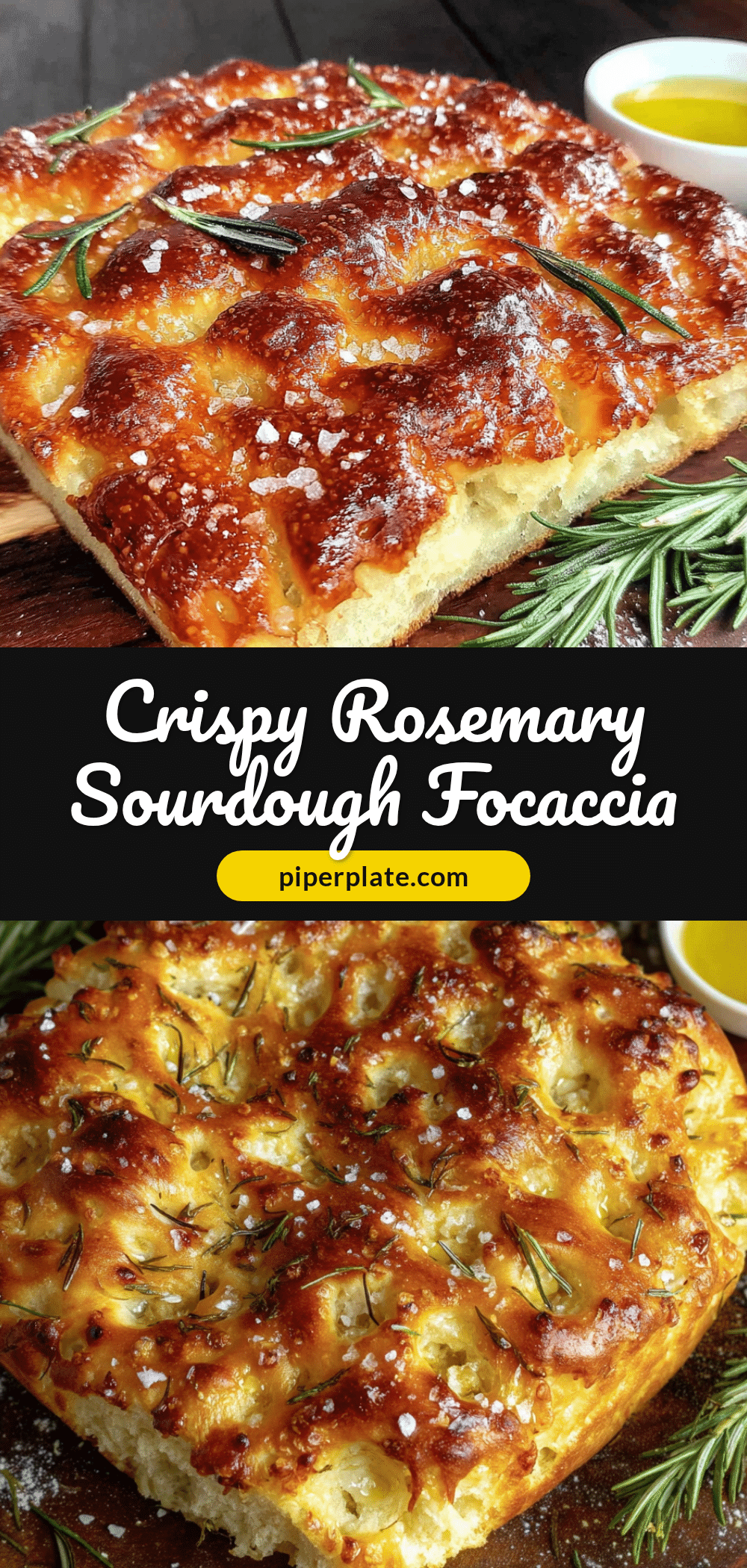
Easy Crispy Rosemary Sourdough Discard Focaccia

This crispy rosemary sourdough discard focaccia is the perfect way to use up your sourdough discard. With a golden, crunchy bottom and soft, airy interior, it’s a simple yet impressive bread that comes together in about 2.5 hours.
- Prep Time: 15 minutes
- Cook Time: 30 minutes
- Total Time: 2 hours 30 minutes
- Yield: 8 servings 1x
- Category: Bread
- Cuisine: Italian
Ingredients
- 3 cups (375g) all-purpose flour
- 1 cup (240g) sourdough discard, unfed
- 1 cup (240ml) warm water (about 110°F)
- 1 teaspoon active dry yeast
- 1/4 cup (60ml) olive oil, plus more for the pan
- 2 tablespoons fresh rosemary, finely chopped
- 1 1/2 teaspoons salt
- Flaky sea salt, for topping
Instructions
- Activate the yeast: In a small bowl, combine the warm water and active dry yeast. Let it sit for 5-10 minutes until foamy.
- Mix the dough: In a large mixing bowl, combine the flour and salt. Add the sourdough discard, yeast mixture, and olive oil. Mix until a shaggy, sticky dough forms.
- First rise: Cover the bowl and let it rest at room temperature for 1 hour until puffy with some bubbles.
- Fold the dough: With wet hands, stretch and fold the dough from all four sides over the center. Cover and rest for another 30 minutes.
- Prepare the pan: Pour about 2 tablespoons of olive oil into a 9×13-inch baking pan and spread evenly.
- Transfer the dough: Gently scrape the dough into the oiled pan. Let rest for 10 minutes, then use fingertips to stretch it to fill the pan. Cover and let rise for 45 minutes to 1 hour until puffy.
- Preheat the oven: About 20 minutes before the second rise is done, preheat oven to 425°F (220°C).
- Dimple the dough: Drizzle more olive oil on top and use fingertips to press deep dimples all over the dough.
- Add toppings: Sprinkle chopped rosemary and flaky sea salt evenly over the top, pressing gently into dimples.
- Bake: Bake for 25-30 minutes until deep golden brown and the bottom is crispy. For extra crispiness, remove from pan and bake directly on oven rack for last 2-3 minutes.
- Cool: Let cool in pan for 5 minutes, then transfer to a wire rack. Wait at least 10 minutes before cutting.
Notes
For a gluten-free version, use a 1:1 gluten-free flour blend and add an extra tablespoon of olive oil. The dough is intentionally sticky—use wet hands to handle it. Don’t skip the dimpling step as it creates the classic focaccia pockets. For a stronger tangy flavor, omit the commercial yeast and let the first rise go overnight (8-12 hours).
Nutrition
- Serving Size: 1 square
- Calories: 280
- Sodium: 440
- Fat: 12
- Saturated Fat: 2
- Carbohydrates: 38
- Fiber: 1
- Protein: 5
Keywords: sourdough discard, focaccia, rosemary, crispy, easy bread, discard recipe, sourdough bread