Love this? Save it for later!
Share the inspiration with your friends
“You won’t believe how much better I felt after just one week,” my friend Jenna confided over a slightly jittery Zoom call last spring. She’d been battling mysterious flare-ups for months—aches, rashes, and a foggy brain she couldn’t shake. Turns out, her mast cells were throwing a party she never RSVPed to. That’s when she started exploring fresh low-histamine diet recipes, hoping to calm that internal storm. Honestly, I wasn’t sure what to expect at first. I mean, how do you cook flavorful meals without the usual suspects like aged cheese, tomatoes, or fermented sauces? But Jenna’s meals looked vibrant, fresh, and surprisingly appetizing—even on my screen.
One night, she sent me a photo of a bright, herbaceous chicken and cucumber salad with a zingy lemon dressing. The best part? No weird ingredients or complicated steps, just simple, fresh foods that respected her body’s needs. That moment stuck with me. I decided to try crafting some mast cell friendly dishes myself, inspired by Jenna’s journey. And let me tell you, these fresh low-histamine diet recipes aren’t just about avoiding triggers—they’re about rediscovering clean, uncomplicated flavors that nourish and satisfy.
Maybe you’ve been there too—feeling stuck between wanting to eat well and needing to avoid an overwhelming list of ingredients. These recipes are for anyone looking to live mast cell friendly without sacrificing taste or time. I’ll share some of my favorite fresh low-histamine diet recipes that have become staples around my kitchen, along with tips and tricks that make this way of eating manageable and even enjoyable. So, let’s get to the heart of mast cell friendly eating and bring fresh, vibrant meals back to your table.
Why You’ll Love This Recipe
- Quick & Easy: Most recipes come together in under 30 minutes—perfect for busy evenings or when you need something nourishing fast.
- Simple Ingredients: No specialized or hard-to-find foods here. These dishes rely on fresh vegetables, lean proteins, and herbs you probably already keep on hand.
- Perfect for Mast Cell Friendly Eating: Designed specifically to avoid common histamine triggers, making them safe and soothing for sensitive systems.
- Crowd-Pleaser: Whether you’re cooking for family, friends, or just yourself, these meals have a fresh, clean flavor that wins over skeptics.
- Unbelievably Delicious: The secret isn’t fancy ingredients—it’s balancing fresh herbs, bright citrus, and gentle cooking methods to bring out natural goodness.
What makes these fresh low-histamine diet recipes different? I’ve tested countless variations to find the sweet spot between flavor and safety. For example, gently poached chicken breast paired with crisp cucumber and a splash of fresh lemon juice provides brightness without risking a histamine flare-up. And instead of aged cheeses or fermented condiments, we use fresh herbs and a hint of good-quality olive oil to keep things lively. Honestly, these aren’t just “safe” meals—they’re the kind of dishes that make you pause and appreciate how simple, clean flavors can be so satisfying. Whether you’re new to mast cell friendly eating or looking for fresh ideas, these recipes are here to make your life easier and your meals tastier.
What Ingredients You Will Need
This collection of fresh low-histamine diet recipes uses wholesome, easy-to-find ingredients to keep your meals gentle on mast cells without sacrificing taste. Most are pantry staples or fresh produce you can grab at your local market.
- Proteins: Fresh chicken breast (skinless, boneless), wild-caught fresh fish fillets (like cod or sole), pasture-raised eggs
- Vegetables: Cucumbers (peeled for extra gentleness), zucchini, fresh carrots, leafy greens like butter lettuce or spinach (fresh, not wilted), green beans
- Fruits: Fresh pears, apples (peeled to reduce histamine), fresh blueberries (small amounts), fresh lemons (for juice only, avoid zest)
- Oils & Fats: Extra virgin olive oil (cold-pressed), coconut oil (unrefined)
- Herbs & Seasonings: Fresh parsley, fresh basil, fresh thyme, sea salt (unprocessed), freshly ground black pepper (use sparingly)
- Others: Filtered water, pure maple syrup (small amounts for sweetness), rice vinegar (check for additives), gluten-free oats (for some recipes)
Look for organic or locally sourced produce when possible—that boost of freshness really shines through in these dishes. If you’re avoiding gluten, swapping regular oats for certified gluten-free oats works well. Also, if you need dairy-free options, coconut oil and olive oil provide great fat without triggering histamine reactions. When selecting herbs, always choose fresh rather than dried, as dried herbs can sometimes concentrate histamines. For sweeteners, pure maple syrup is a gentle choice; just be cautious with quantity.
Equipment Needed
- Sharp chef’s knife: Essential for cleanly slicing fresh vegetables and proteins without bruising or mashing them.
- Cutting board: Preferably separate ones for proteins and vegetables to avoid cross-contamination.
- Non-stick skillet or sauté pan: For gently cooking chicken or fish without needing excess oil.
- Medium mixing bowls: For tossing salads or mixing dressings.
- Measuring spoons and cups: Accurate measurements help keep seasoning balanced.
- Fine mesh strainer: Handy for rinsing delicate greens or draining cooked veggies.
- Citrus juicer: Optional but useful for extracting fresh lemon juice efficiently.
If you don’t have a non-stick pan, a well-seasoned cast iron skillet can work great, just be mindful to keep heat moderate. For a budget-friendly citrus juicer alternative, use a fork to squeeze lemons—works just fine! I’ve found that keeping knives sharp makes prepping these fresh ingredients much more pleasant and safer, so a quick weekly hone is worth it.
Preparation Method
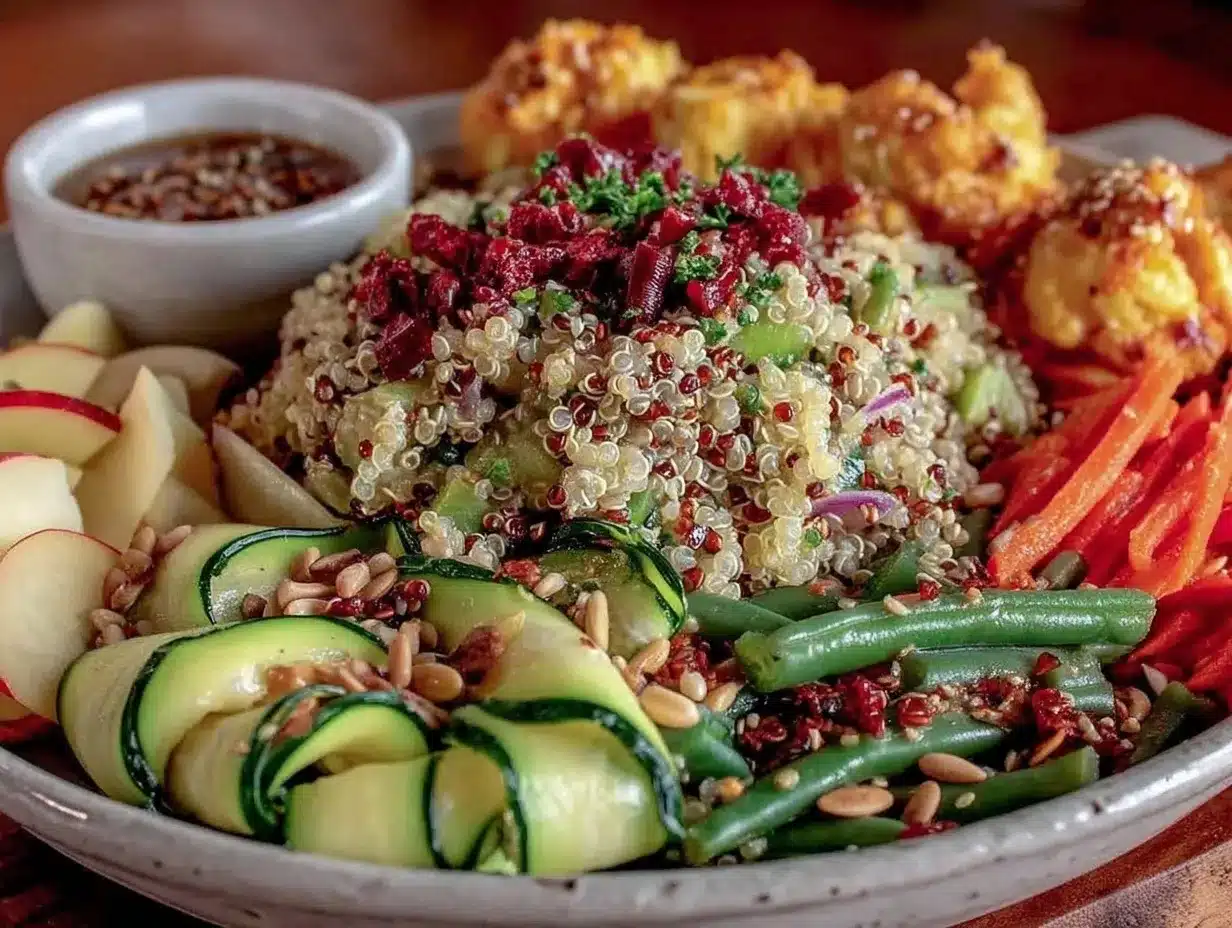
- Prepare your proteins: Rinse chicken breasts under cold water, pat dry with paper towels. Trim any visible fat or connective tissue. Cut into even-sized strips or bite-sized pieces (about 1-inch chunks). This helps cooking evenly. (Prep time: 5 minutes)
- Slice vegetables: Peel cucumbers and carrots to reduce histamine load. Slice cucumbers into thin rounds or half-moons, julienne carrots, and roughly chop leafy greens. Keep everything fresh and crisp. (Prep time: 7 minutes)
- Make the dressing: In a medium bowl, whisk together 2 tablespoons fresh lemon juice, 3 tablespoons extra virgin olive oil, a pinch of sea salt, and 1 teaspoon pure maple syrup. Taste and adjust balance—this simple dressing brings brightness without overpowering the delicate ingredients. (Prep time: 3 minutes)
- Cook the chicken: Heat 1 tablespoon olive oil over medium heat in your pan. Add chicken pieces in a single layer, season lightly with salt and a touch of black pepper. Cook about 4-5 minutes per side until opaque and cooked through. Avoid overcooking to keep chicken tender and juicy. (Cooking time: 10 minutes)
- Toss the salad: In a large bowl, combine sliced cucumbers, carrots, and leafy greens. Add the warm chicken pieces on top. Drizzle dressing over everything and toss gently to coat. The warmth of the chicken slightly softens the greens, creating a lovely texture contrast. (Prep time: 3 minutes)
- Serve immediately: These fresh low-histamine diet recipes are best enjoyed right away to preserve crispness. If you need to prepare ahead, keep dressing separate and toss just before serving. (Total time: ~30 minutes)
Pro tip: If you notice your chicken drying out, try brining it in lightly salted water for 15 minutes before cooking. It adds moisture without introducing histamine risk. Also, use fresh, lively lemons for the dressing—avoid bottled lemon juice, which tends to be more acidic and less fresh tasting. You’ll get a better balance of brightness and gentleness.
Cooking Tips & Techniques
Cooking for mast cell friendly eating requires a bit of mindfulness, but it doesn’t have to be complicated. One of my favorite tips is to keep ingredients as fresh as possible. Histamine levels tend to rise in leftovers or anything stored too long, so cooking smaller portions more often can really help manage symptoms.
Also, gentle cooking methods win here—think poaching, steaming, or quick sautéing over high heat. Avoiding browning or charring protein helps prevent histamine formation. For proteins like chicken, cooking just until opaque and juicy keeps dishes tender and easier on sensitive systems.
When seasoning, less is more. I like to rely on fresh herbs like parsley and basil for flavor instead of heavy spices or dried blends. They add aroma and taste without risking triggers. If you’re new to this style of cooking, start with small batches and keep a food diary to track what works for you. I once made a batch of salad dressing with bottled lemon juice and immediately regretted it—lesson learned!
Timing matters too. Since fresh low-histamine diet recipes rely on fresh ingredients, prep and cook close to mealtime. Multitasking helps—while chicken cooks, prep veggies to save time. And don’t forget to taste as you go; balancing acidity, salt, and sweetness can make a huge difference.
Variations & Adaptations
These recipes are quite flexible, so you can tweak them based on what you have or your taste preferences.
- Protein swaps: Instead of chicken, try fresh wild-caught fish like cod or sole, cooked gently by steaming or poaching. For vegetarian options, soft scrambled eggs or fresh tofu (if tolerated) work well.
- Seasonal twists: In summer, add fresh zucchini ribbons or peeled cherry tomatoes (if tolerated in small amounts). During cooler months, roasted butternut squash cubes can add warmth and sweetness.
- Flavor boosts: Fresh herbs are your friends here. Add chopped dill or chives for a fresh twist. You can also add a splash of rice vinegar in place of lemon juice for a milder acid note.
- Allergen substitutions: For those avoiding nuts, stick with olive or coconut oil. If eggs aren’t an option, omit or replace with chickpea flour batter for binding in some recipes.
Personally, I’ve enjoyed swapping lemon juice with a tiny bit of fresh lime juice on occasion—it adds a slightly different brightness that’s still gentle. Just be cautious with quantities to avoid over-acidifying the dish. These little experiments keep the routine interesting without risking flare-ups.
Serving & Storage Suggestions
These fresh low-histamine diet recipes shine best served immediately, while the vegetables are crisp and the proteins tender. Serving at room temperature or slightly chilled works nicely, especially for salads. If you want to turn a dish into a more filling meal, add a side of cooked quinoa or white rice, which are generally well tolerated.
For storage, keep proteins and veggies separate if possible. Store in airtight containers in the refrigerator for up to 24 hours to minimize histamine buildup. Leftovers beyond that can increase risk of reaction, so I usually avoid keeping these dishes longer than a day.
When reheating, do so gently on low heat or enjoy cold—avoid microwaving aggressively as it can change texture and flavor. Over time, flavors meld, but the freshness of the herbs may fade, so it’s best to add a sprinkle of fresh herbs before serving leftover portions.
Nutritional Information & Benefits
These mast cell friendly recipes offer balanced nutrition with lean protein, fresh vegetables, and healthy fats. A typical serving contains approximately:
| Nutrient | Amount per Serving |
|---|---|
| Calories | 300-350 kcal |
| Protein | 30-35 grams |
| Fat | 12-15 grams (mostly healthy fats) |
| Carbohydrates | 15-20 grams |
| Fiber | 4-6 grams |
The key benefits include high-quality protein for tissue repair, antioxidants from fresh herbs and vegetables, and anti-inflammatory healthy fats from olive oil. These meals are naturally gluten-free, low in sugar, and free from common histamine triggers. If you’re following a low-histamine diet for mast cell activation, these recipes support balanced nutrition without causing flare-ups. From a wellness perspective, focusing on fresh, unprocessed foods helps reduce overall inflammation and supports digestive health.
Conclusion
Trying fresh low-histamine diet recipes doesn’t have to feel like a chore or a flavor sacrifice. These meals have brought me and many others a sense of relief and joy, showing that mast cell friendly eating can be vibrant, simple, and satisfying. I encourage you to experiment with these ideas, adjusting seasonings and ingredients to suit your needs and tastes.
This approach isn’t just about managing symptoms—it’s about reclaiming the pleasure of eating fresh, wholesome food every day. I still remember the first time I made that lemon-herb chicken salad and how good it felt to enjoy something so clean and tasty without worry. Please share your own experiences or adaptations in the comments—I love hearing how others make these recipes their own! Remember, you’re not alone on this journey, and with a little guidance, fresh low-histamine meals can become your new favorite way to eat well.
FAQs about Fresh Low-Histamine Diet Recipes
What foods should I avoid on a low-histamine diet?
Common triggers include aged cheeses, fermented foods, processed meats, tomatoes, spinach, and alcohol. Fresh, unprocessed foods like those in these recipes are generally safer.
Can I freeze these low-histamine meals?
Freezing is not recommended as histamine levels can increase with freezing and thawing. It’s best to prepare fresh batches or refrigerate for up to 24 hours.
Are citrus fruits allowed on a low-histamine diet?
Fresh lemon and lime juice are usually tolerated in small amounts, but avoid large quantities and citrus zest, which may cause reactions in some people.
Is it okay to use dried herbs instead of fresh?
Fresh herbs are preferred because dried herbs can concentrate histamines and other biogenic amines. Use fresh parsley, basil, and thyme when possible.
How can I add variety to my low-histamine meals?
Try swapping proteins, incorporating seasonal vegetables, and experimenting with mild, fresh herbs and gentle acids like rice vinegar or lemon juice to keep meals interesting.
Pin This Recipe!
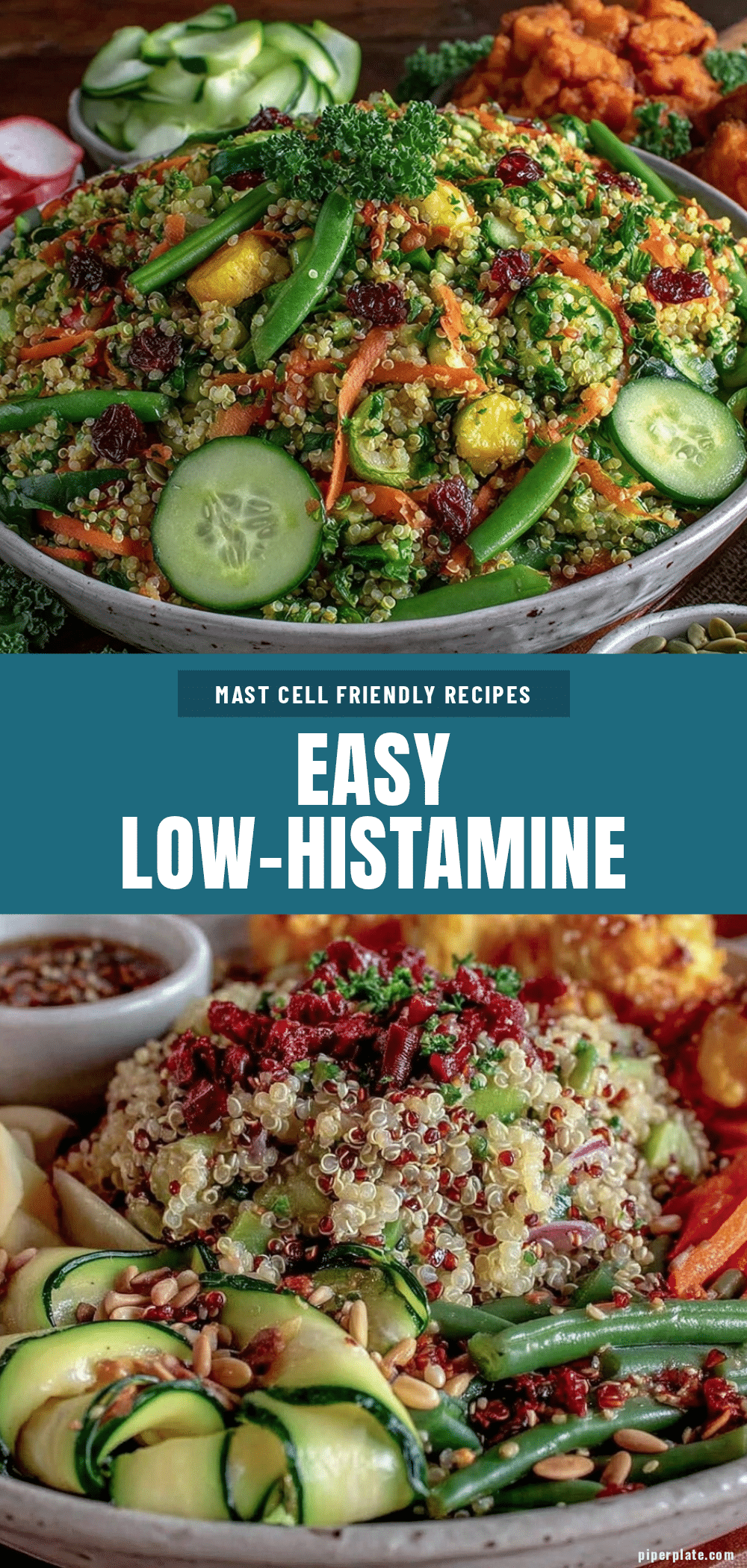
Fresh Low-Histamine Diet Recipes Easy Mast Cell Friendly Meals
These fresh low-histamine diet recipes offer simple, nourishing meals designed to avoid common histamine triggers while delivering vibrant, clean flavors. Perfect for those managing mast cell activation, these recipes are quick, easy, and made with fresh, wholesome ingredients.
- Prep Time: 15 minutes
- Cook Time: 10 minutes
- Total Time: 30 minutes
- Yield: 4 servings
- Category: Main Course
- Cuisine: American
Ingredients
- Fresh chicken breast (skinless, boneless)
- Wild-caught fresh fish fillets (like cod or sole)
- Pasture-raised eggs
- Cucumbers (peeled for extra gentleness)
- Zucchini
- Fresh carrots
- Leafy greens like butter lettuce or spinach (fresh, not wilted)
- Green beans
- Fresh pears
- Apples (peeled to reduce histamine)
- Fresh blueberries (small amounts)
- Fresh lemons (for juice only, avoid zest)
- Extra virgin olive oil (cold-pressed)
- Coconut oil (unrefined)
- Fresh parsley
- Fresh basil
- Fresh thyme
- Sea salt (unprocessed)
- Freshly ground black pepper (use sparingly)
- Filtered water
- Pure maple syrup (small amounts for sweetness)
- Rice vinegar (check for additives)
- Gluten-free oats (for some recipes)
Instructions
- Rinse chicken breasts under cold water, pat dry with paper towels. Trim any visible fat or connective tissue. Cut into even-sized strips or bite-sized pieces (about 1-inch chunks).
- Peel cucumbers and carrots to reduce histamine load. Slice cucumbers into thin rounds or half-moons, julienne carrots, and roughly chop leafy greens. Keep everything fresh and crisp.
- In a medium bowl, whisk together 2 tablespoons fresh lemon juice, 3 tablespoons extra virgin olive oil, a pinch of sea salt, and 1 teaspoon pure maple syrup. Taste and adjust balance.
- Heat 1 tablespoon olive oil over medium heat in your pan. Add chicken pieces in a single layer, season lightly with salt and a touch of black pepper. Cook about 4-5 minutes per side until opaque and cooked through. Avoid overcooking.
- In a large bowl, combine sliced cucumbers, carrots, and leafy greens. Add the warm chicken pieces on top. Drizzle dressing over everything and toss gently to coat.
- Serve immediately to preserve crispness. If preparing ahead, keep dressing separate and toss just before serving.
Notes
If chicken dries out, brine in lightly salted water for 15 minutes before cooking. Use fresh lemon juice instead of bottled for better flavor. Keep ingredients fresh and cook close to serving time to minimize histamine buildup. Avoid overcooking proteins to keep them tender. Store leftovers in airtight containers for up to 24 hours and reheat gently or enjoy cold.
Nutrition
- Serving Size: 1 serving (approxima
- Calories: 325
- Sugar: 5
- Sodium: 150
- Fat: 13.5
- Saturated Fat: 2
- Carbohydrates: 17.5
- Fiber: 5
- Protein: 32.5
Keywords: low histamine, mast cell friendly, fresh recipes, easy meals, healthy, gluten-free, dairy-free, quick cooking