Love this? Save it for later!
Share the inspiration with your friends
“You know that feeling when a headache sneaks up on you just as you’re about to enjoy your lunch break? That was me last Thursday,” I confessed to my friend over the phone. I had been battling migraines for years, and honestly, finding food that wouldn’t set one off felt like navigating a minefield. One afternoon, while chatting with a nutritionist at my local farmer’s market (yes, amidst the kale and tomatoes!), she casually mentioned a salad she swore by—completely free of common migraine triggers. Skeptical but desperate, I decided to create my own version of this fresh migraine diet trigger-free salad bowl.
The first time I assembled it, I forgot to grab my usual dressing and ended up experimenting with a simple lemon and olive oil combo. It was surprisingly refreshing, and without the usual headache aftermath! Maybe you’ve been there too—trying to find something light, satisfying, and headache-friendly that actually tastes good. This salad bowl became my go-to, combining crisp veggies, gentle herbs, and a dressing that soothes rather than sparks. It’s not just a meal; it’s my little relief ritual that I look forward to, especially on tough days.
Let me tell you, it’s a fresh take on salads that respects your head and your palate. Whether you’re new to migraine-friendly meals or a seasoned pro, this recipe has something honest and simple to offer. No fancy ingredients, no complicated steps—just a vibrant bowl of goodness that feels like a hug in food form.
Why You’ll Love This Recipe
After numerous trials and tweaks, this fresh migraine diet salad bowl stands out for several reasons. I’ve tested it on myself and shared it with friends who battle headaches, and it’s always a hit. Here’s why you’ll appreciate it too:
- Quick & Easy: Comes together in under 20 minutes, perfect for busy days when you need relief without fuss.
- Simple Ingredients: No need for specialty stores; the ingredients are pantry staples or easy to find at any market.
- Perfect for Headache Management: Each component is chosen to avoid common migraine triggers, making it a mindful choice for sensitive folks.
- Crowd-Pleaser: Whether you’re cooking for yourself or friends, it offers bright, fresh flavors that everyone enjoys.
- Unbelievably Delicious: The balance of crisp textures and zesty dressing turns a “safe” meal into something you actually crave.
Unlike other salads that might rely on heavy dressings or trigger ingredients like aged cheese or nuts, this bowl keeps it straightforward but flavorful. The lemon-olive oil dressing is a subtle twist that brings it all together without overpowering your senses. Honestly, it’s the kind of recipe that makes you forget you’re eating for headache relief. It’s comfort and care on a plate, ideal for anyone who wants health and taste in one bowl.
What Ingredients You Will Need
This recipe uses fresh, wholesome ingredients to deliver bold flavor and satisfying texture without any migraine triggers. Most are pantry staples or easily swapped if needed.
- Mixed Greens: Fresh spinach, arugula, and butter lettuce (choose organic if possible for best flavor and texture)
- Cucumber: Peeled and thinly sliced (adds crunch and hydration)
- Carrots: Shredded or julienned (for natural sweetness and color)
- Avocado: Ripe, diced (adds creaminess and healthy fats)
- Fresh Herbs: Chopped parsley and basil (offer freshness without strong migraine triggers)
- Cooked Quinoa: About ½ cup (optional, for extra protein and texture)
- Olive Oil: Extra virgin, cold-pressed (I recommend California Olive Ranch for its smooth taste)
- Lemon Juice: Freshly squeezed (brightens flavors and is gentle on sensitive stomachs)
- Sea Salt: A pinch (enhances natural flavors)
- Black Pepper: Freshly ground, sparingly (optional, depending on tolerance)
- Sunflower Seeds: Toasted lightly (for crunch without common nut allergens)
Substitution tips: You can swap quinoa for brown rice or omit grains altogether for a lighter bowl. If you’re avoiding citrus, try a splash of apple cider vinegar instead of lemon juice. For herbs, dill or cilantro can work depending on preference, but keep quantities moderate to avoid overwhelming flavors.
Equipment Needed
- Large salad bowl for tossing
- Sharp chef’s knife for chopping vegetables and herbs
- Cutting board
- Measuring cups and spoons for accurate dressing ratios
- Small bowl or jar to whisk or shake the dressing
- Optional: Salad spinner for washing and drying greens (makes prep faster and prevents sogginess)
If you don’t have a salad spinner, patting greens dry with a clean towel works just fine. When I started making this salad, my old wooden cutting board was a little uneven, which made cutting tricky, so I recommend a sturdy, flat surface for chopping – it really helps with speed and safety. For dressing, a small mason jar with a lid can double as a shaker and storage container, saving you a dish or two.
Preparation Method
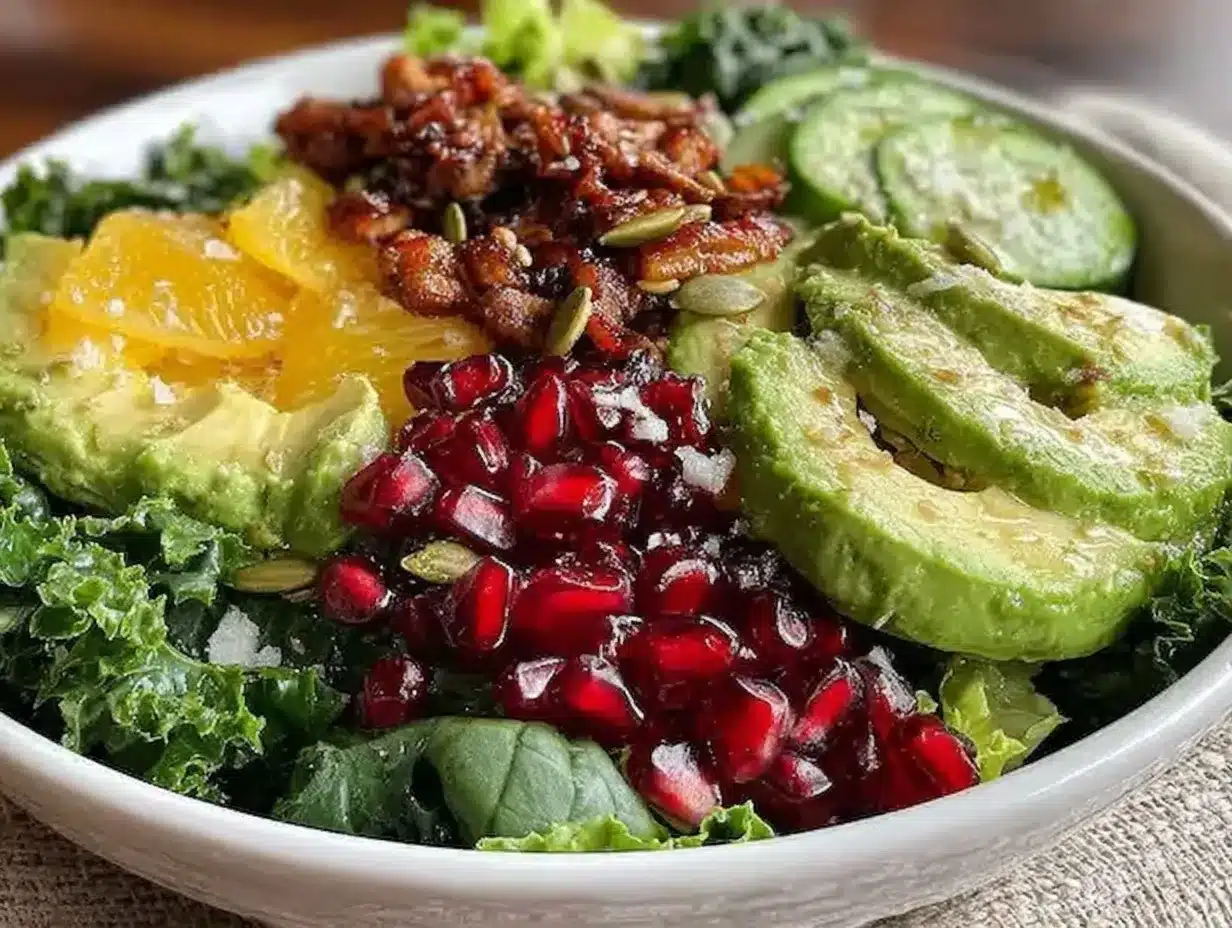
- Rinse and dry the mixed greens. Use a salad spinner or gently pat dry with a kitchen towel. This step prevents watery salad and keeps everything crisp. (About 5 minutes)
- Prepare the vegetables. Peel and thinly slice the cucumber, shred or julienne the carrots, and dice the ripe avocado. The avocado should be soft but firm, not mushy. (7-8 minutes)
- Chop the fresh herbs. Roughly chop parsley and basil, keeping the cuts a little rustic. This keeps the texture interesting rather than a fine mush. (2 minutes)
- Cook the quinoa if using. Rinse ½ cup quinoa under cold water, then combine with 1 cup water in a small pot. Bring to boil, reduce heat, cover, and simmer for 15 minutes or until water is absorbed. Fluff with a fork and let cool. (15 minutes, can be done ahead)
- Make the dressing. In a small bowl or jar, combine 3 tablespoons extra virgin olive oil, 1 tablespoon fresh lemon juice, a pinch of sea salt, and a little black pepper if using. Whisk or shake well until emulsified. Adjust seasoning to taste. (2 minutes)
- Toast the sunflower seeds. In a dry skillet over medium heat, toast seeds for 2-3 minutes, stirring frequently to prevent burning. Remove when fragrant and golden. Let cool. (5 minutes)
- Assemble the salad bowl. In the large salad bowl, combine the greens, cucumber, carrots, avocado, herbs, cooked quinoa, and sunflower seeds. Pour dressing over the top and toss gently but thoroughly. (3-4 minutes)
- Serve immediately. The salad is best fresh but can be held in the fridge for up to 4 hours before serving. (Optional step: Hold off on dressing if prepping early to keep greens crisp.)
Pro tip: If your avocado is underripe, you can slice it thinly and add just before serving to avoid browning. Also, be gentle when tossing after adding dressing to keep textures intact. I learned the hard way that overly vigorous tossing turns avocado into mush — not the vibe you want!
Cooking Tips & Techniques
When making a migraine-friendly salad bowl, the technique can be just as important as the ingredients. Here are some tips I’ve picked up over many salad-making sessions:
- Keep ingredients fresh and cool. Warm greens or overripe veggies can dull the flavors and sometimes trigger discomfort.
- Toast seeds or grains separately. Adding toasted elements just before serving preserves crunch and adds a satisfying contrast.
- Dress lightly. Heavy dressings can overwhelm the palate and sometimes contribute to headaches. The lemon-olive oil combo is light but flavorful.
- Prep in stages. Chop herbs and veggies separately and combine at the last moment to keep textures vibrant.
- Beware of hidden triggers. Ingredients like aged cheese, nuts, or processed dressings often lead to headaches, so avoid them here.
- Experiment with acid levels. If lemon juice feels too sharp, try reducing the amount or swapping for a milder vinegar like rice vinegar.
One time, I accidentally added too much black pepper and had to start over—lesson learned: less is more, especially when managing sensitive heads. Also, multitasking by cooking quinoa while prepping veggies saves time without rushing the process.
Variations & Adaptations
This salad bowl is flexible to your needs and preferences. Here are some ways to make it your own:
- Protein boost: Add grilled chicken, baked tofu, or boiled eggs if you want a heartier meal.
- Seasonal swaps: In warmer months, try adding fresh peas or radishes. In cooler seasons, roasted sweet potato cubes work beautifully.
- Dairy-free dressing: Use a tahini-lemon dressing instead of olive oil for a creamier texture that’s still migraine-safe.
- Grain-free option: Omit quinoa and add extra seeds like pumpkin or hemp for crunch and nutrition.
- Personal twist: I sometimes toss in a peeled, diced pear for gentle sweetness when I want a little dessert vibe without sugar overload.
Feel free to adjust herbs or veggies to what feels best for you. The key is to keep it simple and avoid known triggers while enjoying vibrant, fresh flavors.
Serving & Storage Suggestions
This salad bowl is best served fresh at room temperature or slightly chilled. The textures are crisp, so I recommend plating it just before eating to keep everything lively. It pairs wonderfully with a light soup or a mild herbal tea for a soothing lunch or dinner.
If you have leftovers, store the salad and dressing separately in airtight containers in the refrigerator. The greens and avocado are best consumed within 24 hours for optimal texture and flavor. To reheat quinoa, warm it gently in the microwave or on the stove, then add to fresh greens and veggies.
Over time, flavors meld nicely if you let the dressing sit on grains or veggies for 10-15 minutes, but avoid soaking the greens too long to keep crispness. This salad makes for a refreshing meal prep option when you want to keep your head clear and your energy steady.
Nutritional Information & Benefits
This fresh migraine diet salad bowl is packed with nutrients while steering clear of common headache triggers. A typical serving contains around 300-350 calories, with healthy fats from avocado and olive oil, fiber-rich veggies, and plant-based protein from quinoa.
Key benefits include:
- Anti-inflammatory properties from fresh herbs and olive oil, which may help reduce headache frequency.
- Hydrating vegetables like cucumber and lettuce support overall hydration, important for migraine prevention.
- Magnesium-rich ingredients such as spinach and quinoa can contribute to headache relief.
This recipe is naturally gluten-free, dairy-free, and low in processed sugars, making it suitable for many dietary needs and sensitivities.
Conclusion
Honestly, this fresh migraine diet trigger-free salad bowl has become one of my favorite ways to enjoy a headache-friendly meal without feeling deprived. It’s simple, quick, and packed with flavors that soothe rather than irritate. I encourage you to make it your own—swap herbs, add your favorite safe veggies, or toss in some protein to suit your mood.
Cooking for migraine relief doesn’t have to be boring or complicated, and this recipe proves it. If you give it a try, I’d love to hear how you customize it or any tips you discover along the way. Let’s keep sharing ways to make healthy eating a delicious, headache-free experience!
So, grab your bowl and enjoy a fresh, vibrant meal that your head will thank you for.
Frequently Asked Questions
What common migraine triggers are avoided in this salad?
This salad avoids aged cheeses, nuts, processed dressings, and citrus overload. It focuses on fresh, gentle ingredients that are less likely to trigger headaches.
Can I prepare this salad in advance?
You can prep ingredients ahead but keep the dressing separate and add it just before serving to maintain crispness and freshness.
Is this salad suitable for gluten-free diets?
Yes, this recipe is naturally gluten-free, especially if you omit or substitute the quinoa with gluten-free grains or extra seeds.
What can I use instead of lemon juice if I’m sensitive to citrus?
Apple cider vinegar or a mild rice vinegar can be good alternatives that still provide acidity without triggering migraines for many people.
How can I make this salad more filling?
Add cooked protein like grilled chicken, tofu, or boiled eggs, or increase the quinoa portion for extra energy and satiety.
Pin This Recipe!
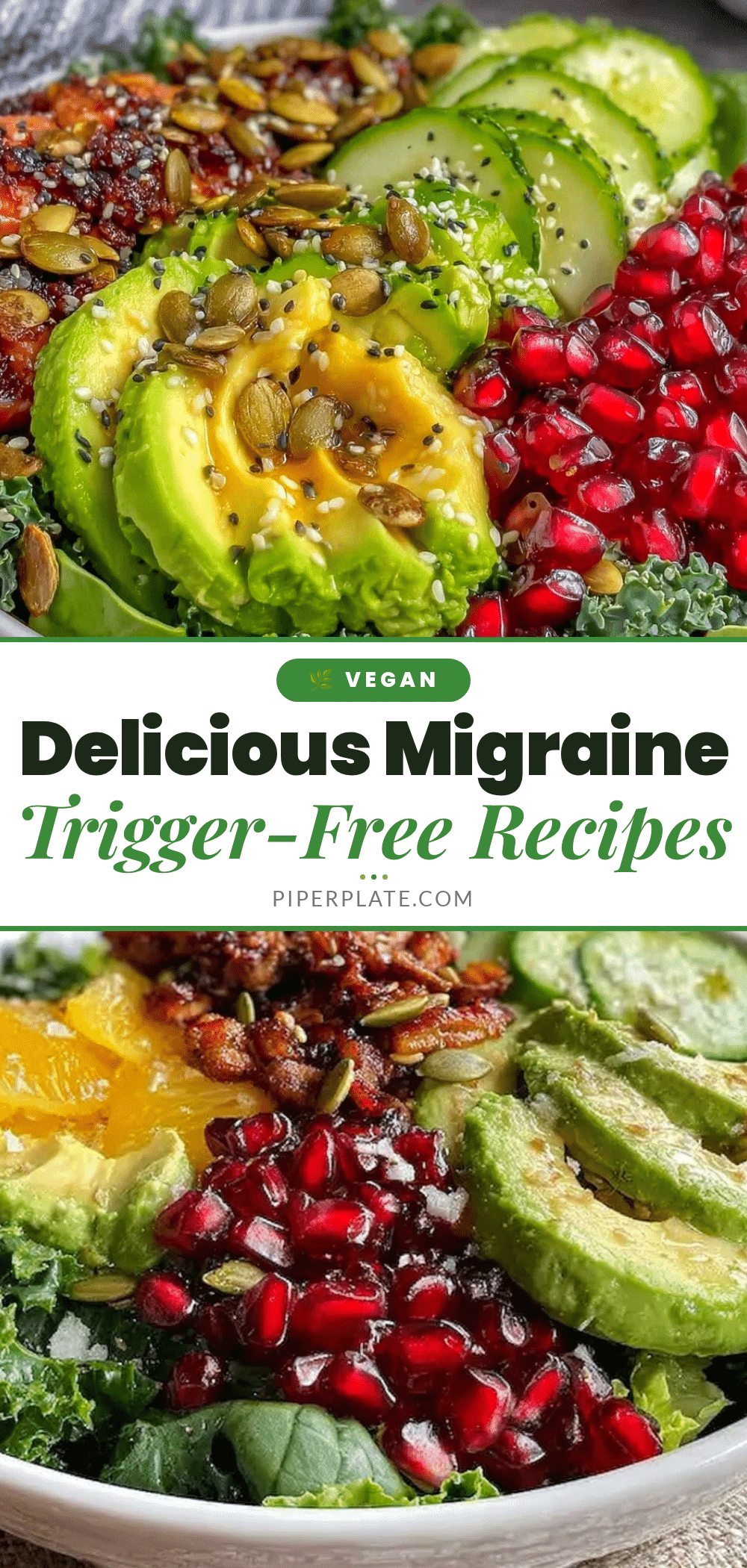
Fresh Migraine Diet Salad Bowl Easy Headache Relief Recipe
A fresh, vibrant salad bowl designed to avoid common migraine triggers, combining crisp veggies, gentle herbs, and a light lemon-olive oil dressing for headache-friendly relief.
- Prep Time: 15 minutes
- Cook Time: 15 minutes
- Total Time: 30 minutes
- Yield: 2 servings 1x
- Category: Main Course
- Cuisine: American
Ingredients
- Mixed greens: fresh spinach, arugula, and butter lettuce (organic if possible)
- 1/2 cucumber, peeled and thinly sliced
- 1/2 cup shredded or julienned carrots
- 1 ripe avocado, diced
- 2 tablespoons chopped fresh parsley
- 2 tablespoons chopped fresh basil
- 1/2 cup cooked quinoa (optional)
- 3 tablespoons extra virgin olive oil
- 1 tablespoon fresh lemon juice
- Pinch of sea salt
- Freshly ground black pepper, sparingly (optional)
- 2 tablespoons toasted sunflower seeds
Instructions
- Rinse and dry the mixed greens using a salad spinner or gently pat dry with a kitchen towel to keep everything crisp (about 5 minutes).
- Peel and thinly slice the cucumber, shred or julienne the carrots, and dice the ripe avocado, ensuring it is soft but firm (7-8 minutes).
- Roughly chop parsley and basil, keeping the cuts rustic for texture (2 minutes).
- If using quinoa, rinse 1/2 cup quinoa under cold water, combine with 1 cup water in a small pot, bring to boil, reduce heat, cover, and simmer for 15 minutes or until water is absorbed. Fluff with a fork and let cool (15 minutes, can be done ahead).
- Make the dressing by combining 3 tablespoons extra virgin olive oil, 1 tablespoon fresh lemon juice, a pinch of sea salt, and a little black pepper if using in a small bowl or jar. Whisk or shake well until emulsified. Adjust seasoning to taste (2 minutes).
- Toast the sunflower seeds in a dry skillet over medium heat for 2-3 minutes, stirring frequently to prevent burning. Remove when fragrant and golden. Let cool (5 minutes).
- In a large salad bowl, combine the greens, cucumber, carrots, avocado, herbs, cooked quinoa, and sunflower seeds. Pour dressing over the top and toss gently but thoroughly (3-4 minutes).
- Serve immediately. The salad is best fresh but can be held in the fridge for up to 4 hours before serving. If prepping early, hold off on dressing to keep greens crisp.
Notes
If avocado is underripe, slice thinly and add just before serving to avoid browning. Be gentle when tossing after adding dressing to keep avocado from turning mushy. Keep ingredients fresh and cool to avoid dull flavors and potential triggers. Toast seeds separately to preserve crunch. Dress lightly with lemon-olive oil combo to avoid overwhelming the palate. Substitute quinoa with brown rice or omit grains for a lighter bowl. Use apple cider vinegar instead of lemon juice if sensitive to citrus.
Nutrition
- Serving Size: 1 salad bowl (approx
- Calories: 325
- Sugar: 5
- Sodium: 150
- Fat: 22
- Saturated Fat: 3
- Carbohydrates: 26
- Fiber: 7
- Protein: 7
Keywords: migraine diet, headache relief, salad bowl, migraine-friendly, gluten-free, dairy-free, healthy salad, easy recipe, fresh salad, lemon olive oil dressing