Love this? Save it for later!
Share the inspiration with your friends
“You know that moment when your toddler suddenly decides they’re only eating crackers and refuses everything else? Yeah, that was me last Thursday afternoon. I was juggling grocery bags and a cranky little one who’d just declared, ‘No meat ever!’ Honestly, I wasn’t sure how to keep her iron levels up without resorting to bland supplements or force-feeding kale smoothies she’d spit out faster than I could blink. That’s when I got creative with healthy iron-rich toddler foods without meat.
It wasn’t about making fancy meals or complicated dishes. No, it was about finding simple, tasty, and sneaky ways to pack iron into foods my picky eater actually wanted to try. I mean, let’s face it, toddlers have a sixth sense for detecting “healthy” food and avoiding it at all costs. I discovered that with a few tweaks and the right ingredients, I could whip up meals that didn’t just fill her belly but also kept her iron levels steady without a single bite of meat. Maybe you’ve been there too—searching for that balance between nutrition and toddler-approved flavors.
This journey wasn’t perfect—there were spills, forgotten ingredients (I once left the iron-fortified cereal on the counter), and a few frustrated sighs—but the win was watching her gobble down dishes that supported her growth and energy. If you’re looking for healthy iron-rich toddler foods without meat for picky eaters, this collection of ten easy recipes is exactly what you need. Let me tell you, these recipes stuck with me because they made mealtime less stressful and a lot more fun.”
Why You’ll Love This Recipe
Honestly, coming up with healthy iron-rich toddler foods without meat that actually please picky eaters felt like cracking a secret code. After lots of trial and error (and a few sneaky ingredient swaps), I’m confident these recipes will make your life easier, too. Here’s why:
- Quick & Easy: Each recipe comes together in under 30 minutes, perfect for those chaotic mornings or busy afternoons when you’re short on time.
- Simple Ingredients: No need to hunt down obscure superfoods. Most ingredients are pantry staples or easy to find at your local market.
- Perfect for Picky Eaters: These recipes are tested and toddler-approved, packed with flavors and textures that even the fussiest kids tend to enjoy.
- Iron-Rich & Nutrient Dense: Thoughtfully crafted to provide plant-based iron sources combined with vitamin C to boost absorption.
- Versatile: Great for snacks, lunches, or dinner sides — these recipes adapt well for meal prep and reheating.
What really sets these recipes apart is the focus on blending nutrition with taste that kids love. For example, in one recipe, I mix lentils with sweet potatoes and a touch of cinnamon — sounds odd, right? But it’s a game-changer for iron intake and flavor. Plus, these dishes are gentle on tiny tummies and easy to chew, which is essential when serving toddlers.
Whether you’re a busy parent, caregiver, or just someone hunting for reliable healthy iron-rich toddler foods without meat, these recipes are a lifesaver. They make mealtime less of a battle and more about nourishment and joy.
What Ingredients You Will Need
These healthy iron-rich toddler foods without meat rely on simple, wholesome ingredients that pack a punch in nutrition and flavor. Most are pantry staples, and a few fresh additions help keep the dishes vibrant and appealing.
- Lentils (red or green) – The superstar plant-based iron source. Choose organic if possible for purity.
- Chickpeas (canned or cooked from dry) – Versatile and rich in iron and fiber, perfect for purees and patties.
- Spinach (fresh or frozen) – Loaded with iron and vitamins, easy to sneak into smoothies or muffins.
- Quinoa – A complete plant protein that pairs well with veggies and adds texture.
- Sweet potatoes – Naturally sweet, packed with vitamin C to help iron absorption.
- Tofu (firm or silken) – Excellent source of iron and protein, great in blends or stir-fries.
- Iron-fortified cereals or oats – Look for brands like Bob’s Red Mill or Nature’s Path for toddler-friendly options.
- Black beans or kidney beans – Great for adding bulk and iron, especially in pureed or mashed form.
- Tomatoes and bell peppers – High in vitamin C, which enhances iron absorption from plants.
- Nut butters (almond or peanut) – Use sparingly and watch for allergies; they add iron and healthy fats.
- Fresh herbs like parsley or cilantro – Add freshness and a nutrient boost.
- Ground flaxseed or chia seeds – Tiny powerhouses for iron, omega-3s, and fiber.
- Whole wheat flour or gluten-free alternatives – For baking toddler-friendly snacks.
- Lemon juice – Simple but important for boosting iron absorption.
Most of these ingredients are flexible. For example, if fresh spinach isn’t available, frozen works just as well. When it comes to substitutions, almond milk can replace dairy milk in recipes to keep things dairy-free, and gluten-free flours work fine for baking. My personal go-to brands for iron-fortified cereals are Nature’s Path and Bob’s Red Mill because their textures are toddler-friendly and they don’t have sneaky sugars.
Equipment Needed
Making healthy iron-rich toddler foods without meat doesn’t require fancy kitchen gadgets. Here’s what you’ll want on hand:
- Blender or Food Processor: Essential for pureeing lentils, beans, and veggies into smooth textures toddlers love.
- Medium Saucepan: For cooking lentils, quinoa, and steaming vegetables.
- Baking Sheet: Handy for roasting veggies or baking patties and muffins.
- Mixing Bowls: At least two sizes for combining ingredients.
- Measuring Cups and Spoons: Accuracy helps keep recipes consistent.
- Non-stick Skillet: Great for quick sautéing and warming foods.
- Small Silicone Spatula: Perfect for scraping every last bit of pureed goodness.
If you’re on a budget, a simple hand blender can replace a full food processor for most pureeing tasks. I’ve found that investing in a good-quality non-stick skillet makes cleanup easier, especially when cooking patties or pancakes. Also, keeping your blender blades sharp through occasional cleaning with warm soapy water and a brush ensures smooth purees every time.
Preparation Method
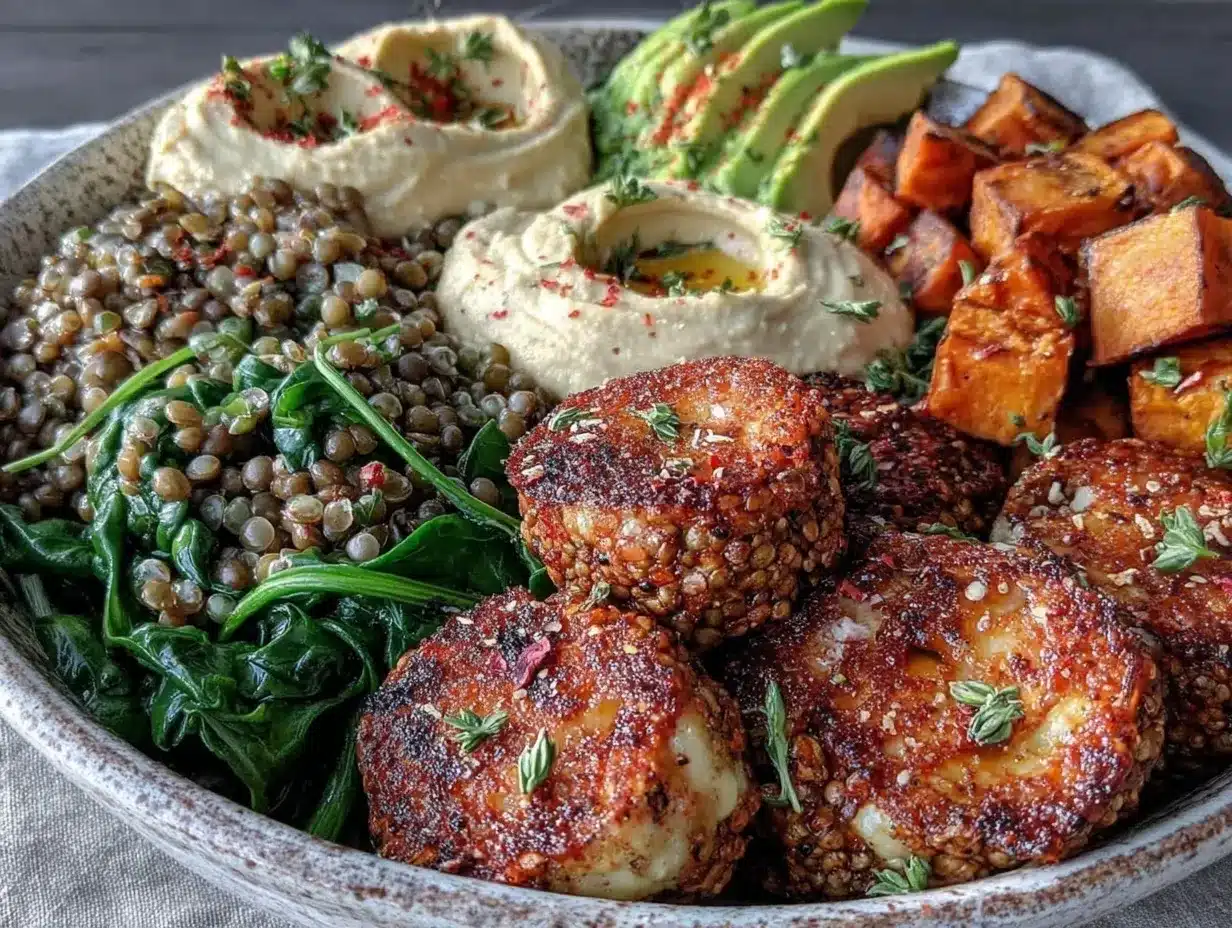
- Prep Your Ingredients (10-15 minutes): Rinse and sort lentils or beans. Peel and chop sweet potatoes into small cubes. Wash spinach thoroughly to remove grit. Pre-measure spices and liquids to keep things moving.
- Cook the Base (15-20 minutes): In a medium saucepan, combine lentils with water (about 1 cup lentils to 2.5 cups water/200g to 600ml). Bring to a boil, then simmer until tender but not mushy (around 15-20 minutes). For quinoa, rinse well and cook with a 2:1 water ratio until fluffy (about 15 minutes).
- Steam or Roast Veggies (15-20 minutes): Either steam spinach until wilted or roast sweet potato cubes at 400°F (200°C) for 20 minutes until soft and slightly caramelized. Roasting brings out sweetness that toddlers love.
- Puree and Combine (10-15 minutes): Transfer cooked lentils, spinach, and sweet potatoes to your blender or food processor. Add a splash of lemon juice to boost iron absorption and a pinch of mild spices like cinnamon or cumin if desired. Blend to your toddler’s preferred consistency—smooth for younger ones, chunkier for older toddlers.
- Make Patties or Muffins (optional, 20-30 minutes): For recipes like lentil patties or muffins, mix pureed base with flours, nut butters, and baking powder. Shape into small patties or spoon into muffin tins. Bake at 350°F (175°C) for 15-20 minutes until golden and cooked through.
- Cool and Serve: Always let foods cool to toddler-safe temperatures. Test texture and taste before serving to gauge acceptance and tweak seasoning for next time.
Pro tip: If purees seem too thick, add a little water, breast milk, or plant milk to thin. Keep an eye on cooking times; overcooked lentils lose texture and nutrients. I once forgot the timer and ended up with mushy lentils—still edible, but not ideal for texture-loving toddlers. Sensory cues like the sweet aroma of roasted sweet potatoes and the vibrant green of wilted spinach tell you you’re on the right track.
Cooking Tips & Techniques
Getting healthy iron-rich toddler foods without meat just right can be tricky, but here are some tips I’ve gathered over the years:
- Balance Iron Sources with Vitamin C: Always pair iron-rich plant foods with vitamin C-rich items like bell peppers or lemon juice to improve absorption.
- Mind the Texture: Toddlers are texture detectives. Smooth purees for younger kids, chunkier for older ones. Blending in stages lets you customize.
- Cook Lentils Properly: Avoid overcooking to preserve texture and nutrients. Rinse lentils well to reduce gas-causing compounds.
- Introduce New Flavors Gradually: Mix new iron-rich foods with familiar favorites to avoid mealtime battles.
- Use Mild Spices: A pinch of cinnamon, cumin, or paprika can make a difference without overwhelming tiny palates.
- Batch Cook and Freeze: Make big batches of purees or muffins and freeze in toddler-sized portions for convenience.
- Watch for Allergens: Introduce nut butters and soy (tofu) carefully and one at a time.
Once, I learned the hard way that skipping vitamin C paired with beans led to cranky toddlers with less appetite. Including a simple squeeze of fresh lemon made a visible difference in how eagerly they ate. Timing is everything—start prepping ingredients while toddlers nap or play to keep things stress-free.
Variations & Adaptations
These recipes are flexible and can be tailored to different dietary needs or taste preferences. Here are some ideas you might find useful:
- Gluten-Free: Swap whole wheat flour for almond or oat flour in muffins and patties.
- Dairy-Free: Use coconut or almond milk in recipes requiring milk instead of cow’s milk.
- Seasonal Veggies: Replace spinach with kale or Swiss chard, and sweet potatoes with butternut squash in fall.
- Flavor Boost: Add mild grated cheese or nutritional yeast for a cheesy twist.
- Protein Swap: Incorporate cooked green peas or edamame for a fresh plant protein.
Personally, I experimented with pureed black beans instead of lentils in patties once—big hit! The darker color threw me off at first, but the taste was rich and kid-approved. Feel free to get creative based on what your toddler enjoys and what’s available seasonally.
Serving & Storage Suggestions
Serve these healthy iron-rich toddler foods without meat warm or at room temperature, depending on your child’s preference. Presentation matters—cut patties into fun shapes or serve purees with colorful veggie sticks alongside to make meals inviting.
Pair with vitamin C-rich sides like orange slices, strawberries, or bell pepper strips to boost iron uptake naturally. For beverages, offer water or natural fruit-infused water rather than juice to avoid excess sugar.
Store leftovers in airtight containers in the refrigerator for up to 3 days. Most purees and patties freeze well—portion into silicone trays or muffin tins for easy thawing. Reheat gently in a microwave or on the stovetop, stirring occasionally to ensure even warmth. Avoid overheating, which can degrade nutrients and change textures.
Flavors often mellow and deepen after a day or two in the fridge, making leftovers even tastier. Just keep an eye on freshness and toss anything that smells off.
Nutritional Information & Benefits
These recipes provide a solid dose of non-heme iron, critical for toddler development, especially without meat. Lentils, chickpeas, and spinach are standout sources, offering approximately 3-4 mg of iron per serving depending on the recipe. Paired with vitamin C-rich ingredients, absorption can improve by up to 3 times.
Besides iron, these dishes include fiber, protein, and essential vitamins like A, C, and folate, supporting overall growth and immunity. Recipes are generally low in saturated fat and free from added sugars, aligning well with toddler nutritional guidelines.
For families managing allergies or specific diets, gluten-free and dairy-free adaptations ensure everyone can enjoy these meals safely. I’ve seen picky toddlers grow more energetic and less fussy once their iron needs were met through these tasty meals, which is a personal win.
Conclusion
Finding healthy iron-rich toddler foods without meat that appeal to picky eaters may feel like a challenge, but it’s totally doable with the right recipes and a bit of creativity. These ten easy dishes bring together nutrition, flavor, and toddler-friendly textures in a way that makes mealtime more enjoyable for both kids and parents.
Remember, every toddler is unique, so don’t hesitate to tweak ingredients and textures to suit your little one’s tastes. I make these recipes regularly because they keep my toddler happy, healthy, and curious about food. If you give them a try, I’d love to hear which ones won your family over or how you adapted them to fit your needs.
Let’s keep sharing tips and stories to make feeding toddlers less stressful and more joyful. Your next favorite iron-rich recipe is just a few steps away!
FAQs
What are some good plant-based sources of iron for toddlers?
Lentils, chickpeas, spinach, tofu, quinoa, and iron-fortified cereals are excellent plant-based iron sources suitable for toddlers.
How can I improve iron absorption from plant-based foods?
Pair iron-rich foods with vitamin C sources like citrus fruits, bell peppers, or tomatoes to help your toddler’s body absorb iron better.
Are these recipes suitable for toddlers with food allergies?
Many recipes can be adapted for allergies by swapping ingredients like dairy or gluten with safe alternatives. Always introduce new foods carefully and consult your pediatrician if needed.
Can I prepare these meals in advance and freeze them?
Yes! Most purees, patties, and muffins freeze well. Portion them into toddler-sized servings and thaw as needed for quick meals.
What if my toddler refuses to eat these iron-rich foods?
Try mixing new recipes with familiar favorites, adjusting textures, or offering small portions alongside preferred foods. Sometimes persistence and patience pay off with picky eaters.
Pin This Recipe!
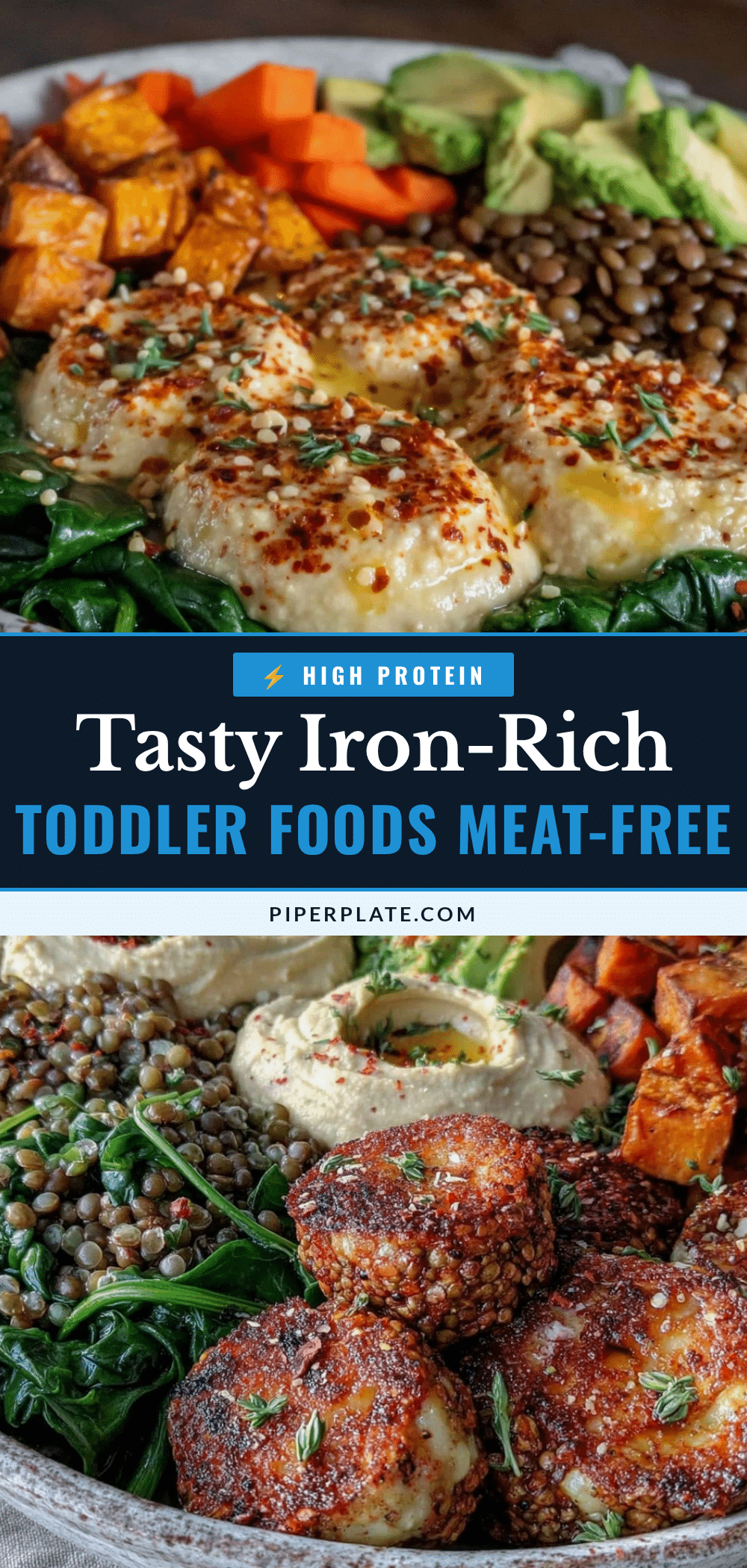
Healthy Iron-Rich Toddler Foods Without Meat
A collection of 10 easy, tasty, and nutrient-dense recipes designed to provide iron-rich, meat-free meals for picky toddlers, focusing on simple ingredients and toddler-friendly textures.
- Prep Time: 10-15 minutes
- Cook Time: 15-30 minutes
- Total Time: 25-45 minutes
- Yield: Varies per recipe, typically 4 toddler servings
- Category: Main Course, Snacks
- Cuisine: American, Plant-Based
Ingredients
- Lentils (red or green)
- Chickpeas (canned or cooked from dry)
- Spinach (fresh or frozen)
- Quinoa
- Sweet potatoes
- Tofu (firm or silken)
- Iron-fortified cereals or oats
- Black beans or kidney beans
- Tomatoes
- Bell peppers
- Nut butters (almond or peanut)
- Fresh herbs like parsley or cilantro
- Ground flaxseed or chia seeds
- Whole wheat flour or gluten-free alternatives
- Lemon juice
Instructions
- Prep Your Ingredients (10-15 minutes): Rinse and sort lentils or beans. Peel and chop sweet potatoes into small cubes. Wash spinach thoroughly to remove grit. Pre-measure spices and liquids to keep things moving.
- Cook the Base (15-20 minutes): In a medium saucepan, combine lentils with water (about 1 cup lentils to 2.5 cups water). Bring to a boil, then simmer until tender but not mushy (around 15-20 minutes). For quinoa, rinse well and cook with a 2:1 water ratio until fluffy (about 15 minutes).
- Steam or Roast Veggies (15-20 minutes): Either steam spinach until wilted or roast sweet potato cubes at 400°F (200°C) for 20 minutes until soft and slightly caramelized.
- Puree and Combine (10-15 minutes): Transfer cooked lentils, spinach, and sweet potatoes to your blender or food processor. Add a splash of lemon juice and a pinch of mild spices like cinnamon or cumin if desired. Blend to your toddler’s preferred consistency.
- Make Patties or Muffins (optional, 20-30 minutes): Mix pureed base with flours, nut butters, and baking powder. Shape into small patties or spoon into muffin tins. Bake at 350°F (175°C) for 15-20 minutes until golden and cooked through.
- Cool and Serve: Let foods cool to toddler-safe temperatures. Test texture and taste before serving to gauge acceptance and tweak seasoning for next time.
Notes
Pair iron-rich plant foods with vitamin C sources like lemon juice, bell peppers, or tomatoes to improve iron absorption. Adjust texture according to toddler age and preference. Avoid overcooking lentils to preserve texture and nutrients. Introduce nut butters and soy carefully to monitor allergies. Batch cook and freeze in toddler-sized portions for convenience.
Nutrition
- Serving Size: Approximately 1/2 to
- Calories: 15020
- Sugar: 35
- Sodium: 100150
- Fat: 46
- Saturated Fat: 0.51
- Carbohydrates: 2530
- Fiber: 57
- Protein: 68
Keywords: iron-rich toddler foods, meat-free toddler meals, picky eater recipes, plant-based iron, toddler nutrition, healthy toddler snacks, iron absorption, gluten-free toddler recipes, dairy-free toddler meals