Love this? Save it for later!
Share the inspiration with your friends
“You know that moment when you realize your favorite comfort foods just aren’t an option anymore?” That’s exactly where I found myself one chilly Thursday evening, staring blankly into my fridge. My partner had just been diagnosed with both lactose intolerance and gluten sensitivity, which meant our usual go-to dinners — loaded with cheese and bread — were off the table. Honestly, I felt a bit lost. I mean, how do you whip up something tasty when two major food groups are out?
That night, as I rummaged through the pantry, I remembered a chat with my friend Mateo, who once mentioned his secret stash of recipes for “double intolerance” meals. I gave one a try, with no great expectations, but the result? Surprisingly delicious and nourishing. The crisp texture, the gentle blend of flavors, and the fact that it was gentle on the stomach made me realize something important: eating healthy and catering to dietary restrictions doesn’t have to be boring or complicated.
Maybe you’ve been there too—scrambling to find meals that work for your dietary needs without feeling like you’re missing out. That’s exactly why I kept refining these healthy lactose-free gluten-free meals. They’re simple enough for weeknight dinners but wholesome enough to keep you feeling satisfied and vibrant. Let me tell you, this isn’t just another list of replacement dishes; it’s a collection I keep coming back to because it respects both the palate and the body.
Why You’ll Love This Recipe
Trust me, preparing healthy lactose-free gluten-free meals can feel like a puzzle, but this recipe collection takes the guesswork out of your kitchen routine. Here’s why I think you’ll find these double intolerance meals a game-changer:
- Quick & Easy: Most recipes come together in under 30 minutes, perfect for busy evenings or spontaneous cravings.
- Simple Ingredients: No trawling specialty stores—ingredients are mostly pantry staples or easy finds at your local market.
- Perfect for Any Occasion: Whether it’s a casual dinner, meal prep for the week, or even a cozy brunch, these meals fit right in.
- Crowd-Pleaser: These dishes are family-approved, with flavors that appeal to both kids and adults, no one feels left out.
- Unbelievably Delicious: The textures and flavors feel indulgent without the lactose or gluten, giving you comfort food vibes minus the discomfort.
- Unique Techniques: For example, blending almond flour with chickpea flour for a perfect, tender crumb, or using coconut yogurt for creamy dressings that don’t skimp on richness.
Honestly, these recipes are not just about avoiding certain ingredients—they’re about making food that invites you to savor every bite. This collection respects your needs, your time, and your taste buds, making it easier to enjoy meals without second-guessing. I hope you find, like I did, that these healthy lactose-free gluten-free meals become your kitchen favorites too.
What Ingredients You Will Need
This recipe collection uses simple, wholesome ingredients to deliver bold flavor and satisfying texture without the fuss. Most of these are pantry staples or easily adaptable, making your cooking experience smooth.
- For the Base:
- Quinoa (rinsed) – light, protein-rich, and gluten-free
- Brown rice or cauliflower rice (for a low-carb option)
- Gluten-free oats (certified)
- Proteins:
- Organic chicken breast, boneless and skinless
- Firm tofu (pressed well to remove moisture) – an excellent plant-based protein
- Canned chickpeas, rinsed and drained
- Vegetables:
- Fresh spinach or kale (washed and chopped)
- Bell peppers, diced
- Carrots, shredded or sliced thin
- Zucchini, spiralized or sliced
- Dairy Alternatives:
- Coconut yogurt (full-fat for creaminess)
- Almond or oat milk (unsweetened, plain)
- Dairy-free cheese shreds (look for brands like Violife or Miyoko’s)
- Flours & Thickeners:
- Almond flour (adds nuttiness and moisture)
- Chickpea flour (for binding and protein boost)
- Arrowroot powder or tapioca starch (for thickening sauces)
- Pantry Staples & Flavorings:
- Extra virgin olive oil or avocado oil
- Fresh garlic (minced)
- Sea salt and freshly ground black pepper
- Smoked paprika and ground cumin (for warmth and depth)
- Fresh lemon juice (adds brightness)
- Fresh herbs like parsley, cilantro, or basil
If you want to switch things up, you can swap quinoa for millet or use coconut aminos instead of soy sauce for a lower-sodium option. Also, the cheese alternatives I mentioned tend to melt well and have a mild flavor that works nicely in most recipes.
Equipment Needed
You don’t need a fancy kitchen to make these healthy lactose-free gluten-free meals, but a few key tools will help you get the best results:
- Non-stick skillet or sauté pan: For quick cooking of proteins and veggies. I swear by my 10-inch non-stick pan, which cleans easily and heats evenly.
- Medium saucepan with lid: Perfect for cooking grains like quinoa or brown rice without fuss.
- Mixing bowls: Multiple sizes for combining ingredients and marinating.
- Sharp chef’s knife: A good knife makes chopping veggies and proteins a breeze. Honestly, I always keep mine sharpened—it saves so much time and frustration.
- Measuring cups and spoons: For accuracy, especially with gluten-free flours and seasonings.
- Food processor or blender (optional): Handy for making creamy dressings or finely chopping nuts and herbs.
If you don’t have a food processor, a sturdy whisk and a bowl can often do the trick for dressings. Also, a cast iron skillet works well, but just keep in mind it needs seasoning and care to prevent sticking. For budget-friendly options, many stores offer affordable non-stick pans that perform surprisingly well.
Preparation Method
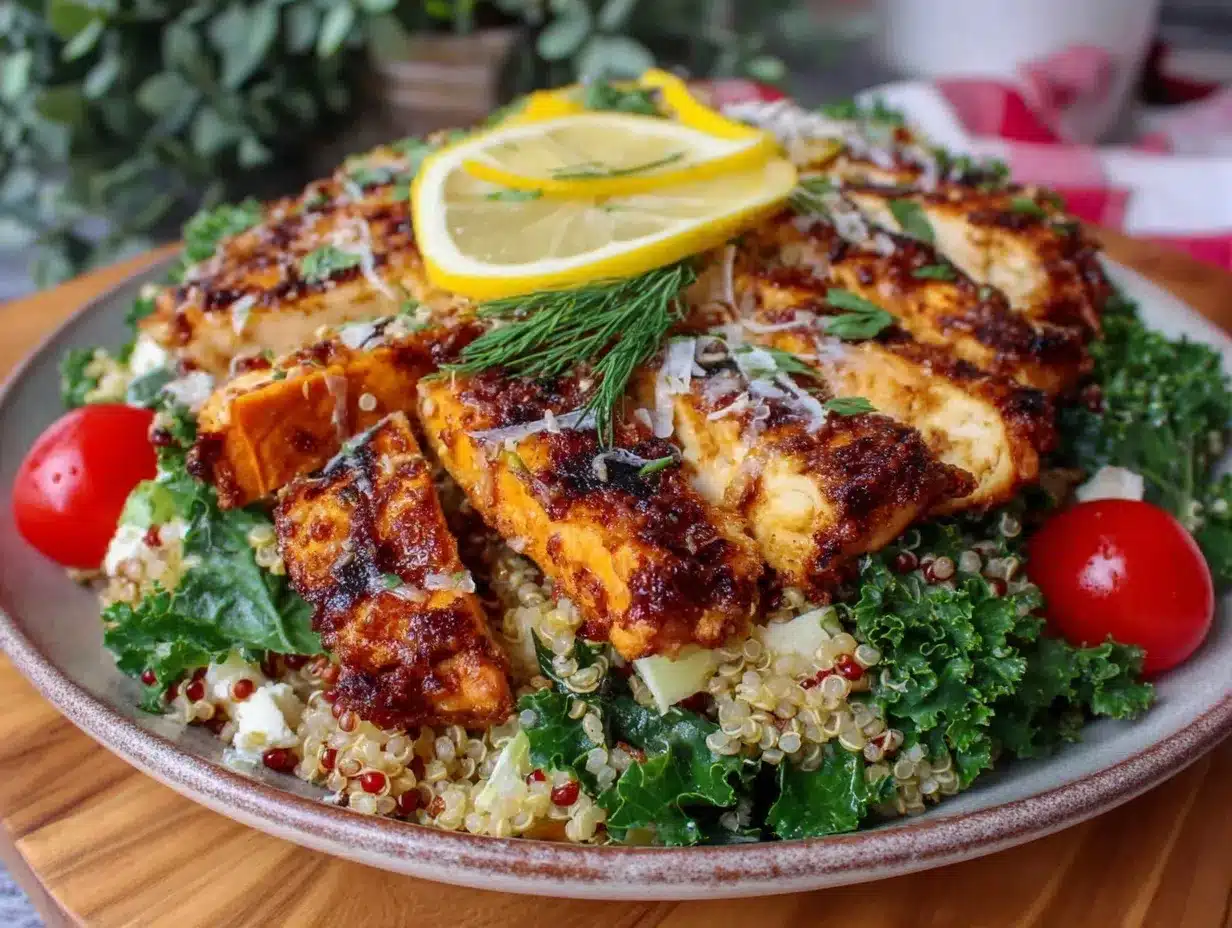
- Prepare the grains: Rinse 1 cup (170 g) of quinoa under cold water to remove bitterness. Place in a medium saucepan with 2 cups (480 ml) of water and a pinch of salt. Bring to a boil, then reduce heat to low, cover, and simmer for 15 minutes. Remove from heat and let it sit covered for 5 minutes. Fluff with a fork before serving. (If using brown rice, follow package instructions, usually around 40 minutes.)
- Cook your protein: Heat 1 tablespoon of olive oil in a non-stick skillet over medium heat. Add 1 pound (450 g) of chicken breast cut into bite-sized pieces or pressed tofu cubes. Season with salt, pepper, 1 teaspoon smoked paprika, and ½ teaspoon cumin. Cook for 5-7 minutes until browned and cooked through, flipping halfway. For chickpeas, simply sauté with seasoning for 3-4 minutes until slightly crispy.
- Sauté the vegetables: In the same pan, add another teaspoon of oil if needed. Toss in 1 cup (150 g) diced bell peppers, 1 cup (100 g) shredded carrots, and a handful of spinach or kale. Cook for 3-4 minutes until tender but still vibrant. Add a minced garlic clove during the last minute for aroma.
- Combine and season: Add the cooked grains and protein back into the skillet with the veggies. Stir gently to combine. Squeeze fresh lemon juice over everything and sprinkle chopped fresh herbs. Taste and adjust salt and pepper.
- Make the dressing (optional): In a small bowl or blender, mix ¼ cup (60 ml) coconut yogurt, 1 tablespoon lemon juice, 1 teaspoon olive oil, a pinch of salt, and a little chopped parsley. Drizzle over the dish before serving for a creamy finish.
- Serve immediately: Transfer to plates and garnish with extra herbs or a sprinkle of dairy-free cheese if you like. This meal can be enjoyed warm or at room temperature.
Pro tip: If you want to speed things up, you can cook the grains ahead and store them in the fridge for up to 3 days. Just reheat with a splash of water before mixing. Also, remember that tofu cooks faster if pressed to remove moisture—that little step makes a huge difference in texture.
Cooking Tips & Techniques
Cooking healthy lactose-free gluten-free meals isn’t just about swapping ingredients; it’s about mastering simple techniques to keep flavors vibrant and textures just right. Here are some tips I’ve learned along the way:
- Press your tofu: Removing excess water helps it absorb marinades and crisp up beautifully in the pan. I usually wrap it in kitchen towels and place a heavy skillet on top for 15 minutes.
- Don’t skip rinsing quinoa: It can taste bitter if not washed properly. Rinsing also helps the grains cook up fluffy and separate.
- Season in layers: Add salt and spices at different stages—while cooking the protein, sautéing veggies, and finally when combining everything. This builds depth.
- Use fresh lemon juice last: Acid brightens dishes but loses punch if cooked too long. Add it just before serving.
- Multitask smartly: While grains simmer, chop veggies and prep proteins. This keeps the workflow efficient and kitchen mess minimal.
- Watch your cooking times: Overcooked veggies lose their color and snap. Aim for tender-crisp for the best texture.
Honest moment: I once forgot to press tofu and ended up with a soggy mess. Since then, it’s become non-negotiable. Also, using a sharp knife saves time and keeps the veggies looking fresh, which makes a big difference in presentation.
Variations & Adaptations
These healthy lactose-free gluten-free meals are flexible and open to your creativity. Here are some ways to switch things up:
- Plant-based twist: Swap chicken for grilled tempeh or extra chickpeas. Marinate tempeh in tamari and maple syrup for a smoky-sweet flavor.
- Seasonal veggies: Use whatever’s fresh—roasted sweet potatoes in fall, asparagus in spring, or zucchini noodles for a low-carb option.
- Spice it up: Add chili flakes or fresh jalapeño for heat, or swap cumin for coriander and turmeric for a different flavor profile.
- Allergen-friendly: If nut allergies are a concern, replace almond flour with oat flour and use sunflower seed butter in dressings.
- Cooking method: Try baking the combined dish in a casserole for a comforting twist—top with dairy-free cheese and bake at 375°F (190°C) for 20 minutes until golden.
Personally, I love adding roasted butternut squash and a sprinkle of toasted pumpkin seeds in fall. It gives the dish a cozy, nutty crunch that feels perfect for cooler nights.
Serving & Storage Suggestions
These meals are best served warm, but they also taste great at room temperature, making them perfect for packed lunches or picnics. For a complete plate, pair with a crisp green salad dressed lightly with lemon and olive oil, or serve alongside crispy garlic chicken for extra protein variety.
Store leftovers in airtight containers in the refrigerator for up to 3 days. For longer storage, these meals freeze well—freeze in portions and thaw overnight in the fridge. When reheating, add a splash of almond or oat milk to keep grains moist and avoid drying out.
Reheating in a skillet over medium heat retains texture better than microwaving, which can turn veggies mushy. Flavors tend to meld beautifully after a day or two, so sometimes leftovers taste even better the next day!
Nutritional Information & Benefits
Each serving of these healthy lactose-free gluten-free meals is approximately 350-400 calories, rich in plant and animal proteins, fiber, and essential vitamins. Quinoa and chickpea flours provide a good dose of magnesium, iron, and B vitamins, while the veggies add antioxidants and fiber for digestion.
Because these recipes avoid lactose and gluten, they’re gentle on sensitive digestive systems and reduce common inflammation triggers. They fit well into gluten-free, dairy-free, and even paleo or low-FODMAP diets with minor tweaks.
As someone who values balanced wellness, I appreciate how these meals nourish without compromise—making it easier to stick to dietary needs without feeling deprived or bored.
Conclusion
Creating healthy lactose-free gluten-free meals doesn’t need to be a chore or a limitation. With a handful of simple ingredients, a few smart techniques, and some flexibility, you can enjoy dishes that satisfy both body and soul. These recipes have become staples in my kitchen, not because they’re perfect but because they’re adaptable, flavorful, and kind to digestion.
I encourage you to tweak these meals to your liking and bring your own personal touch. Maybe add your favorite herbs or swap veggies based on what’s fresh. Cooking for double intolerance can feel tricky, but honestly, it’s just another chance to get creative and care for yourself.
If you try these recipes, please share your experience or adaptations in the comments—I’d love to hear how they fit into your meal routine. Here’s to enjoying food that feels good in every way!
FAQs
Can I use other gluten-free grains instead of quinoa?
Absolutely! Brown rice, millet, or even gluten-free couscous work well. Just adjust cooking times according to the grain’s instructions.
What dairy-free cheese melts best in these recipes?
Brands like Violife and Miyoko’s tend to melt nicely and have a mild taste that complements these meals.
Is it okay to freeze these meals?
Yes, they freeze well. Portion them before freezing and thaw overnight in the fridge for best results.
Can I make these meals ahead for meal prep?
Definitely! Cook grains and proteins in advance, and combine with fresh veggies when ready to eat for freshness.
How can I add more flavor without adding lactose or gluten?
Use fresh herbs, spices like smoked paprika and cumin, lemon juice, and garlic. These add depth without triggering intolerances.
Pin This Recipe!
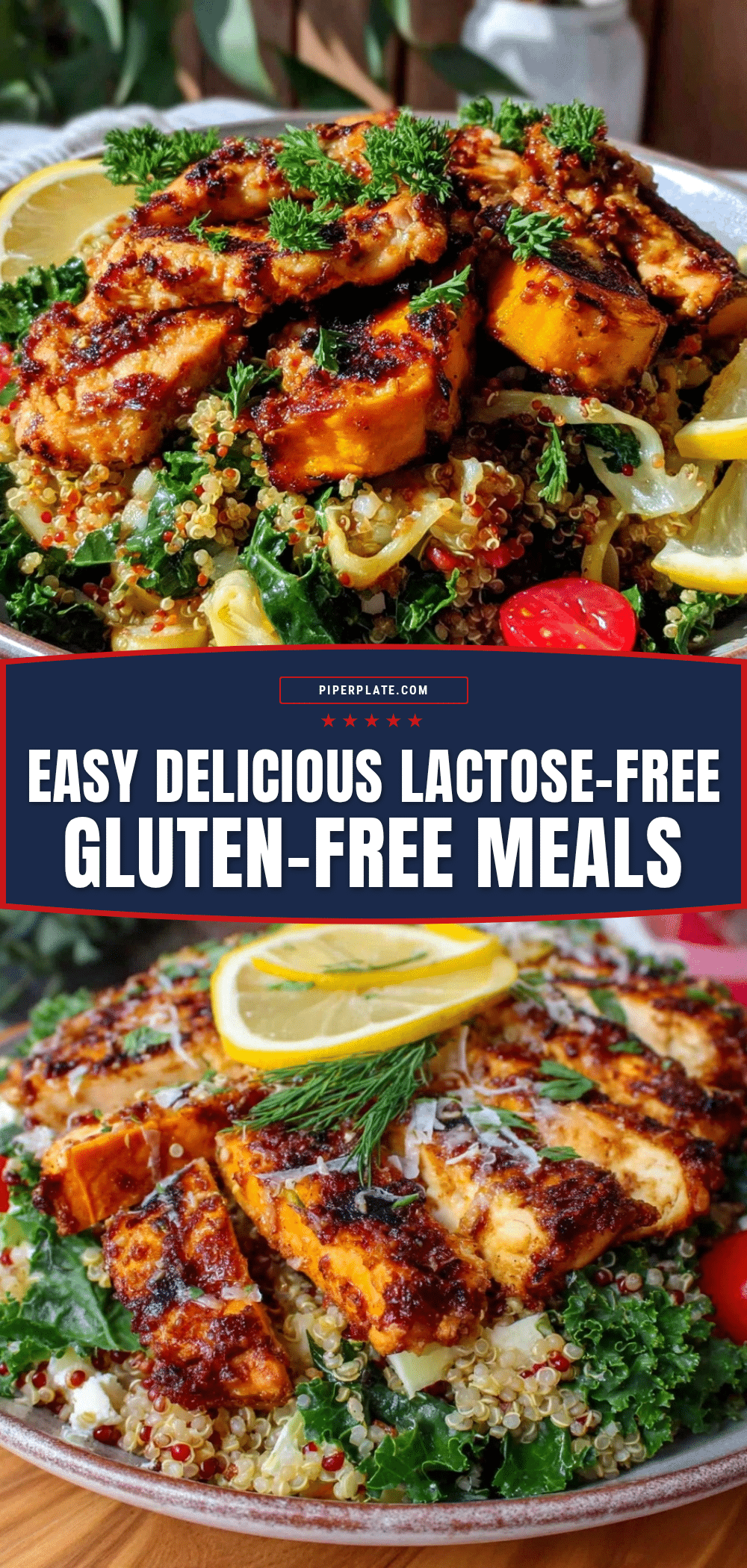
Healthy Lactose-Free Gluten-Free Meals Easy Double Intolerance Recipes
A collection of quick, easy, and nourishing meals designed for those with lactose intolerance and gluten sensitivity, featuring simple ingredients and adaptable techniques.
- Prep Time: 10 minutes
- Cook Time: 25 minutes
- Total Time: 35 minutes
- Yield: 4 servings 1x
- Category: Main Course
- Cuisine: Fusion
Ingredients
- 1 cup (170 g) quinoa, rinsed
- 2 cups (480 ml) water
- Pinch of salt
- 1 pound (450 g) organic chicken breast, boneless and skinless, cut into bite-sized pieces
- Or 1 pound (450 g) firm tofu, pressed and cubed
- Or 1 can chickpeas, rinsed and drained
- 1 tablespoon extra virgin olive oil or avocado oil
- 1 teaspoon smoked paprika
- ½ teaspoon ground cumin
- Salt and freshly ground black pepper, to taste
- 1 cup (150 g) diced bell peppers
- 1 cup (100 g) shredded carrots
- A handful of fresh spinach or kale, washed and chopped
- 1 clove fresh garlic, minced
- Fresh lemon juice, to taste
- Chopped fresh herbs (parsley, cilantro, or basil), to taste
- ¼ cup (60 ml) full-fat coconut yogurt (optional, for dressing)
- 1 tablespoon lemon juice (for dressing)
- 1 teaspoon olive oil (for dressing)
- Pinch of salt (for dressing)
- Chopped parsley (for dressing)
- Dairy-free cheese shreds (optional, brands like Violife or Miyoko’s)
Instructions
- Rinse 1 cup quinoa under cold water to remove bitterness. Place in a medium saucepan with 2 cups water and a pinch of salt. Bring to a boil, reduce heat to low, cover, and simmer for 15 minutes. Remove from heat and let sit covered for 5 minutes. Fluff with a fork before serving. (If using brown rice, follow package instructions, usually around 40 minutes.)
- Heat 1 tablespoon olive oil in a non-stick skillet over medium heat. Add chicken pieces or pressed tofu cubes. Season with salt, pepper, smoked paprika, and cumin. Cook for 5-7 minutes until browned and cooked through, flipping halfway. For chickpeas, sauté with seasoning for 3-4 minutes until slightly crispy.
- In the same pan, add another teaspoon of oil if needed. Add diced bell peppers, shredded carrots, and spinach or kale. Cook for 3-4 minutes until tender but still vibrant. Add minced garlic during the last minute for aroma.
- Add cooked grains and protein back into the skillet with the veggies. Stir gently to combine. Squeeze fresh lemon juice over everything and sprinkle chopped fresh herbs. Taste and adjust salt and pepper.
- Optional: In a small bowl or blender, mix coconut yogurt, lemon juice, olive oil, salt, and chopped parsley. Drizzle over the dish before serving for a creamy finish.
- Serve immediately, garnished with extra herbs or dairy-free cheese if desired. Enjoy warm or at room temperature.
Notes
Press tofu well to remove moisture for better texture. Rinse quinoa thoroughly to avoid bitterness. Season in layers for depth of flavor. Add fresh lemon juice last to preserve brightness. Cook veggies to tender-crisp for best texture. Grains can be cooked ahead and stored in the fridge for up to 3 days. Reheat with a splash of almond or oat milk to keep moist. Leftovers freeze well; thaw overnight in fridge.
Nutrition
- Serving Size: 1 plate (approximate
- Calories: 350400
- Sugar: 5
- Sodium: 300
- Fat: 12
- Saturated Fat: 3
- Carbohydrates: 40
- Fiber: 6
- Protein: 25
Keywords: lactose-free, gluten-free, healthy meals, double intolerance, dairy-free, gluten sensitivity, quick recipes, easy dinners, plant-based options