Love this? Save it for later!
Share the inspiration with your friends
“I wasn’t planning on making Korean food that Tuesday night,” I confess. The day had been one of those full-on, meet-after-meet marathons, and honestly, I was staring blankly into my fridge, contemplating cereal as dinner. Then my neighbor Jin popped by with a quick hello, holding a tattered little recipe card she pulled from her wallet. It was scribbled with notes, a bit smudged from years of use—her go-to Korean ground beef bibimbap bowl recipe. She said, “It’s my cheat day meal—fast, filling, and one-pot magic.”
I thought, hey, why not? I mean, I’ve always loved bibimbap’s vibrant flavors but never had the patience for all the prep. Jin’s recipe promised easy cleanup and a dinner that comes together in one pan—perfect for nights when you want something delicious but don’t want to turn the kitchen upside down. Plus, it’s Korean food, packed with umami and a touch of sweet-spicy goodness that hits the spot every time.
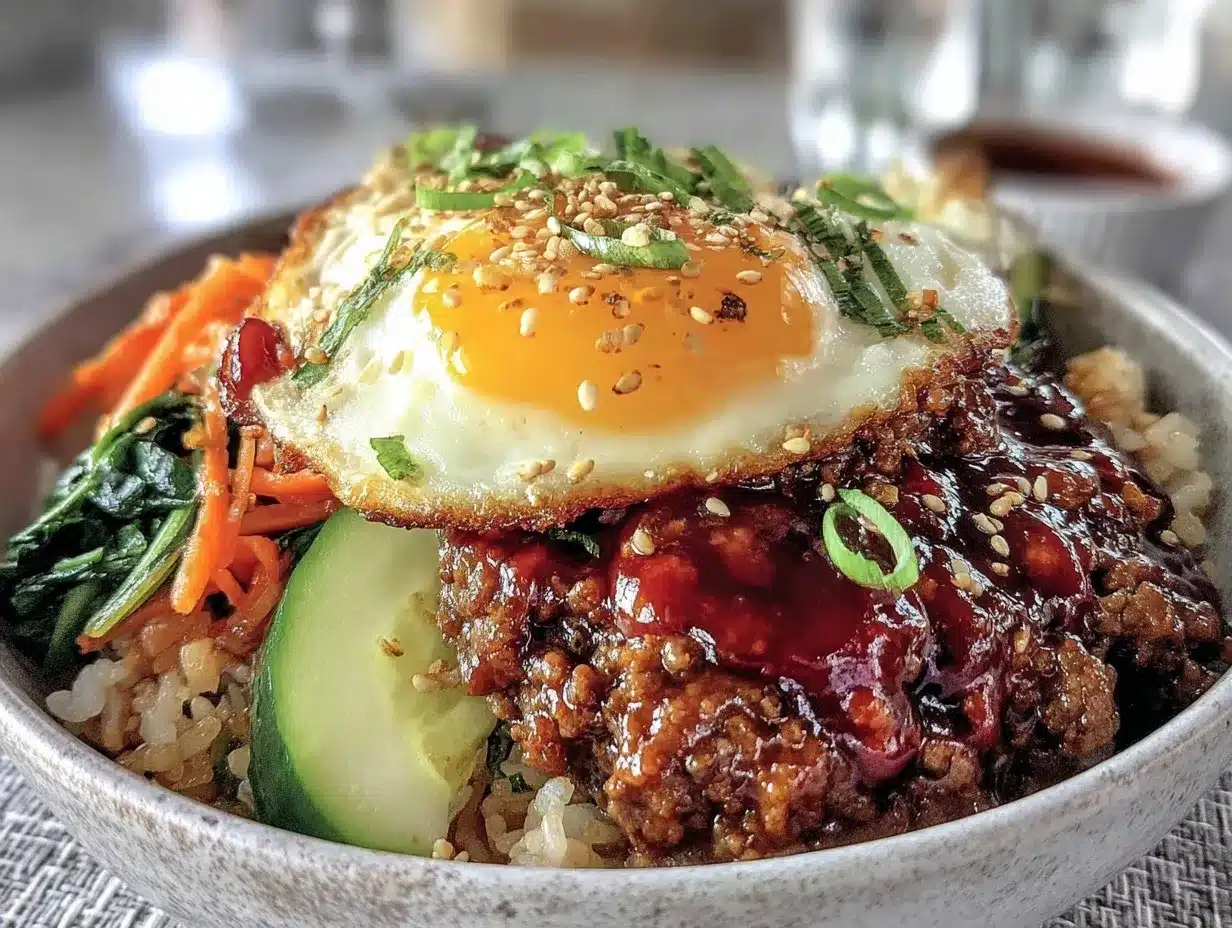
That night, I grabbed the ingredients, threw them into my largest skillet, and let the magic happen. The sizzle of the ground beef mingling with garlic and ginger, the fresh crunch of sautéed spinach and carrots, and that perfectly fried egg on top — honestly, it felt like a cozy culinary hug. Maybe you’ve been there, too, craving bold flavors but needing a quick fix. This easy one-pot Korean ground beef bibimbap bowl recipe has stuck with me ever since, showing up on busy weeknights and impromptu dinners alike. Let me tell you, it’s a keeper.”
Why You’ll Love This Recipe
This easy one-pot Korean ground beef bibimbap bowl has won me over in so many ways, and I’m pretty sure it’ll do the same for you. Here’s why it’s become a staple in my kitchen:
- Quick & Easy: Ready in about 30 minutes, this recipe fits perfectly into hectic schedules or those nights when you just want food on the table fast.
- Simple Ingredients: No need to hunt down obscure items. The ingredients are pantry-friendly and fresh veggies you can swap based on what’s in season or your fridge.
- Perfect for Weeknight Dinners: Whether you’re cooking solo or feeding a small family, this bowl brings satisfying flavors without the fuss.
- Crowd-Pleaser: The savory-sweet ground beef and vibrant veggies always get compliments, even from picky eaters who usually shy away from Korean dishes.
- Unbelievably Delicious: The combination of all the textures and the gochujang sauce’s subtle heat is honestly addictive—comfort food with a Korean twist.
What makes this version different? Jin’s recipe uses a one-pot method that means less mess without sacrificing any of the flavors you love in traditional bibimbap. Plus, the ground beef is simmered with a perfectly balanced mixture of soy, garlic, and sesame oil that makes every bite sing. Honestly, it’s the kind of dish that makes you close your eyes and smile after the first mouthful. This is bibimbap, but way simpler and just as soul-soothing.
What Ingredients You Will Need
This recipe uses simple, wholesome ingredients to deliver bold flavor and satisfying texture without the fuss. Most of these are pantry staples, and the fresh veggies can be swapped based on what you have on hand.
- Ground Beef (1 lb / 450 g) – I prefer 80/20 for juiciness, but leaner works if you want less fat.
- Cooked White Rice (3 cups / 600 g) – Day-old rice works great to avoid mushiness.
- Carrots (2 medium, julienned) – Adds sweetness and crunch.
- Baby Spinach (3 cups / 90 g) – Fresh, washed, for a bright, tender green.
- Green Onions (2, sliced) – Gives a fresh bite and color pop.
- Garlic (3 cloves, minced) – For that aromatic depth.
- Ginger (1 tsp, minced) – Adds warmth and zest.
- Soy Sauce (¼ cup / 60 ml) – I recommend Kikkoman for a balanced salty-sweet note.
- Sesame Oil (2 tbsp / 30 ml) – Toasted variety for nutty richness.
- Brown Sugar (1 tbsp / 12 g) – Balances the salty with a touch of sweetness.
- Gochujang (Korean chili paste) (1-2 tbsp / 15-30 g) – Adds spice and complexity; adjust to taste.
- Eggs (4 large) – Fried sunny-side up for that luscious runny yolk.
- Sesame Seeds (1 tbsp / 9 g) – Toasted, for garnish and crunch.
- Optional: Cucumber slices or kimchi – For extra freshness or tang.
Feel free to swap the ground beef with ground turkey or chicken for a lighter version, and if you prefer a vegetarian twist, crumbled tofu works surprisingly well when marinated with the same sauce. For gluten-free needs, tamari is an excellent soy sauce alternative. Jin once told me she always keeps gochujang in her fridge because it’s the secret weapon for quick Korean flavors—trust me, it’s worth grabbing!
Equipment Needed
To make this easy one-pot Korean ground beef bibimbap bowl recipe, you don’t need anything fancy, which is one of its best parts.
- Large Skillet or Sauté Pan: A 12-inch (30 cm) non-stick skillet works perfectly to cook everything together without crowding the ingredients.
- Wooden Spoon or Silicone Spatula: For stirring and scraping the pan without damaging the surface.
- Knife and Cutting Board: For prepping the veggies and aromatics.
- Measuring Cups and Spoons: To keep the flavors balanced, especially with the sauces.
- Frying Pan (optional): If you prefer, you can fry the eggs separately, but I usually use the same skillet to keep it truly one-pot.
If you don’t have a non-stick skillet, a well-seasoned cast iron pan works well, but watch the heat to avoid sticking. Also, keep a small bowl handy for mixing the sauce before adding it to the beef. Jin’s tip: wipe your wooden spoon with a damp cloth between stirring the beef and the veggies to keep flavors distinct.
Preparation Method
- Prep your ingredients (10 minutes): Julienne the carrots, wash and roughly chop the spinach, slice the green onions, and mince the garlic and ginger. Having everything ready before you start cooking keeps things smooth.
- Cook the ground beef (8 minutes): Heat 1 tablespoon of sesame oil in the large skillet over medium-high heat. Add the minced garlic and ginger, sauté for 30 seconds until fragrant. Toss in the ground beef, breaking it up with your spatula. Cook until browned and no longer pink, about 6-8 minutes.
- Make the sauce and combine (2 minutes): In a small bowl, whisk together soy sauce, brown sugar, and gochujang. Pour this mixture over the cooked beef and stir to coat evenly. Simmer for 2 minutes to let the flavors meld.
- Add veggies (5 minutes): Push the beef to one side of the pan. Add a drizzle of sesame oil and toss in the carrots and spinach on the other side. Sauté until the spinach wilts and carrots soften slightly, about 3-5 minutes. Mix the veggies and beef gently to combine but keep some textural contrast.
- Warm the rice (3 minutes): If your rice is cold, microwave or gently warm it separately. Transfer the rice into serving bowls, creating a base.
- Assemble the bowls (5 minutes): Spoon the beef and veggie mixture over the rice. In the same skillet, add a little oil and fry eggs sunny-side up until the whites are set but yolks remain runny, about 2-3 minutes. Place one egg atop each bowl.
- Garnish and serve: Sprinkle with toasted sesame seeds and sliced green onions. Optionally add cucumber slices or kimchi on the side for extra freshness and tang.
Tips: If your skillet feels crowded, cook the veggies in batches. The smell of garlic and sesame oil in the air is your green light that dinner’s nearly ready. And yes, that first bite combining the warm rice, spicy beef, and runny egg yolk is just pure magic.
Cooking Tips & Techniques
When making this easy one-pot Korean ground beef bibimbap bowl, a few tricks can really lift the dish from good to memorable.
- Don’t overcook the beef: Browning the ground beef properly creates flavor but avoid drying it out. Keep medium-high heat and stir frequently.
- Use day-old rice: Fresh rice tends to be too sticky, causing the bowl to get mushy. Leftover rice holds up better and gives you that perfect texture.
- Balance the sauce: Gochujang can be spicy, so start with less and add more according to your heat tolerance.
- Cook veggies separately: Keeping the beef and veggies on different sides of the pan during cooking preserves their distinct textures and colors.
- Fry eggs last: Timing here matters. You want the yolks runny for the best bibimbap experience, so keep an eye on the whites cooking without overdoing it.
- Multitasking tip: While the beef cooks, prep your veggies to save time.
One time, I forgot to mince the ginger and ended up tossing in slices — the flavor was stronger than expected but surprisingly good! Cooking is about experimenting, and this recipe is forgiving enough to handle those little slip-ups.
Variations & Adaptations
This one-pot Korean ground beef bibimbap bowl is super flexible. Here are some ways you can customize it:
- Vegetarian version: Swap ground beef for crumbled firm tofu or tempeh marinated in the same sauce. Add mushrooms for umami depth.
- Spice it up: Add extra gochujang or a sprinkle of Korean chili flakes for a fiery kick. Alternatively, top with sliced fresh chili peppers.
- Seasonal veggies: Try shredded zucchini or bell peppers instead of carrots and spinach to switch things up according to what’s fresh.
- Low-carb option: Use cauliflower rice instead of white rice for a lighter bowl.
- Different protein: Ground turkey or chicken also work well if you want a leaner meat.
Personally, I once added kimchi right into the pan with the veggies for a tangy surprise, and it was a hit with friends. Feel free to make this recipe your own!
Serving & Storage Suggestions
This bibimbap bowl is best served hot and fresh, with the egg yolk still runny and the rice warm. I like to present it in deep bowls so all the layers stay intact and the sauce can mingle beautifully.
Pair it with a light cucumber salad or some steamed edamame to round out the meal. For drinks, a chilled barley tea or even a simple sparkling water with lemon keeps things refreshing.
Leftovers store well in the fridge for up to 3 days. Keep the fried eggs separate if possible—they don’t reheat as nicely. To reheat, warm the beef and veggies gently in a skillet or microwave, then add a fresh fried egg on top.
Flavors often deepen after a day, making it a great make-ahead option for lunches or quick dinners. Just beware of soggy rice if stored too long—reheat gently and fluff it up before serving.
Nutritional Information & Benefits
Each serving of this easy one-pot Korean ground beef bibimbap bowl contains approximately 450-500 calories, with a balanced mix of protein, carbs, and fats. The ground beef provides a good source of iron and B vitamins, while the fresh spinach and carrots add fiber, vitamins A and C.
Using sesame oil and gochujang brings antioxidants and healthy fats into the mix. The dish can be adapted to gluten-free by using tamari and is naturally low in added sugars aside from the small amount of brown sugar.
For those watching carbs, substituting cauliflower rice drastically reduces the carbohydrate content. It’s a hearty yet wholesome meal that fuels your day without leaving you sluggish.
Conclusion
Honestly, this easy one-pot Korean ground beef bibimbap bowl has become one of my go-to dinners for a reason—it’s fast, flavorful, and unpretentious. I love how you can tweak it endlessly while still getting that comforting mix of savory meat, fresh veggies, and that luscious egg finish. Maybe you’ll find it becomes one of your staples too.
Don’t hesitate to adjust the spice level or swap out veggies to suit your taste or what’s in your fridge. Cooking should be fun and flexible, right? If you give this recipe a try, I’d love to hear how you made it your own—drop a comment or share your favorite twists. Here’s to many delicious, easy dinners ahead!
FAQs
Can I make this bibimbap bowl gluten-free?
Yes! Simply substitute soy sauce with tamari or a gluten-free soy sauce alternative to keep all the flavor without gluten.
What can I use instead of gochujang?
If you don’t have gochujang, try a mixture of miso paste with a bit of chili powder and a touch of honey or brown sugar for sweetness. It won’t be exactly the same but still tasty.
Can I prepare this recipe ahead of time?
You can prep the sauce and chop the veggies in advance. Cook the beef and assemble right before serving to keep everything fresh and vibrant.
Is there a vegetarian version of this recipe?
Absolutely! Use crumbled tofu or tempeh instead of beef and add mushrooms or extra veggies for a satisfying plant-based bowl.
How do I keep the rice from getting mushy?
Using day-old or well-cooled rice helps prevent mushiness. Also, warm the rice gently and avoid stirring too vigorously once combined with the sauce and beef.
Pin This Recipe!

Easy One-Pot Korean Ground Beef Bibimbap Bowls Recipe for Quick Dinner

A quick and easy one-pot Korean ground beef bibimbap bowl recipe that combines savory-sweet beef, fresh veggies, and a runny fried egg for a comforting and flavorful meal perfect for busy weeknights.
- Prep Time: 10 minutes
- Cook Time: 20 minutes
- Total Time: 30 minutes
- Yield: 4 servings 1x
- Category: Main Course
- Cuisine: Korean
Ingredients
- 1 lb ground beef (80/20 preferred)
- 3 cups cooked white rice (day-old rice recommended)
- 2 medium carrots, julienned
- 3 cups baby spinach, fresh and washed
- 2 green onions, sliced
- 3 cloves garlic, minced
- 1 tsp ginger, minced
- 1/4 cup soy sauce (60 ml), Kikkoman recommended
- 2 tbsp toasted sesame oil (30 ml)
- 1 tbsp brown sugar (12 g)
- 1–2 tbsp gochujang (Korean chili paste) (15–30 g), adjust to taste
- 4 large eggs
- 1 tbsp toasted sesame seeds (9 g)
- Optional: cucumber slices or kimchi for garnish
Instructions
- Prep your ingredients: julienne carrots, wash and roughly chop spinach, slice green onions, and mince garlic and ginger (10 minutes).
- Heat 1 tablespoon sesame oil in a large skillet over medium-high heat. Add garlic and ginger, sauté for 30 seconds until fragrant.
- Add ground beef, breaking it up with a spatula. Cook until browned and no longer pink, about 6-8 minutes.
- In a small bowl, whisk together soy sauce, brown sugar, and gochujang. Pour over cooked beef and stir to coat evenly. Simmer for 2 minutes.
- Push beef to one side of the pan. Add a drizzle of sesame oil and toss in carrots and spinach on the other side. Sauté until spinach wilts and carrots soften slightly, about 3-5 minutes. Mix gently.
- Warm rice separately if cold, then transfer into serving bowls as a base (3 minutes).
- Spoon beef and veggie mixture over rice. In the same skillet, add a little oil and fry eggs sunny-side up until whites are set but yolks remain runny, about 2-3 minutes. Place one egg atop each bowl.
- Garnish with toasted sesame seeds and sliced green onions. Optionally add cucumber slices or kimchi on the side.
Notes
Use day-old rice to avoid mushiness. Adjust gochujang to taste for spice level. For gluten-free, substitute soy sauce with tamari. Ground turkey, chicken, or tofu can be used as alternatives. Fry eggs last to keep yolks runny. Cook veggies separately on one side of the pan to preserve texture.
Nutrition
- Serving Size: 1 bowl with 1 egg
- Calories: 475
- Sugar: 6
- Sodium: 850
- Fat: 25
- Saturated Fat: 7
- Carbohydrates: 40
- Fiber: 4
- Protein: 28
Keywords: bibimbap, Korean ground beef, one-pot meal, quick dinner, easy Korean recipe, gochujang, weeknight dinner, savory-sweet beef bowl