Love this? Save it for later!
Share the inspiration with your friends
“You know that feeling when you bite into something so delicate and fresh it almost feels like spring itself has landed on your tongue?” Last Mother’s Day, I found myself chasing that exact moment in my kitchen. It all started when I stumbled upon a tiny jar of elderflower syrup at a local market—forgotten on a dusty shelf between artisanal honeys and lavender jams. Honestly, I wasn’t even sure what elderflower was until then, but something about its floral, slightly sweet aroma pulled me in.
I wasn’t planning to make a cake that day. The plan was a simple lemon drizzle, but as I mixed the batter, I thought, “Why not add a little twist?” That’s how the perfect floral elderflower lemon layer cake was born. The syrup added this subtle yet enchanting fragrance, blending beautifully with the bright lemon zest. There was a bit of chaos too—my mixer decided to sputter mid-whip, and I almost gave up, but the end result was worth every messy moment.
Maybe you’ve been there—wanting to impress someone special with something that tastes like a love letter. This cake has stayed with me since then, not just because of the flavors but because it’s a reminder that the best recipes can come from the most unexpected finds. So, let me tell you how this cake can make your Mother’s Day a little more magical, with its layers of light lemon sponge and that unforgettable floral hug from elderflower.
Why You’ll Love This Recipe
- Quick & Easy: Comes together in under 90 minutes, making it perfect for a last-minute Mother’s Day treat.
- Simple Ingredients: You probably have most of what you need already, with the elderflower syrup being a charming surprise.
- Perfect for Celebrations: This cake shines at brunches, garden parties, or any occasion where you want to impress without stress.
- Crowd-Pleaser: Its light texture and delicate flavors win over both kids and adults—seriously, my picky eater nephew asked for seconds.
- Unbelievably Delicious: The floral notes from elderflower combine with zesty lemon for an elegant yet comforting flavor profile.
What sets this cake apart from other lemon cakes? It’s the little secret of blending elderflower syrup into both the batter and the frosting, which gives it a unique scent and taste that feels fresh but not overpowering. Plus, the frosting is whipped just right—airy and slightly tangy with a hint of vanilla. Trust me, this recipe isn’t just another lemon cake; it’s a celebration on a plate, perfect for making memories around the table.
What Ingredients You Will Need
This recipe uses simple, wholesome ingredients to deliver bold flavor and satisfying texture without the fuss. Most are pantry staples, while elderflower syrup adds that special floral touch. If you don’t have it, there are easy substitutions mentioned below.
- For the Cake Batter:
- All-purpose flour – 2 ½ cups (310g), sifted
- Baking powder – 2 ½ teaspoons
- Salt – ½ teaspoon
- Unsalted butter – 1 cup (226g), softened (I recommend Kerrygold for creaminess)
- Granulated sugar – 1 ¾ cups (350g)
- Large eggs – 4, room temperature
- Whole milk – 1 cup (240ml), room temperature (use almond milk for dairy-free)
- Lemon zest – from 2 large lemons (adds bright citrus flavor)
- Fresh lemon juice – ¼ cup (60ml)
- Elderflower syrup – 3 tablespoons (such as Stirrings or Monin)
- For the Elderflower Lemon Buttercream:
- Unsalted butter – 1 cup (226g), softened
- Powdered sugar – 4 cups (480g), sifted
- Fresh lemon juice – 2 tablespoons (30ml)
- Elderflower syrup – 2 tablespoons
- Vanilla extract – 1 teaspoon
- Pinch of salt
- Optional Decorations:
- Edible flowers (like violets or pansies)
- Thin lemon slices or candied lemon peel
For substitutions, if you can’t find elderflower syrup, a splash of orange blossom water works in a pinch but use less to avoid bitterness. Organic lemons are preferred for zesting to avoid wax residues. Also, if you need a gluten-free option, swapping all-purpose flour for a 1:1 gluten-free baking blend works well.
Equipment Needed
- Two 8-inch (20 cm) round cake pans – non-stick preferred for easy release
- Electric mixer (stand or hand) – makes creaming butter and sugar easier
- Mixing bowls – medium and large sizes
- Measuring cups and spoons – for accurate ingredient portions
- Zester or microplane – to get that fresh lemon zest
- Rubber spatula – for folding batter gently
- Cooling rack – to cool cakes evenly and avoid sogginess
- Offset spatula or butter knife – for spreading frosting smoothly
If you don’t have two cake pans, you can bake one layer at a time, but the timing will be longer. I’ve used silicone pans before, and while they work fine, the edges don’t brown as nicely as with metal pans. Also, keeping your butter at the right softness is key—too cold, and it won’t cream properly; too warm, and the cake can be dense. So, patience here really pays off!
Preparation Method
- Preheat and Prep: Preheat your oven to 350°F (175°C). Grease two 8-inch (20 cm) round cake pans and line the bottoms with parchment paper. This helps prevent sticking and ensures clean edges. (Time: 10 minutes)
- Mix Dry Ingredients: In a bowl, sift together 2 ½ cups (310g) of flour, 2 ½ teaspoons baking powder, and ½ teaspoon salt. Set aside. This step makes sure your cake rises evenly and has a light crumb.
- Cream Butter and Sugar: Using an electric mixer, beat 1 cup (226g) softened unsalted butter with 1 ¾ cups (350g) granulated sugar on medium speed until fluffy and pale—about 4-5 minutes. This aerates the batter, which is key for a tender texture.
- Add Eggs: Crack in 4 large eggs, one at a time, beating well after each addition. If the mixture looks like it might curdle, add a tablespoon of the flour mixture to stabilize it. (This little trick saved me once when I got distracted by a phone call!)
- Incorporate Flavors: Mix in lemon zest from 2 lemons and 3 tablespoons elderflower syrup gently, so the batter stays light but gets a floral punch.
- Alternate Adding Dry Ingredients and Milk: Add the dry ingredients in three parts, alternating with 1 cup (240ml) of whole milk and ¼ cup (60ml) fresh lemon juice. Start and end with the dry mix. Use low speed and fold gently to maintain airiness. (Time: 5 minutes)
- Divide and Bake: Pour batter evenly into the prepared pans. Tap to release air bubbles. Bake for 30-35 minutes or until a toothpick inserted in the center comes out clean. Oven times vary, so start checking at 30 minutes. (Pro tip: rotate pans halfway through baking for even color.)
- Cool Completely: Let cakes cool in pans for 15 minutes, then transfer to a wire rack to cool fully. Don’t rush the frosting step or the buttercream might melt!
- Prepare Buttercream: Beat 1 cup (226g) softened butter until creamy. Gradually add 4 cups (480g) sifted powdered sugar, mixing on low speed. Add 2 tablespoons elderflower syrup, 2 tablespoons fresh lemon juice, 1 teaspoon vanilla extract, and a pinch of salt. Beat until light and fluffy, about 3-4 minutes.
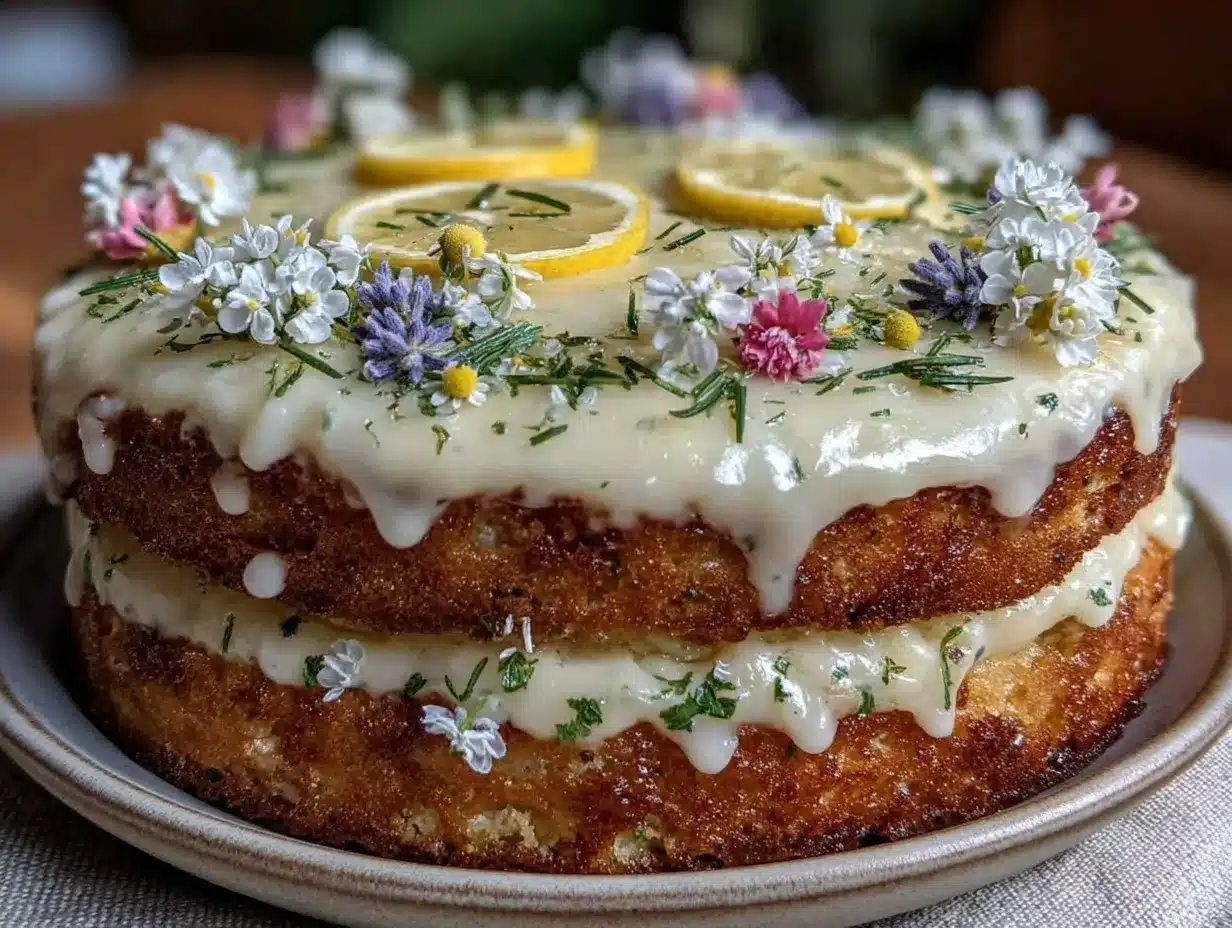
- Assemble the Cake: Place one cake layer on your serving plate. Spread a thick layer of buttercream evenly over the top. Add the second layer and cover the entire cake with the remaining frosting. Smooth or decorate with an offset spatula as you like.
- Decorate: Garnish with edible flowers or thin lemon slices for that extra special touch. Chill for 30 minutes before serving to let the flavors meld.
Cooking Tips & Techniques
Making the perfect elderflower lemon layer cake is all about balance and timing. Here are some tips I’ve picked up over the years:
- Don’t skip sifting: Sifting flour and powdered sugar avoids lumps and helps your cake be lighter.
- Room temperature ingredients: Butter, eggs, and milk should be at room temp to blend smoothly—otherwise, the batter can look curdled or split.
- Measuring flour properly: Spoon flour into your measuring cup and level it off. Scooping directly can make your cake dry.
- Folding gently: When mixing in dry ingredients, fold with a spatula rather than beating vigorously to keep the cake tender.
- Baking time vigilance: Oven temperatures vary, so start checking your cake a few minutes early. Overbaking dries it out.
- Buttercream consistency: If your frosting feels too stiff, add a teaspoon of milk at a time. Too soft? Add more powdered sugar.
- Multitasking: While cakes bake, prepare your buttercream to save time, but be mindful not to let the butter sit out too long in summer heat.
Honestly, the first time I made this cake, the buttercream was too runny because I forgot to chill the butter beforehand. The second try was perfect, so don’t be discouraged by little hiccups—they’re part of the fun!
Variations & Adaptations
- Seasonal Twist: Swap lemon zest for orange or grapefruit zest in winter for a cozy citrus flavor. Adding fresh raspberries between layers adds a beautiful color contrast.
- Dairy-Free Version: Use a plant-based butter and almond or oat milk. Replace whole milk with coconut milk for a subtle tropical note.
- Gluten-Free Option: Substitute all-purpose flour with a quality gluten-free flour blend (like Bob’s Red Mill 1:1). Add ½ teaspoon xanthan gum if your blend doesn’t contain it.
- Frosting Alternatives: Try whipped cream mixed with elderflower syrup instead of buttercream for a lighter topping, perfect for hot weather.
- Personal Variation: Once, I added a splash of lavender extract with elderflower syrup—it was a bit daring but turned out surprisingly delightful! Just a few drops though, as it can quickly overpower.
Serving & Storage Suggestions
Serve this cake slightly chilled or at room temperature to best enjoy the floral and citrus flavors. It pairs beautifully with a cup of Earl Grey tea or a glass of sparkling elderflower lemonade for a cohesive flavor experience.
Store leftovers covered in the refrigerator for up to 3 days. Before serving again, let the cake sit at room temperature for about 30 minutes to soften the frosting. You can freeze the cake layers (without frosting) wrapped tightly in plastic wrap for up to a month. Thaw overnight in the fridge before assembling.
Keep in mind, the lemon and elderflower flavors tend to deepen and mellow slightly after a day, which some people prefer. So, making the cake a day ahead can be a smart move for Mother’s Day celebrations.
Nutritional Information & Benefits
This elderflower lemon layer cake is a treat, but it also offers some nutritional perks. Lemons provide vitamin C and antioxidants, which support immunity and skin health. Elderflower syrup, while used sparingly, adds a hint of natural floral compounds thought to have anti-inflammatory properties.
Per serving (assuming 12 slices), the cake contains approximately 320 calories, 15g fats, 45g carbohydrates, and 3g protein. It’s not low-calorie, but it’s a special occasion dessert meant to be savored.
For those watching allergens, note this recipe contains gluten, dairy, and eggs. However, the variations section offers alternatives for dairy-free and gluten-free diets.
Conclusion
This perfect floral elderflower lemon layer cake isn’t just dessert; it’s a celebration of subtle flavors and thoughtful moments. Whether you’re honoring your mom, a friend, or yourself, this cake brings a smile with every bite. I love how the elderflower adds a whisper of spring, making it feel both elegant and comforting—something I look forward to baking every year.
Feel free to adjust the floral notes or swap in your favorite citrus to make it truly yours. And hey, if you try this recipe, I’d love to hear how it turned out or any tweaks you made!
So go ahead, whip up this cake, and make your Mother’s Day delightfully memorable.
FAQs
Can I make this cake ahead of time?
Absolutely! You can bake the cake layers up to two days in advance and keep them wrapped tightly at room temperature or in the fridge. The frosting is best made fresh, but you can prepare it a day ahead and store it covered in the fridge, then re-whip before using.
What if I don’t have elderflower syrup?
If elderflower syrup isn’t available, orange blossom water is a good substitute—just use half the amount to avoid bitterness. You could also omit it altogether for a classic lemon cake.
How do I prevent my cake layers from drying out?
Use room temperature ingredients and avoid overbaking. Check for doneness a few minutes before the suggested time. Also, cooling the cakes on a rack and wrapping them in plastic wrap once cool helps retain moisture.
Can I use a different size cake pan?
Yes, but adjust the baking time accordingly. For example, a 9-inch (23 cm) pan will require slightly less baking time. Keep an eye on the cake and do the toothpick test.
Is this cake suitable for children?
Definitely! The flavors are gentle and not overly sweet. Just be mindful of any allergies to eggs or dairy. The recipe’s mild floral note usually delights kids and adults alike.
Pin This Recipe!
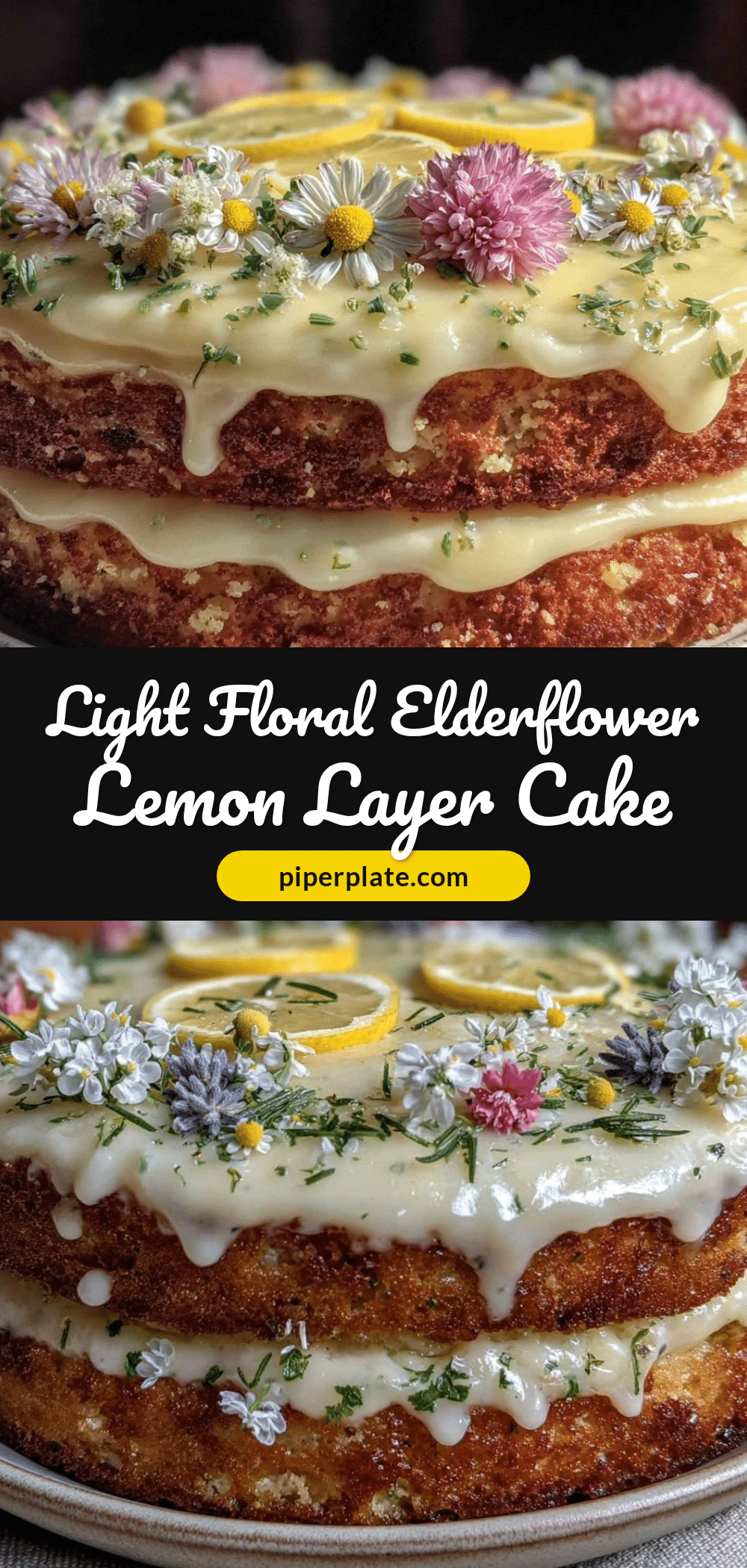
Perfect Floral Elderflower Lemon Layer Cake
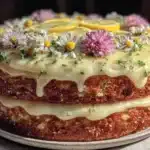
A delicate and fresh lemon layer cake infused with floral elderflower syrup, perfect for Mother’s Day or any special celebration. This cake features light lemon sponge layers and an airy elderflower lemon buttercream frosting.
- Prep Time: 20 minutes
- Cook Time: 35 minutes
- Total Time: 55 minutes
- Yield: 12 servings 1x
- Category: Dessert
- Cuisine: American
Ingredients
- 2 ½ cups (310g) all-purpose flour, sifted
- 2 ½ teaspoons baking powder
- ½ teaspoon salt
- 1 cup (226g) unsalted butter, softened
- 1 ¾ cups (350g) granulated sugar
- 4 large eggs, room temperature
- 1 cup (240ml) whole milk, room temperature (or almond milk for dairy-free)
- Zest of 2 large lemons
- ¼ cup (60ml) fresh lemon juice
- 3 tablespoons elderflower syrup (such as Stirrings or Monin)
- For the Elderflower Lemon Buttercream:
- 1 cup (226g) unsalted butter, softened
- 4 cups (480g) powdered sugar, sifted
- 2 tablespoons fresh lemon juice
- 2 tablespoons elderflower syrup
- 1 teaspoon vanilla extract
- Pinch of salt
- Optional Decorations:
- Edible flowers (like violets or pansies)
- Thin lemon slices or candied lemon peel
Instructions
- Preheat oven to 350°F (175°C). Grease two 8-inch (20 cm) round cake pans and line bottoms with parchment paper.
- In a bowl, sift together flour, baking powder, and salt. Set aside.
- Using an electric mixer, beat softened butter and granulated sugar on medium speed until fluffy and pale, about 4-5 minutes.
- Add eggs one at a time, beating well after each addition. If mixture looks curdled, add a tablespoon of flour mixture to stabilize.
- Mix in lemon zest and elderflower syrup gently.
- Add dry ingredients in three parts, alternating with milk and lemon juice, starting and ending with dry ingredients. Fold gently on low speed to maintain airiness.
- Divide batter evenly into prepared pans. Tap pans to release air bubbles.
- Bake for 30-35 minutes or until a toothpick inserted in the center comes out clean. Rotate pans halfway through baking for even color.
- Let cakes cool in pans for 15 minutes, then transfer to wire rack to cool completely.
- Prepare buttercream by beating softened butter until creamy. Gradually add powdered sugar on low speed.
- Add elderflower syrup, lemon juice, vanilla extract, and salt. Beat until light and fluffy, about 3-4 minutes.
- Place one cake layer on serving plate. Spread a thick layer of buttercream evenly over the top.
- Add second layer and cover entire cake with remaining frosting. Smooth or decorate as desired.
- Garnish with edible flowers or thin lemon slices. Chill cake for 30 minutes before serving to let flavors meld.
Notes
Use room temperature ingredients for best results. Sift flour and powdered sugar to avoid lumps. Fold dry ingredients gently to keep cake tender. Rotate pans halfway through baking for even color. If buttercream is too stiff, add milk teaspoon by teaspoon; if too soft, add more powdered sugar. Cake layers can be baked ahead and stored wrapped. Frosting is best fresh but can be made a day ahead and re-whipped before use. For elderflower syrup substitute, use half the amount of orange blossom water to avoid bitterness. Gluten-free and dairy-free substitutions are possible.
Nutrition
- Serving Size: 1 slice (1/12th of c
- Calories: 320
- Fat: 15
- Carbohydrates: 45
- Protein: 3
Keywords: elderflower cake, lemon layer cake, floral cake, Mother's Day cake, lemon elderflower dessert, buttercream frosting, celebration cake