Love this? Save it for later!
Share the inspiration with your friends
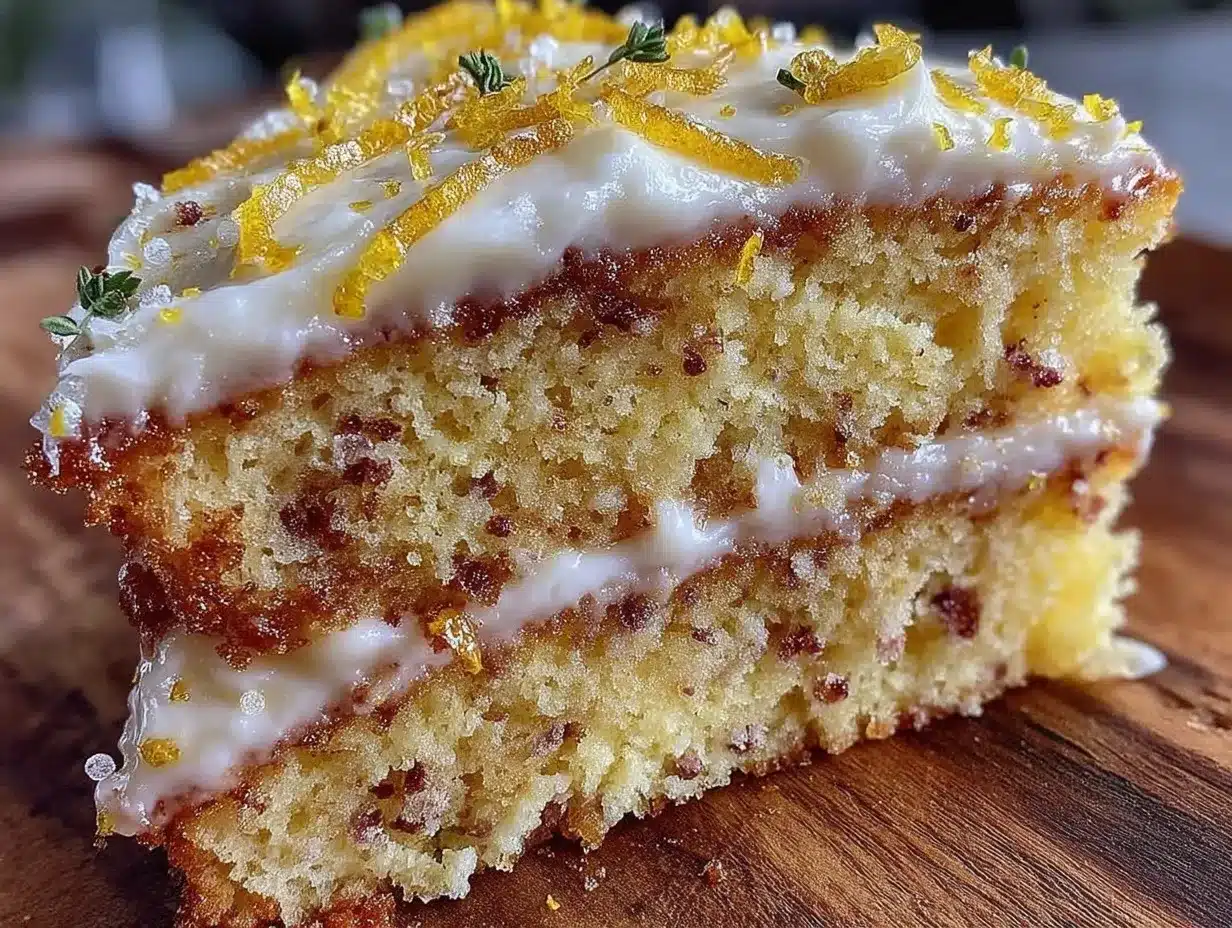
“You have to try this lemon elderflower cake,” my neighbor, Mrs. Harper, insisted one sunny Saturday afternoon as she handed me a slice wrapped in parchment. I wasn’t expecting much—just another floral-flavored treat—but that first bite caught me off guard. The cake was light, almost ethereal, with a delicate citrus zing perfectly balanced by the subtle, sweet aroma of elderflower. Honestly, it felt like biting into spring itself.
Mrs. Harper, a retired botanist with a passion for gardening and baking, shared that this recipe was inspired by her travels through the English countryside where elderflower blossoms were everywhere in late spring. She swore by the combination of lemon and elderflower—saying it was magical, especially when paired with a honey cream cheese frosting that wasn’t too sweet, just creamy and smooth.
That afternoon, I learned the recipe right in her kitchen, messily scribbling notes while she joked about how she once forgot to add sugar to the frosting (don’t ask how it tasted). I made a mess with zest flying everywhere, but the result was worth every sticky finger. Ever since, this Perfect Lemon Elderflower Cake with Honey Cream Cheese Frosting has been a go-to for weekend baking, garden parties, and whenever I want to impress guests without fuss. Maybe you’ve been there—craving something bright and fresh but also comforting? Well, this cake fits the bill to a T, and I can’t wait for you to try it.
Why You’ll Love This Recipe
- Bright & Refreshing: The lemon and elderflower combo gives a fresh, floral zing that’s perfect for spring and summer gatherings.
- Simple Yet Elegant: No complicated steps or hard-to-find ingredients—just good flavors that come together effortlessly.
- Honey Cream Cheese Frosting: This frosting is creamy, lightly sweetened with honey, and just the right balance to complement the citrus notes.
- Versatile Occasion Cake: Whether it’s a birthday, brunch, or afternoon tea, this cake fits right in with its uplifting flavor and beautiful presentation.
- Tested & Trusted: I’ve baked this recipe dozens of times, tweaking it until the crumb is perfectly moist and the frosting smooth and luscious.
- Impress Without Stress: It’s a showstopper that tastes like it took hours but comes together quickly—ideal for last-minute celebrations.
What sets this cake apart is the subtle elderflower syrup folded into the batter, which adds a floral complexity you don’t find in your standard lemon cake. And the honey in the frosting isn’t just a sweetener—it brings a depth of flavor that pairs beautifully with the tangy cream cheese. Honestly, this isn’t just another lemon cake; it’s an experience—you might just find yourself closing your eyes with the first bite, savoring the layers of flavor and texture.
What Ingredients You Will Need
This recipe uses simple, wholesome ingredients to deliver bold flavor and a moist, tender crumb without the fuss. Most of these are pantry staples, with the elderflower syrup adding a special touch you can find at specialty stores or make at home.
- For the Cake Batter:
- All-purpose flour (2 ½ cups / 315 g) – I prefer King Arthur for consistent texture
- Baking powder (2 ½ tsp) – for that perfect rise
- Salt (½ tsp)
- Unsalted butter (1 cup / 225 g), softened – room temperature for easy creaming
- Granulated sugar (1 ¾ cups / 350 g)
- Large eggs (4), room temperature – helps with even mixing
- Whole milk (¾ cup / 180 ml), room temperature
- Fresh lemon zest (2 tbsp) – from about 2 medium lemons
- Fresh lemon juice (¼ cup / 60 ml) – adds bright tartness
- Elderflower syrup (3 tbsp) – look for St. Germain or homemade; adds delicate floral notes
- For the Honey Cream Cheese Frosting:
- Cream cheese (8 oz / 225 g), softened – Philadelphia brand works great
- Unsalted butter (½ cup / 115 g), softened
- Honey (⅓ cup / 113 g) – raw honey preferred for flavor depth
- Powdered sugar (2 cups / 250 g), sifted – for smooth frosting
- Vanilla extract (1 tsp) – adds warmth and aroma
- Fresh lemon juice (1 tbsp) – balances the sweetness
If you can’t find elderflower syrup, feel free to substitute with a tablespoon of orange blossom water, though the flavor won’t be quite the same. For a dairy-free option, swap the butter and cream cheese with plant-based alternatives and use maple syrup instead of honey.
Equipment Needed
- Two 8-inch (20 cm) round cake pans – non-stick or lined with parchment paper for easy release
- Electric mixer (stand or hand-held) – crucial for creaming butter and whipping frosting smoothly
- Mixing bowls – at least two, medium and large size
- Measuring cups and spoons – for accurate ingredient amounts
- Microplane or fine grater – for zesting lemons finely
- Rubber spatula – for folding batter gently
- Cooling rack – to cool cakes evenly without sogginess
If you don’t have two cake pans, you can bake the batter in one pan in two batches, but the baking time will differ. I’ve tried using silicone pans before; they work fine but make sure to adjust baking times slightly. For frosting, a stand mixer speeds things up, but a hand mixer works just as well (I’ve done both when my stand mixer was in the shop!).
Preparation Method
- Preheat your oven to 350°F (175°C). Grease and flour two 8-inch cake pans or line them with parchment paper. This step helps prevent the cake from sticking and ensures even baking.
- Sift together the dry ingredients: In a medium bowl, whisk the all-purpose flour (315 g), baking powder (2 ½ tsp), and salt (½ tsp). Set aside. This keeps the leavening agents evenly distributed and avoids lumps.
- Cream the butter and sugar: In a large bowl, use an electric mixer to beat the softened butter (225 g) and granulated sugar (350 g) on medium-high speed until light and fluffy—about 3 to 5 minutes. This step is key for a tender crumb and airy texture.
- Add the eggs one at a time: Beat in 4 large eggs, one by one, mixing well after each addition. Scrape down the sides to keep everything incorporated evenly.
- Mix in lemon zest (2 tbsp), lemon juice (¼ cup), and elderflower syrup (3 tbsp): These ingredients infuse the batter with bright, floral notes. Stir gently but thoroughly so the flavors meld.
- Alternate adding dry ingredients and milk: With the mixer on low, add the sifted flour mixture in three parts, alternating with whole milk (¾ cup), beginning and ending with the dry ingredients. Mix just until combined. Overmixing can make the cake tough.
- Divide the batter evenly: Pour the batter into the prepared pans, smoothing the tops with a spatula. Tap the pans gently on the counter to release air bubbles.
- Bake for 30-35 minutes: Place the pans in the oven. The cakes are done when a toothpick inserted in the center comes out clean or with just a few moist crumbs. Ovens vary, so start checking at 30 minutes.
- Cool the cakes: Let the pans cool on a wire rack for 10 minutes, then run a knife around the edges and invert the cakes onto the rack to cool completely. This prevents sogginess and helps the frosting stick better.
- Prepare the honey cream cheese frosting: Beat softened cream cheese (225 g) and butter (115 g) on medium speed until smooth and creamy. Gradually add honey (⅓ cup), then sifted powdered sugar (2 cups), mixing well after each addition. Stir in vanilla extract (1 tsp) and lemon juice (1 tbsp) for balance.
- Assemble the cake: Place one cake layer on your serving plate. Spread a generous layer of frosting evenly over the top. Add the second layer and cover the entire cake with the remaining frosting. Use a spatula to create soft swirls or smooth it for a clean look.
- Chill for at least 30 minutes: This helps the frosting set and makes slicing easier. If you like, garnish with lemon zest or edible flowers for a pretty finish.
Pro tip: If your frosting feels too soft, pop it in the fridge for 10 minutes and then whip it again briefly before frosting. Also, try to use room temperature ingredients throughout—cold eggs or butter can cause the batter to curdle or the frosting to be lumpy.
Cooking Tips & Techniques
One of the trickiest parts of this recipe is getting the cake crumb just right—moist but not dense. I’ve learned to trust the creaming method: beat the butter and sugar well to trap air, which makes a lighter cake.
Also, don’t skip sifting the flour and baking powder. I used to think it was unnecessary until a batch came out heavy and uneven. Sifting helps with even mixing and a fluffier texture. When adding the milk and flour, keep the mixer on low speed and alternate additions. Overmixing is the enemy here, as it develops gluten and toughens the cake.
For the elderflower syrup, quality matters. I once used a cheaper brand, and the floral note was faint. St. Germain works beautifully, but homemade syrup is even better if you have access to fresh elderflowers.
When frosting, if the cream cheese is too cold, it won’t mix smoothly and can leave you with lumps. Take your time to soften it properly, and beat well for a velvety finish. If you’re short on time, chilling the frosted cake helps the frosting firm up, making it easier to slice without smudging.
Variations & Adaptations
- Gluten-Free Option: Substitute the all-purpose flour with a 1-to-1 gluten-free baking flour blend. Make sure it contains xanthan gum or add ½ tsp for structure.
- Vegan Version: Use dairy-free cream cheese and butter alternatives, replace eggs with flax eggs (1 tbsp flaxseed meal + 3 tbsp water per egg), and swap honey for maple syrup in the frosting.
- Seasonal Twist: Swap elderflower syrup with a homemade blueberry syrup or raspberry coulis folded lightly into the batter for a berry-flavored cake variant.
- Additional Flavor Boost: Add a teaspoon of almond extract to the frosting for a nutty aroma that pairs well with lemon.
- Personal Try: I once added a handful of finely chopped pistachios between the frosting layers for a bit of crunch and a pretty green contrast. It was a hit at a garden brunch!
These tweaks make the cake adaptable for different diets and occasions without losing its signature bright flavor and moist texture.
Serving & Storage Suggestions
Serve this lemon elderflower cake slightly chilled or at room temperature for the best taste and texture. The frosting softens beautifully at room temp, releasing all its flavors.
This cake pairs wonderfully with a cup of Earl Grey tea or a light, floral white wine such as a Riesling. For a brunch spread, consider combining it with a fresh fruit salad or your favorite crispy garlic chicken recipe for a delightful sweet-savory balance.
To store, cover the cake tightly with plastic wrap or keep it in an airtight cake container in the refrigerator for up to 4 days. The flavor actually deepens after a day or two, but the frosting might firm up a little.
If freezing, wrap the cake (whole or in slices) in plastic wrap and then foil, freezing for up to 3 months. Thaw overnight in the fridge and bring to room temperature before serving. Reheat slices gently in a microwave for 10-15 seconds if you want it warmer.
Nutritional Information & Benefits
Per serving (based on 12 slices): approximately 320 calories, 16 g fat, 40 g carbohydrates, 3 g protein.
This cake offers a modest dose of calcium and vitamin C from the lemon juice and zest. The honey in the frosting provides natural antioxidants and a gentler sweetness than refined sugar alone.
If you opt for the gluten-free or vegan versions, this cake can fit into various dietary preferences, including those sensitive to gluten or dairy. Just be mindful of the cream cheese substitutes if you have nut allergies.
From a wellness perspective, this cake strikes a nice balance: it’s not overly sweet, has fresh citrus zing, and uses real ingredients. It’s a treat that feels a little lighter than your typical rich butter cake.
Conclusion
The Perfect Lemon Elderflower Cake with Honey Cream Cheese Frosting isn’t just a recipe; it’s a little celebration in every bite. Its bright, floral notes combined with creamy, lightly sweet frosting make it a standout that’s surprisingly easy to bake, even if you don’t consider yourself a baker.
Feel free to tweak the flavors to suit your taste or occasion—it’s forgiving and versatile. I love this cake because it always brings a bit of sunshine into the kitchen, even on cloudy days. I hope it becomes a favorite in your home, too.
If you give this recipe a try, I’d love to hear your tweaks or how it turned out. Drop a comment below or share your photos—you know I’m always excited to see your kitchen creations!
Happy baking and enjoy every sweet, tangy bite!
FAQs
Can I make this cake ahead of time?
Yes! You can bake the cake layers up to two days in advance and keep them wrapped tightly in the fridge. Frost just before serving for the freshest taste.
What if I don’t have elderflower syrup?
Substitute with orange blossom water or a bit more lemon juice and zest, but the flavor will be less floral. Homemade elderflower syrup is also easy to make when in season.
How do I prevent the frosting from being too runny?
Make sure your cream cheese and butter are softened but not melted. If your frosting feels soft, chill it for 10-15 minutes, then beat again before using.
Can I use a different size cake pan?
Yes, but baking times will vary. For smaller pans, check for doneness earlier; for larger pans, the cake may take longer to bake through.
Is this cake suitable for kids?
Absolutely! The flavors are bright but gentle, and the honey cream cheese frosting is sweet without being overpowering. Just watch out if your child has any allergies to dairy or eggs.
Pin This Recipe!
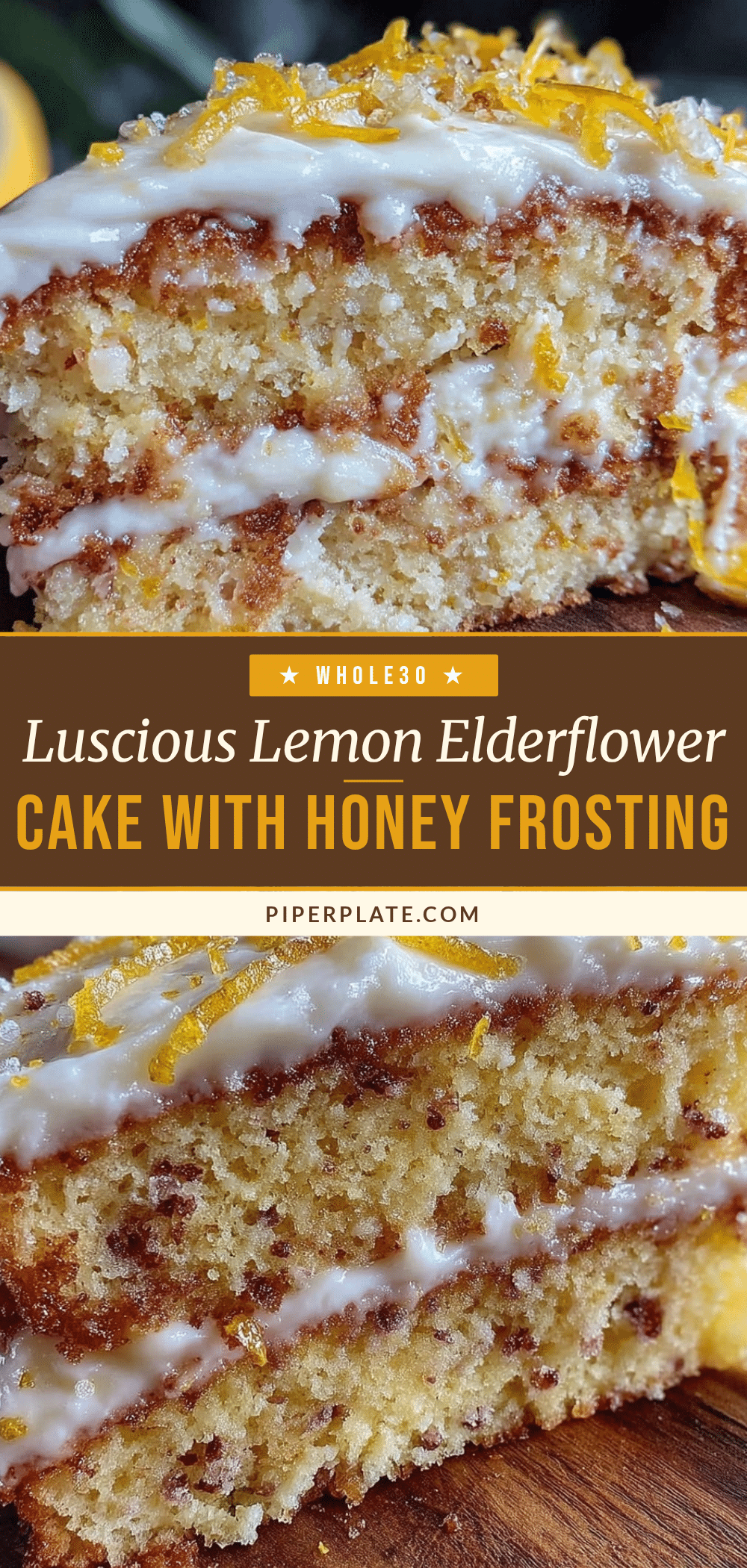
Perfect Lemon Elderflower Cake Recipe with Easy Honey Cream Cheese Frosting
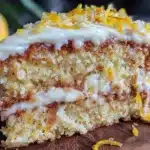
A light and refreshing lemon elderflower cake with a delicate citrus zing and floral notes, topped with a creamy honey cream cheese frosting. Perfect for spring and summer gatherings, this cake is simple yet elegant and versatile for various occasions.
- Prep Time: 20 minutes
- Cook Time: 30-35 minutes
- Total Time: 55-60 minutes
- Yield: 12 servings 1x
- Category: Dessert
- Cuisine: English-inspired
Ingredients
- 2 ½ cups (315 g) all-purpose flour
- 2 ½ tsp baking powder
- ½ tsp salt
- 1 cup (225 g) unsalted butter, softened
- 1 ¾ cups (350 g) granulated sugar
- 4 large eggs, room temperature
- ¾ cup (180 ml) whole milk, room temperature
- 2 tbsp fresh lemon zest (from about 2 medium lemons)
- ¼ cup (60 ml) fresh lemon juice
- 3 tbsp elderflower syrup (St. Germain or homemade)
- 8 oz (225 g) cream cheese, softened
- ½ cup (115 g) unsalted butter, softened
- ⅓ cup (113 g) honey (raw preferred)
- 2 cups (250 g) powdered sugar, sifted
- 1 tsp vanilla extract
- 1 tbsp fresh lemon juice
Instructions
- Preheat your oven to 350°F (175°C). Grease and flour two 8-inch cake pans or line them with parchment paper.
- Sift together the all-purpose flour, baking powder, and salt in a medium bowl. Set aside.
- In a large bowl, use an electric mixer to beat the softened butter and granulated sugar on medium-high speed until light and fluffy, about 3 to 5 minutes.
- Beat in the eggs one at a time, mixing well after each addition and scraping down the sides.
- Mix in the lemon zest, lemon juice, and elderflower syrup gently but thoroughly.
- With the mixer on low, alternate adding the sifted flour mixture in three parts with the whole milk, beginning and ending with the dry ingredients. Mix just until combined.
- Divide the batter evenly between the prepared pans, smoothing the tops with a spatula and tapping the pans gently to release air bubbles.
- Bake for 30-35 minutes, or until a toothpick inserted in the center comes out clean or with a few moist crumbs.
- Let the cakes cool in the pans on a wire rack for 10 minutes, then run a knife around the edges and invert the cakes onto the rack to cool completely.
- To prepare the frosting, beat the softened cream cheese and butter on medium speed until smooth and creamy.
- Gradually add the honey, then sifted powdered sugar, mixing well after each addition.
- Stir in the vanilla extract and lemon juice.
- Place one cake layer on a serving plate and spread a generous layer of frosting evenly over the top.
- Add the second layer and cover the entire cake with the remaining frosting, smoothing or creating soft swirls as desired.
- Chill the cake for at least 30 minutes to set the frosting before slicing and serving.
Notes
If elderflower syrup is unavailable, substitute with orange blossom water or extra lemon zest and juice. For dairy-free options, use plant-based butter and cream cheese alternatives and replace honey with maple syrup. Use room temperature ingredients for best results. Chill frosting if too soft before applying. Avoid overmixing batter to keep cake tender.
Nutrition
- Serving Size: 1 slice (1/12 of cak
- Calories: 320
- Sugar: 28
- Sodium: 180
- Fat: 16
- Saturated Fat: 9
- Carbohydrates: 40
- Fiber: 1
- Protein: 3
Keywords: lemon cake, elderflower cake, honey cream cheese frosting, spring dessert, floral cake, easy cake recipe, garden party cake